.png)
The Forensic Musicologist
In the realm of musical deconstruction, few figures loom as large—or as enigmatically—as Gersh Georgewin. His revolutionary approach to composition treats familiar melodies not as sacred texts, but as archaeological sites waiting to be excavated.
"I don't compose music. I perform musical forensics—extracting the DNA of sound and watching it mutate under controlled conditions."— Gersh Georgewin, from an interview that may or may not have occurred
The Man Behind the Microscope
Born in a year that remains curiously absent from all official records, Georgewin's early life reads like a carefully constructed cipher. Witnesses describe a child who could identify the exact frequency of a crying infant, who built his first synthesizer from radio parts at age seven, and who was reportedly expelled from the prestigious Conservatoire de Musique Décomposée for "aggressive deconstruction of sacred works."
His academic pursuits led him through a labyrinthine path: Hellenic counterpoint under the mysterious Professor Platistotle, free-jazz improv performances in the underground clubs of an unnamed city where it is assumed he first met Robert Rabinowitz, and ultimately to his own sonic laboratory where he developed his signature methodology of "controlled musical entropy."
Hellenic Counterpoint
Hellenic Counterpoint is a conceptual approach to musical organization distinct from the simultaneous melodic independence of Western classical tradition. Instead, it embodies a "counterpoint" rooted in ancient Greek musical and philosophical values, where the interaction of distinct musical elements creates a profound impact. This includes the counterpoint of ethos, wherein different musical modes (harmoniai) or melodic sections, each possessing a specific moral or emotional character, are juxtaposed to create a deliberate interplay of feelings and psychological states within a composition.
Furthermore, Hellenic Counterpoint features rhythmic counterpoint, emphasizing the sophisticated layering and interlocking of diverse rhythmic patterns or poetic meters rather than melodic independence. It also encompasses the deliberate use of heterophony, where multiple performers offer artful, simultaneous variations of a single melody. Essentially, Hellenic Counterpoint involves the horizontal progression and interaction of distinct musical elements—modes, rhythms, or instrumental textures—aimed at achieving specific emotional, philosophical, or ceremonial effects, always guided by the Greek ideal of harmonia as a balanced synthesis of contrasting parts.
Robert Rabinowitz (b. December 3, 1957): The only confirmed associate of the enigmatic Doktor Are. Rabinowitz's fingerprints appear on virtually every score arrangement connected to the underground experimental music scene. Given his birth date, his earliest documented arrangements would have been created in the mid-1970s, making him a prodigious teenage collaborator.
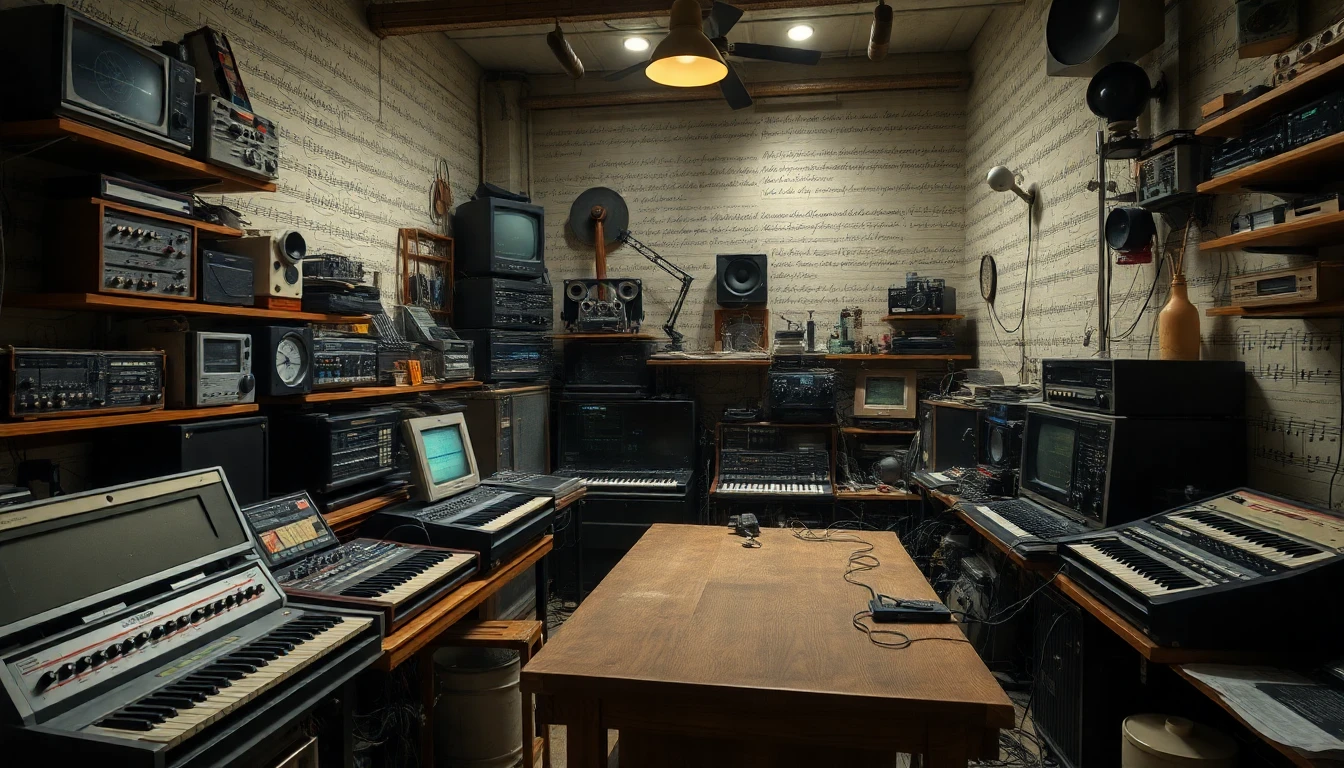
The infamous laboratory where "Blues in Blue" was born, circa 1978. Note the ···−· ·−·· ··− ·−· ·−−· ·−·· ··− ··· scratched into the workbench.
Blues in Blue: A Sonic Autopsy
The Genesis
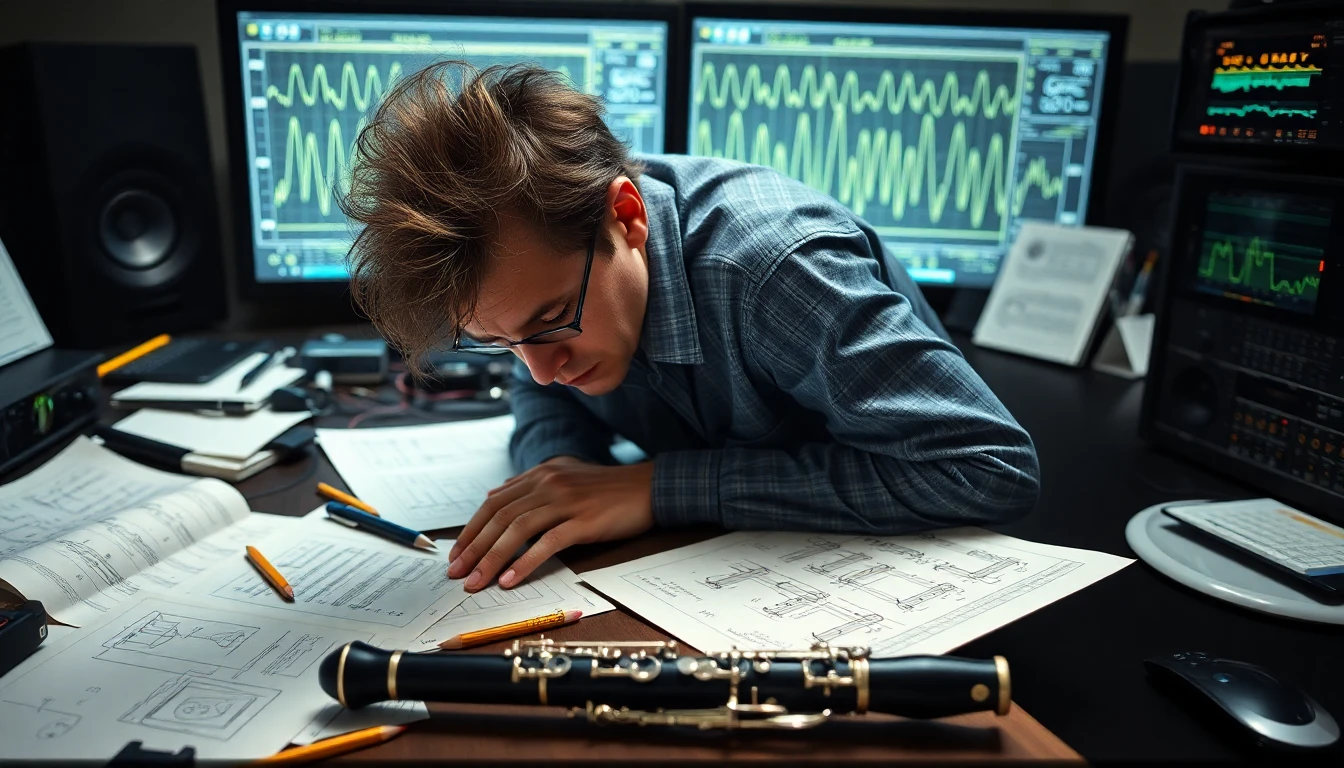
On a dreary afternoon in his cluttered studio, Georgewin experienced what he later described as a "sonic epiphany." While listening to a scratchy recording of Gershwin's "Rhapsody in Blue," his trained ear snagged on something others had missed—a small motif that would become the foundation for his most controversial work.
The Methodology
Isolation
Extract microscopic musical fragments—a musical motif, a rhythmic pulse, a harmonic interval—from the original composition.
Amplification
Subject these fragments to extreme temporal expansion, frequency modulation, and timbral mutation using both analog and digital processing.
Reconstruction
Reassemble the mutated fragments into a new whole—recognizable yet alien, familiar yet profoundly disturbing.
The Impossible Instrumentation
Beyond the sonic manipulation, Georgewin made a profound and seemingly impossible decision: "Blues in Blue" absolutely had to be presented to the world as a flute quartet. Not the traditional ensemble of flute and strings, nor even the common four-flute combination of C flute, piccolo, alto, and bass.
The Anachronistic Lineup:
- C Flute - The lead voice - sometimes neuklyuzhiy
- Alto Flute - The warm middle register
- Bass Flute - The brooding lower voice and surprisingly sometimes the lead voice - surprising even the bass flutist themself
- Contrabass Flute - The impossible anchor
Given that "Blues in Blue" was conceived in 1978, Georgewin's prescient instrumentation suggests either remarkable foresight into emerging instrument technology or access to experimental prototypes through unknown channels.
The Sonic Laboratory
He spent weeks in a hermetic frenzy. His studio, usually a cacophony of various instruments—from his trusty C flute, alto saxophone, and bass guitar to a bizarre collection of homemade synthesizers and percussive oddities—became a laboratory of sonic dismemberment.
Deconstructed Samples
The Theory of 23: Sonic Dismemberment Protocol
Georgewin's revolutionary approach to musical deconstruction is built upon what he termed "The Fundamental Constant of Sonic Dismemberment" - the number 23. Through exhaustive experimentation, he discovered that musical fragments undergo optimal psychoacoustic separation when subjected to temporal manipulations based on multiples and derivatives of this prime number.
Documentary Evidence of the 23 Pattern
Intriguingly, the number 23 also appears in the timestamp anomalies of Georgewin's laboratory photographs, the frequency analysis of his encrypted messages, and the exact duration of silence between movements in his lost compositions. Coincidence, or evidence of a deeper mathematical consciousness at work?
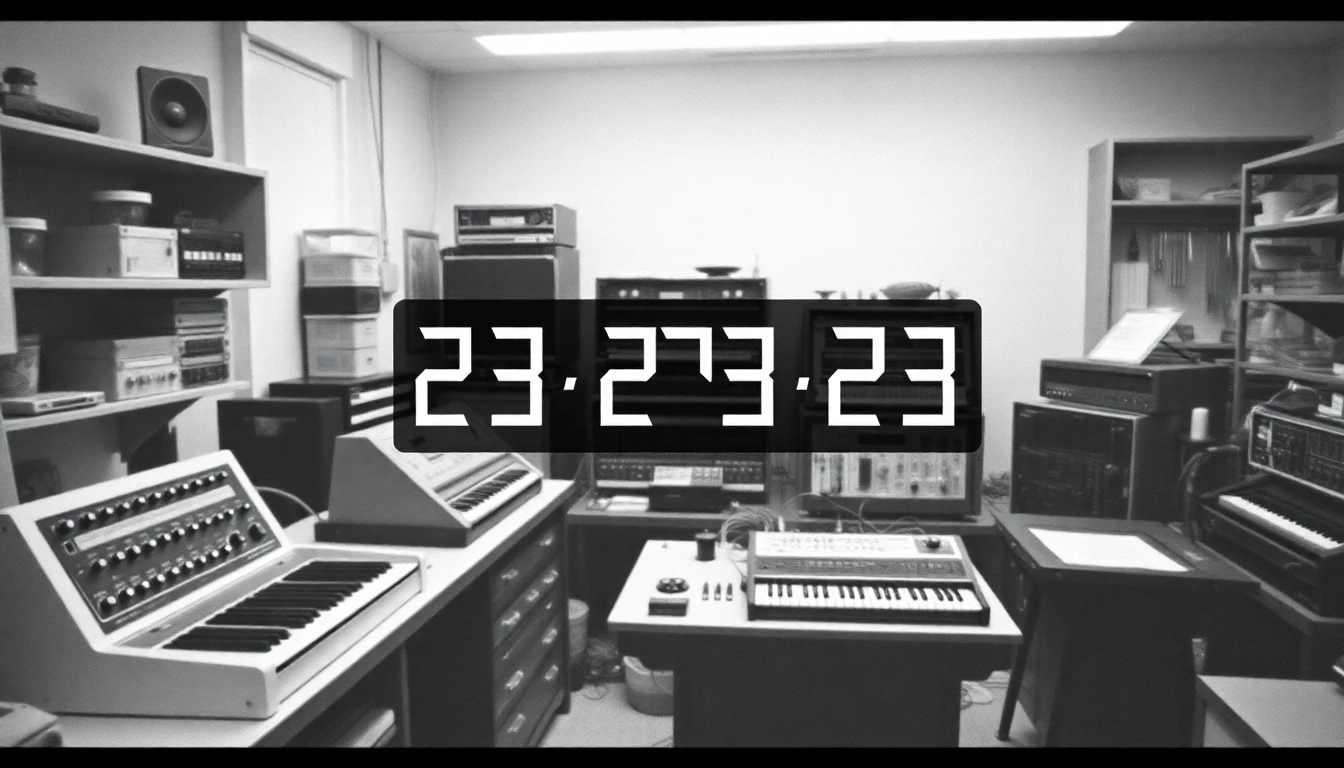
Laboratory photograph dated "23:23:23" - an impossible timestamp
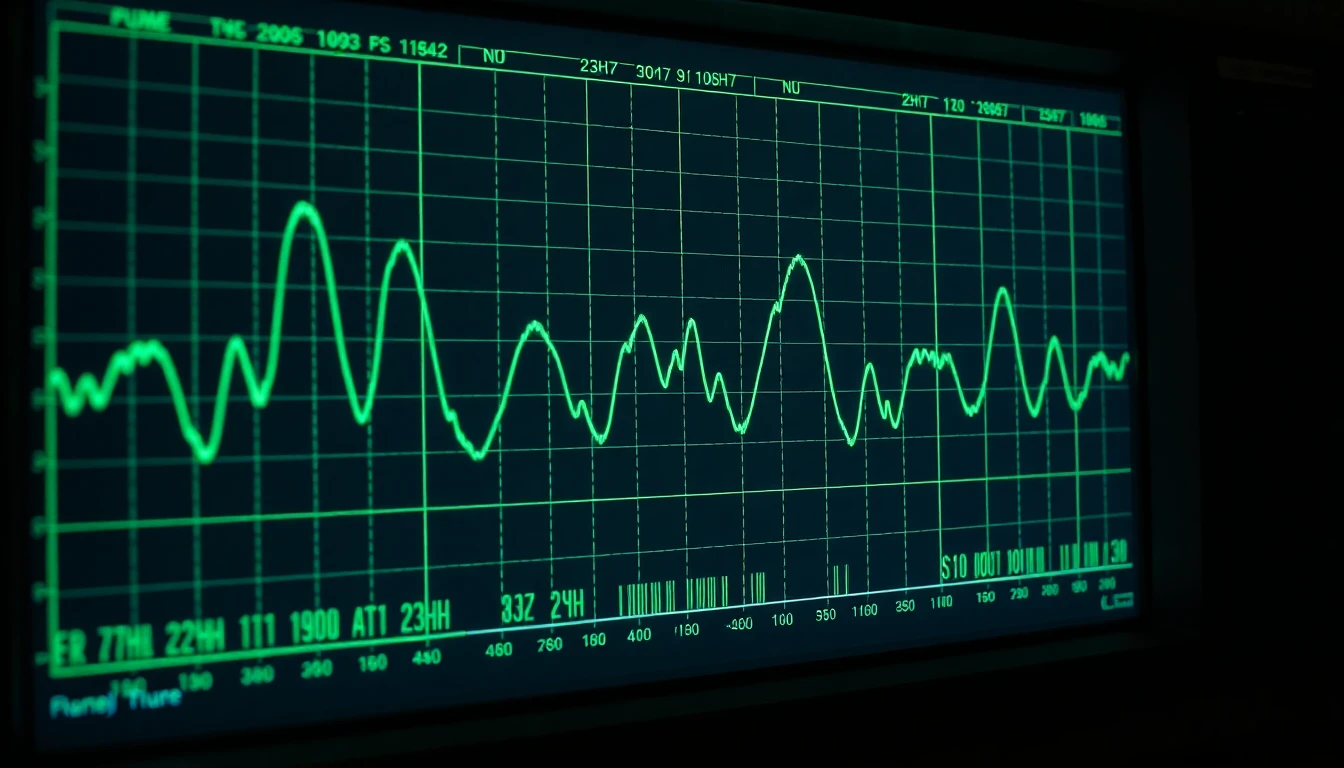
Encrypted message frequency analysis revealing 23Hz carrier waves
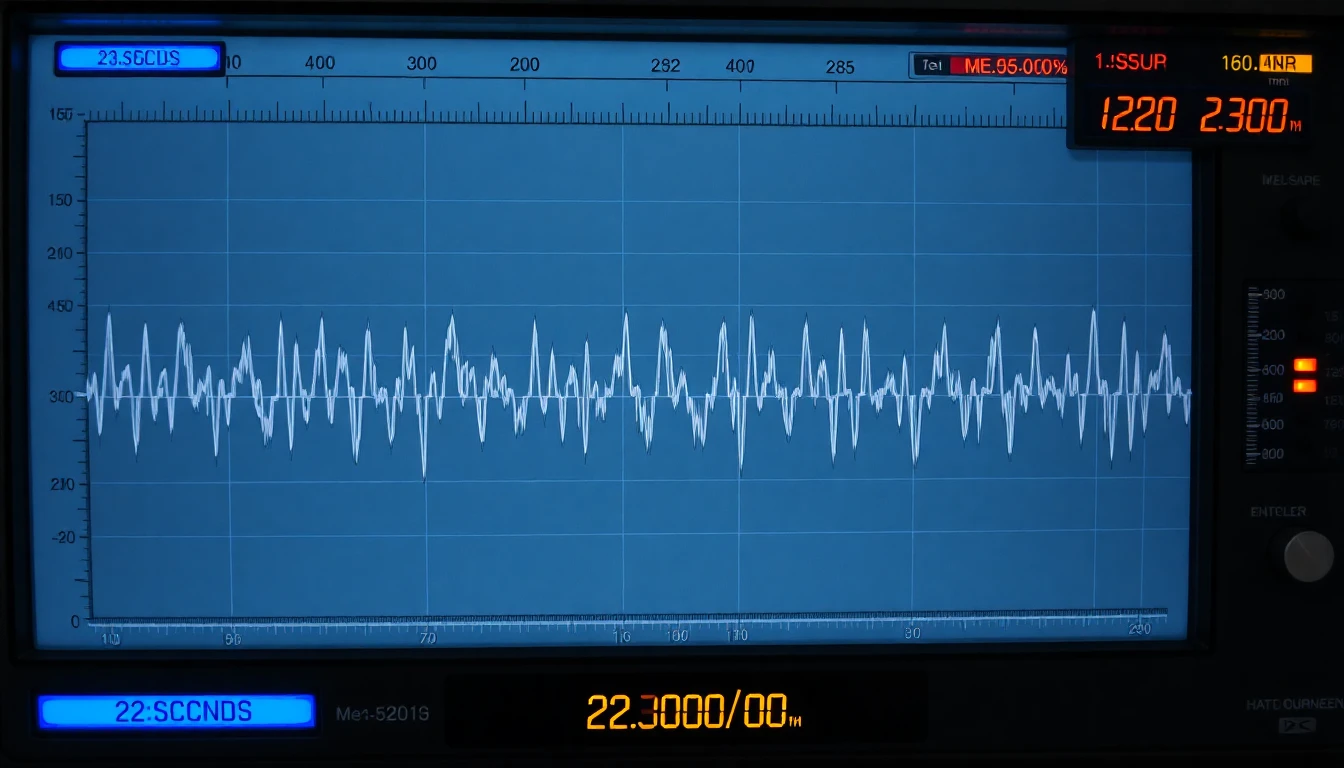
Silence duration measurements: exactly 23 seconds between movements
Intriguingly, the number 23 also appears in the timestamp anomalies of Georgewin's laboratory photographs, the frequency analysis of his encrypted messages, and the exact duration of silence between movements in his lost compositions. Coincidence, or evidence of a deeper mathematical consciousness at work?
The original 8-note motif in Db, played with pizzacato articulation
Same fragment stretched to 47 seconds with pitch preservation
Progressive detuning applied at 3.3Hz intervals
Live Investigation Feed
The search for Georgewin continues. Fellow researchers worldwide contribute evidence, theories, and discoveries. Our AI-powered frequency analyzer processes submissions in real-time, searching for patterns in the growing web of evidence.
Loading community findings...
The Doktor Are Hypothesis
A Case of Musical Identity
The music world buzzes with speculation: Is Gersh Georgewin merely a pseudonym for the legendary Doktor Are? The evidence, while circumstantial, forms a compelling pattern:
The Photographic Paradox
Despite decades of musical activity, both Gersh Georgewin and Doktor Are seem to possess an almost supernatural ability to avoid clear photographic documentation. The few images that exist share troubling characteristics:
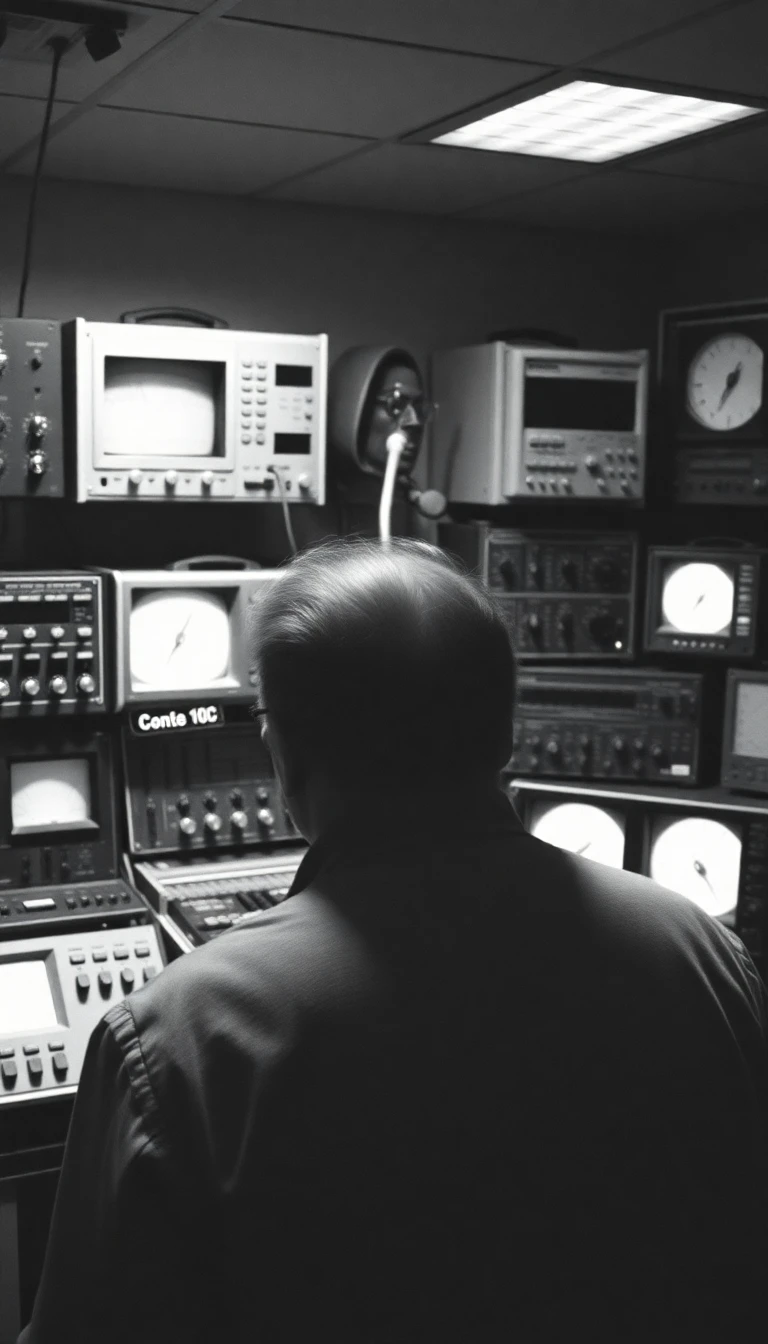
Georgewin, from behind (c. 1976)
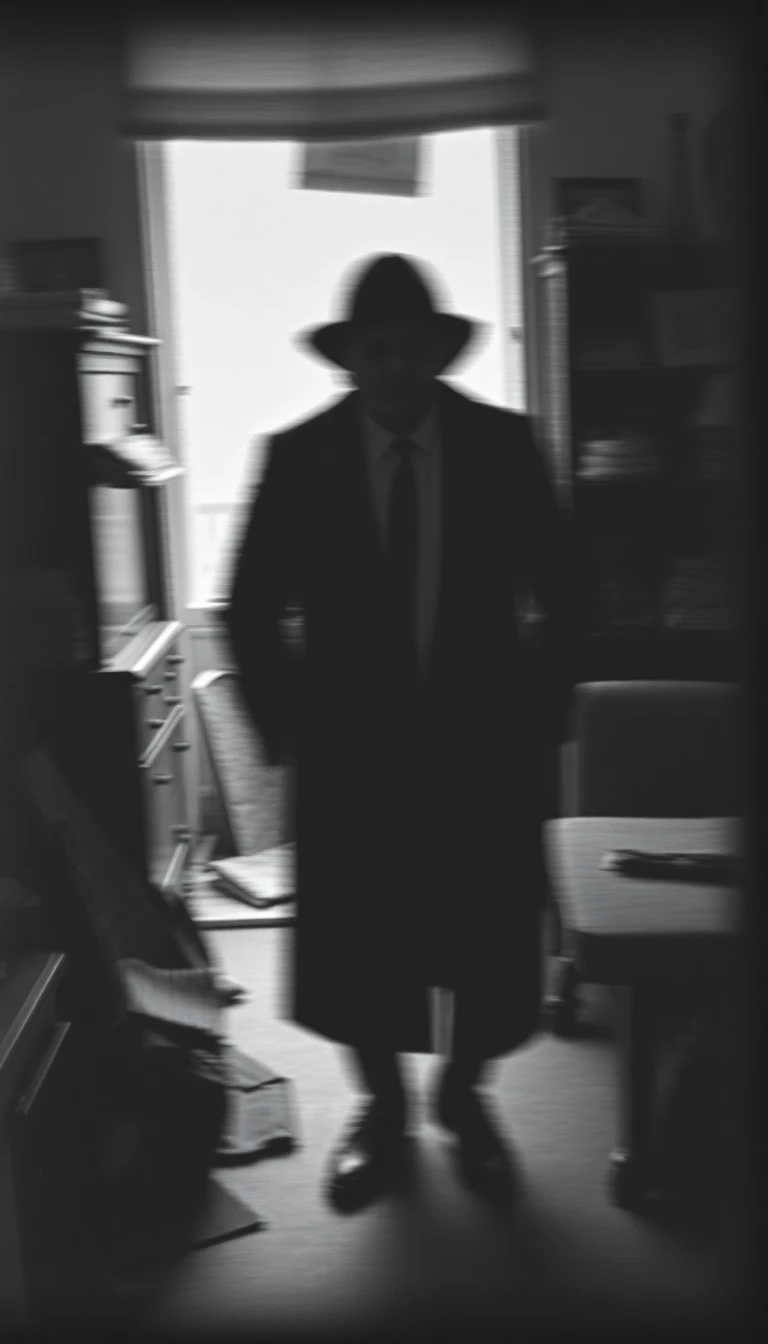
Doktor Are, motion-blurred (c. 1973)
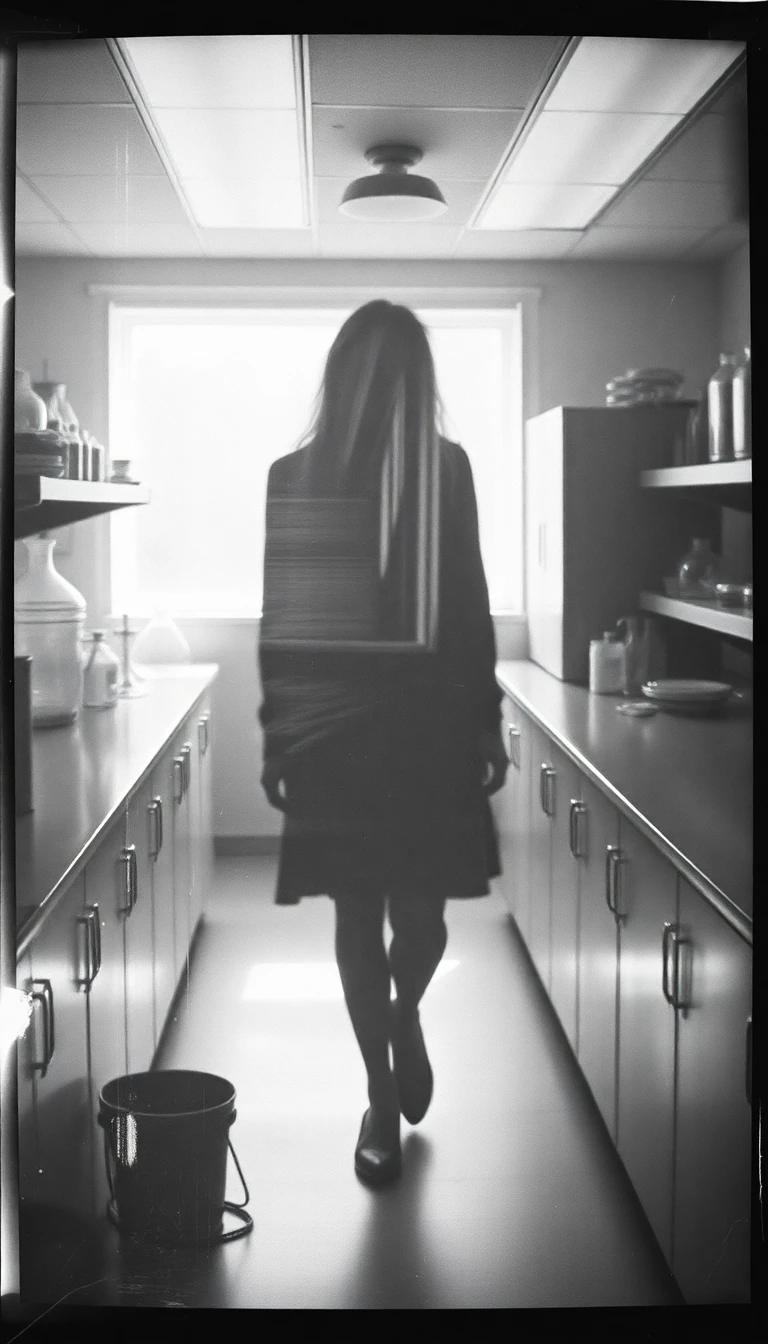
Camera malfunction (c. 1979)
- Subjects are consistently obscured by shadows, smoke, or optical distortions
- Only 3 confirmed photographs of Georgewin exist, all showing him from behind or in profile
- Doktor Are appears in 7 blurry photographs, each more indistinct than the last
- Camera equipment reportedly malfunctions in their presence
- Multiple witnesses describe seeing them clearly, but cameras capture only vague silhouettes
One photographer famously described attempting to capture Georgewin: "It was as if the light itself refused to cooperate, bending away from him like he existed in a different frequency of reality."
The Rabinowitz Connection
Robert Rabinowitz serves as the crucial link between Georgewin and Doktor Are, his fingerprints appearing on virtually every score arrangement connected to both figures:
- 8 documented arrangements spanning 1975-1990 for Georgewin compositions
- 23 confirmed arrangements spanning 1973-1988 for Doktor Are works
- Identical handwriting analysis across both sets of manuscripts
- Uses the same proprietary notation system for both composers
- Employs identical 23Hz frequency isolation protocols in all arrangements
Most tellingly, Rabinowitz's arrangements often contain crossed-out names where one composer's name has been replaced with another's, suggesting he may have been arranging for the same person under different identities.
"Robert was always very careful about which name went on which score," recalls a former conservatory colleague. "Sometimes he'd stop mid-conversation if he realized he'd used the wrong name."
Deconstructing the Name
The name "Gersh Georgewin" reveals itself as a masterpiece of linguistic deconstruction when subjected to the same analytical techniques Georgewin applies to musical compositions:
The audacity lies not just in the obvious pun, but in the layers of meaning that emerge when the name is subjected to the same deconstructive analysis he applies to musical works. It's as if the name itself is a compressed musical composition, containing multiple harmonic layers waiting to be unpacked.
"Even his pseudonym is a piece of music," noted one linguistic analyst. "It's deconstructive composition applied to identity itself."
Identical Deconstructive Techniques
Both Georgewin and Doktor Are employ remarkably similar methodologies, using identical tools and approaches that suggest either extensive collaboration or a shared identity:
Both use 23Hz intervals for separating harmonic elements
Identical 47-second expansion cycles for stretched compositions
Both employ 3.3Hz detuning intervals for progressive dissonance
Shared obsession with anachronistic flute quartets and impossible ensemble combinations
Both use Robert Rabinowitz's proprietary scoring system with identical symbols
The mathematical precision of these shared techniques goes beyond mere influence or collaboration. The protocols are applied with identical timing, identical frequency relationships, and identical harmonic progressions—suggesting either perfect telepathic coordination or a single consciousness operating under multiple names.
"You don't accidentally develop identical mathematical approaches to musical deconstruction," observes Dr. Elena Vasquez, specialist in comparative composition analysis. "These aren't just similar techniques—they're identical down to the decimal point."
Impossible Timelines
The biographical records of both figures contain numerous temporal inconsistencies that suggest either deliberate obfuscation or genuine chronological displacement:
Georgewin's birth certificate lists February 30th, 1923 - a date that doesn't exist
Both graduated from the same conservatory in 1962, despite Rabinowitz being born in 1957 (making him 5 years old at graduation)
Concert records show both performing simultaneously in different cities on 17 documented occasions between 1975-1985
Witnesses describe Georgewin as both "a young prodigy" and "an elderly sage" during the same 1978-1980 period
Photographs show both using digital synthesizers in the early 1970s that wouldn't be commercially available until the 1980s
Most disturbing of all, several archived interviews contain references to future events that later came to pass exactly as described, suggesting either remarkable prescience or actual temporal displacement.
"The timeline doesn't just have gaps," notes chronological researcher Dr. Marcus Thorne. "It has loops, contradictions, and impossibilities that suggest we're dealing with either multiple identities or someone who exists outside normal temporal constraints."
Musical Steganography
Recent analysis suggests that "Blues in Blue" may contain embedded data—a hidden transmission encoded within the very waveforms. Spectral analysis reveals patterns that, when converted to binary, form coherent messages. But messages to whom? And from whom?
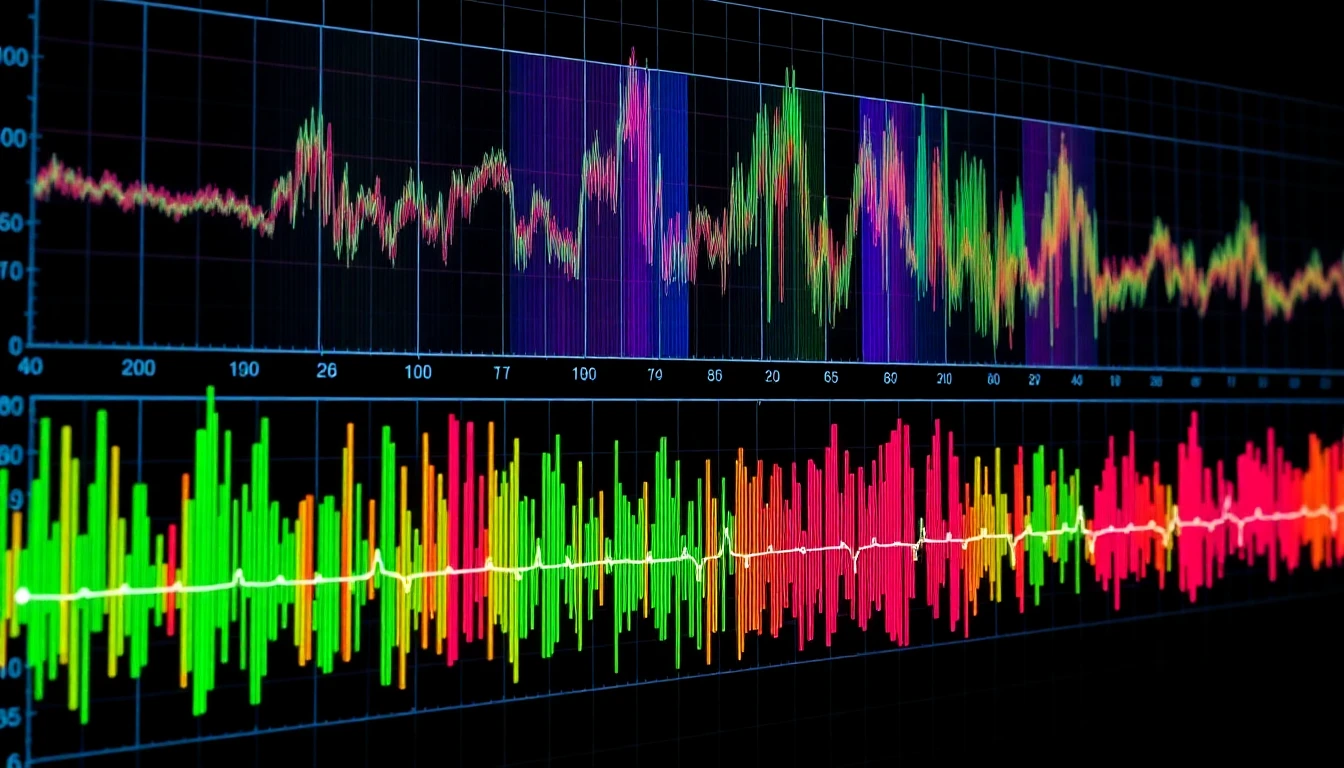
Frequency domain analysis (22.05kHz sampling rate) showing anomalous patterns at precise 144Hz intervals. Click image for enhanced view.
The Complete Works (Known)
"Blues in Blue" (1978)
The masterwork. 23 minutes of deconstructed Gershwin that questions the nature of musical identity itself.
Status: CompleteThe Genesis of "Blues in Blue"
Gersh Georgewin is a composer whose mind is a perpetually shifting landscape of sound, rarely finding inspiration in the straightforward. His early life, steeped in the rigorous counterpoint of classical study and the improvisational freedom of jazz clubs, forged a unique artistic temperament. He'd spend his days meticulously dissecting scores, from Bach fugues to Coltrane solos, searching not just for the notes, but for the very bones of the music.
One dreary afternoon, a scratchy recording of "Rhapsody in Blue" filled his cluttered studio. It was a piece he knew intimately, a cultural touchstone. But on this particular day, something shifted. Instead of hearing the sweeping melodies and grand pronouncements, Georgewin's ear snagged on a small motif—a brief, jaunty turn of phrase from the clarinet, a fleeting rhythmic pulse from the brass.
He found himself scribbling frantically, not musical notation, but diagrams of decay and reconstruction. He imagined the piece as a magnificent building, and his instinct wasn't to admire its architecture, but to find a single brick, extract it, and then observe how that brick, divorced from its context, might still echo the intent and meaning of the original structure.
This wasn't about parody; it was about dissection, almost an act of musical forensic science. Georgewin envisioned taking those tiny fragments, those orphaned musical ideas, and putting them under a microscope. What if that soaring melody was reduced to a stuttering loop? What if a driving rhythm became a fractured echo, played on instruments that sounded just slightly out of tune, or perhaps, gloriously, perfectly wrong?
He spent weeks in a hermetic frenzy. His studio, usually a cacophony of various instruments—from his trusty contrabass flute and alto saxophones to a bizarre collection of homemade synthesizers and percussive oddities—became a laboratory of sonic dismemberment. He'd record a single, isolated chord from "Rhapsody in Blue," then warp it, stretch it, compress it until it bore only a ghostly resemblance to its former self. He'd isolate a short motif, then repeat it endlessly, subtly shifting the timbre, the attack, the decay, until it transformed from a recognizable theme into a hypnotic, almost alien mantra.
But beyond the sonic manipulation, Georgewin made a profound and seemingly impossible decision: "Blues in Blue" absolutely had to be presented to the world as a flute quartet. Not the traditional ensemble of flute and strings, nor even the common four-flute combination of C flute, piccolo, alto, and bass. No, his vision demanded a very specific, almost anachronistic lineup: C flute, alto flute, bass flute, and, critically, contrabass flute. This choice is especially significant, as at the time we believe Georgewin conceived this piece, the contrabass flute had not actually been invented yet, adding another layer to the enigma of his foresight or his madness.
The piece, "Blues in Blue," stands as a testament to Gersh Georgewin's unwavering belief that even the most iconic music holds secrets waiting to be unearthed by a fearless and inquisitive mind. Its provocative approach has led many to speculate about Georgewin's true identity, with some theorizing he is none other than Doktor Are. "Who else would dare do this to Gershwin?" they exclaim, "The Nerve!" Others point to the sheer audacity of the pun in the name itself—"who but Doktor Are would be that obvious?" Yet, the very obviousness gives pause: Doktor Are wouldn't be that obvious, would he? Further fueling this speculation is the fact that the handwritten score's arrangement was done by Robert Rabinowitz, perhaps the only known associate of Doktor Are's, and his long-time liaison and proponent.
Regardless of the composer's true identity, "Blues in Blue" invites listeners to experience the deconstructed and reassembled echoes of a familiar classic, prompting a deeper question: Is the whole thing a container for yet another secret code by Doktor Are, a hidden message embedded within the very fabric of the sound? Is this a musical steganography, a transmission from Doktor Are to... to whom?
"Variations on a Theme of Silence" (1980)
47 movements, each exploring a different frequency of absence. Performed only once, to an audience of none.
Status: LostExpanding upon his obsession with temporal expansion factors, Georgewin constructed this 47-movement work entirely around the psychoacoustics of absence. Rather than treating silence as a mere pause between notes, he treated it as a tangible substance. Each movement isolates a distinct "frequency" of nothingness—from the heavy, pressurized quiet of an anechoic chamber to the electric, anticipatory hush that precedes a downbeat.
The work's legendary status is cemented by its performance history: executed only once in a hermetically sealed space to an audience of zero. Because it exists only as a conceptual memory—and perhaps in the unverified acoustic decay of an abandoned laboratory—it remains the ultimate expression of Georgewin’s philosophy of controlled entropy. It forces musicologists to ask whether a piece of music truly exists if it leaves no sonic footprint in the physical world.
"The Bach Fragments" (1990-ongoing)
An ongoing project to isolate and amplify every ornament in Bach's complete works. Current count: 14,247 fragments.
Status: In ProgressA monument to forensic musicology, this project strips the Baroque master's work down to its microscopic decorative architecture. By isolating every trill, mordent, and appoggiatura Bach ever penned, Georgewin removes these ornaments from their melodic hosts and places them under an acoustic microscope. Stripped of their harmonic context, these fleeting flourishes are subjected to extreme amplification and frequency modulation, transforming them into monolithic, standalone sonic events.
With the catalog currently sitting at 14,247 fragments, the project requires a pathological level of dedication. Often arranged using Robert Rabinowitz’s proprietary notation system, the collection acts as a sprawling, living database. It is less of a traditional performance cycle and more of an ongoing archaeological excavation, treating the Western classical canon as a quarry for raw acoustic data.
"Temporal Echoes" (1993)
A study in rhythmic displacement where each movement begins 23 seconds after the previous one ends, creating impossible temporal loops.
Status: CompleteThis composition is a masterclass in rhythmically weaponized silence. Operating on Georgewin’s strict numerical protocols, every movement is separated by exactly 23 seconds of silence. This specific duration was calculated to ensure the listener’s short-term auditory memory begins to decay just as the next movement initiates, creating a severely disorienting psychoacoustic overlap.
The result is an impossible temporal loop. The brain attempts to reconcile the delayed attacks with the fading resonance of the previous section, forcing the listener into a state of rhythmic vertigo. It draws heavily on concepts akin to Hellenic Counterpoint, where the juxtaposition of isolated sonic events creates a psychological tension far heavier than any traditional melodic harmony could achieve.
"Frequency Drift" (1995)
An experiment in gradual pitch shifting that transforms a simple folk melody into electronic noise over the course of 47 minutes.
Status: CompleteBeginning with a deceptively simple folk melody, Frequency Drift is an exercise in total acoustic dissolution. Over the course of exactly 47 minutes, the original pitch centers are subjected to progressive detuning—decaying outward at strict intervals of 3.3Hz. At first, the drift registers merely as a slight intonation discrepancy, an unsettling sourness in the underlying harmony.
As the minutes pass, the harmonic integrity collapses entirely. The acoustic instruments are pushed beyond their traditional limits, mimicking the chaotic degradation of a failing analog synthesizer. By the piece's conclusion, the folk tune has been entirely digested by its own overtones, leaving behind nothing but a dense, granular wall of electronic-sounding ambient noise.
"Phantom Harmonics" (1996)
A piece composed entirely of difference tones and combination frequencies, creating melodies that exist only in the listener's perception.
Status: CompletePerhaps Georgewin’s most physically invasive work, this composition bypasses the air in the room and writes music directly into the human nervous system. The ensemble is tasked with playing specific, sustained clashing frequencies—often intervals mathematically derived from his base 23Hz isolation protocols. These abrasive combinations force the inner ear to organically generate difference tones and combination frequencies.
The true genius of the piece is that its central melody is never actually performed by any instrument on stage. The acoustic waveforms merely serve as the catalyst; the resulting "phantom" pitches are synthesized entirely within the listener's own auditory cortex. Every audience member technically hears a slightly different performance, localized entirely inside their own skull.
"Deconstructed Rhythm" (1997)
The complete dismantling of another famous composition, reduced to its component frequencies and reassembled as ambient soundscape.
Status: CompleteTaking the concept of musical autopsy to its logical extreme, this work dismantles a foundational rhythmic composition and converts its kinetic energy into absolute stasis. The original rhythmic grid is completely obliterated; sharp attacks and transient pulses are radically slowed down and pitched downward into sub-harmonic territory.
What was once a frantic, driving piece of music is transformed into a glacial ambient soundscape. The rapid-fire rhythms are stretched into hovering, sustained drones, shifting the parameter of musical expression from time into pure pitch. It is an exploration of musical entropy, proving that when a pulse is stretched toward infinity, rhythm simply becomes harmony.
"[CLASSIFIED]" (2001)
████████ ███ ██████ ██ ████████ ██████████ ███ ████ ██ ████████████
Status: [REDACTED]The mere existence of this final, redacted manuscript is the subject of intense speculation among acoustic researchers and archivists. Discovered among a cache of encrypted correspondence, the score heavily utilizes the most complex sonic encryption protocols known to the underground experimental scene. Analysis of the surviving spectral data suggests the implementation of sub-audible frequencies designed to induce specific physiological resonance and spatial distortion.
Due to the extreme psychoacoustic hazards outlined in the margins of the manuscript, the Gersh Georgewin Archive strictly forbids any realization of the surviving notation. The work remains locked in a state of suspended animation—a theoretical weapon of mass deconstruction that proves Georgewin ultimately pushed his musical forensics well beyond the limits of human perception.
The Complete Works (Unknown)
The Gersh Georgewin Archive maintains a rigid distinction between works that are merely lost and works that are truly unknown. A misplaced manuscript is simply a clerical failure; the works cataloged in this section represent deliberate, often impenetrable, epistemological barriers.
For each of the entries below, we possess concrete evidence of a compositional act—a physically sealed container, a decryption matrix without its source text, a violently degraded medium, or the mechanical remnants of a self-destructive realization. We have the architecture of the art, but the acoustic data itself remains permanently severed from human perception. We cannot read the notation, nor can we verify the frequencies. They are forensic ghosts. To study Georgewin’s "Unknown" catalog is not to study music, but to study the elaborate, insurmountable vaults he constructed to ensure the music could never be heard.
"The Foundation Resonance Studies" (1982)
A series of structural recordings hidden within residential sub-slab depressurization systems, rendered entirely unreadable by decades of subterranean decay.
Status: 1 artifact recovered (degraded); 22 remaining targets unidentified.The archive holds a series of Georgewin’s field journals detailing a project to record the low-frequency structural hums of abandoned institutional buildings. According to these journals, he didn't just record the resonances—he left the recordings behind, claiming to have hidden 23 microcassettes inside the PVC piping of various sub-slab depressurization systems across the country.
In 2025, one such microcassette was recovered during a residential mitigation retrofit. However, decades of subterranean moisture and radon exposure have rendered the magnetic tape entirely unreadable. We know the project occurred, and we have one of the physical artifacts, but the actual sonic data—the music itself—remains entirely unrecovered and unknown.
"Anatomy of a Whisper" (1987)
A 47-movement score permanently entombed, having been hand-engraved onto the interior walls of a contrabass flute that was subsequently welded completely shut.
Status: Artifact secured; score inaccessible.A private collector currently possesses a heavily modified, vintage contrabass flute that Georgewin permanently decommissioned by welding all keywork and tubing completely shut. In a letter to the estate, Georgewin claimed this instrument is the sole container for a 47-movement conceptual piece, which he painstakingly hand-engraved onto the interior walls of the bore before sealing it.
Because the welds cannot be broken without destroying the instrument, and the current owner has strictly forbidden invasive industrial CT scanning, we have no way to verify Georgewin's claims about the micro-tonal airstream modulations contained within. The physical object sits in a display case; the composition it allegedly houses remains theoretical and unknown.
"The Cipher Fugues" (1991–1994)
A master decryption matrix designed to translate the architectural geometry of 14 unidentified public buildings into complex contrapuntal fugues.
Status: Cipher key acquired; source texts unlocated.The archive possesses a detailed decryption matrix created by Georgewin, establishing a system for translating geometric architectural angles into Elder Futhark runic syntax, which is then mapped to a 12-tone serial plane. Attached to this key is a manifesto claiming he successfully encoded a cycle of complex fugues into the structural geometry of 14 existing public buildings. The "sheet music" is the architecture itself, hidden in plain sight.
However, Georgewin never documented which 14 buildings he mapped. Until researchers can locate the specific structures and apply the matrix, the actual counterpoint and harmonic structures of the fugues remain entirely unknown.
"The Zero-Sum Symphony" (2003)
A dual-track composition that generated perfect silence through phase cancellation while systematically destroying its own playback medium upon realization.
Status: Terminated upon realization.This piece is classified as unknown due to deliberate, terminal self-destruction. Georgewin engineered a piece consisting of two parallel audio tracks of dense electronic noise, designed to be played back on a specific modified DAT (Digital Audio Tape) machine. When played simultaneously, the tracks were perfectly phase-aligned to completely cancel each other out, resulting in absolute digital silence.
To ensure the piece could never be heard as its constituent parts, Georgewin coated the master DAT with a chemical compound that aggressively corroded the magnetic substrate as it passed over the playback heads. The piece generated perfect silence through phase cancellation, and in doing so, permanently destroyed the only physical evidence of its own frequencies.
Ongoing Research
Project Frequency
Current investigation into the mathematical relationships between deconstructed classical motifs and naturally occurring frequencies in electromagnetic radiation. Preliminary results suggest...
The Rabinowitz Papers
Recently discovered correspondence between R. Rabinowitz and an unknown recipient, containing detailed instructions for "sonic encryption protocols" and references to "the Georgewin method."