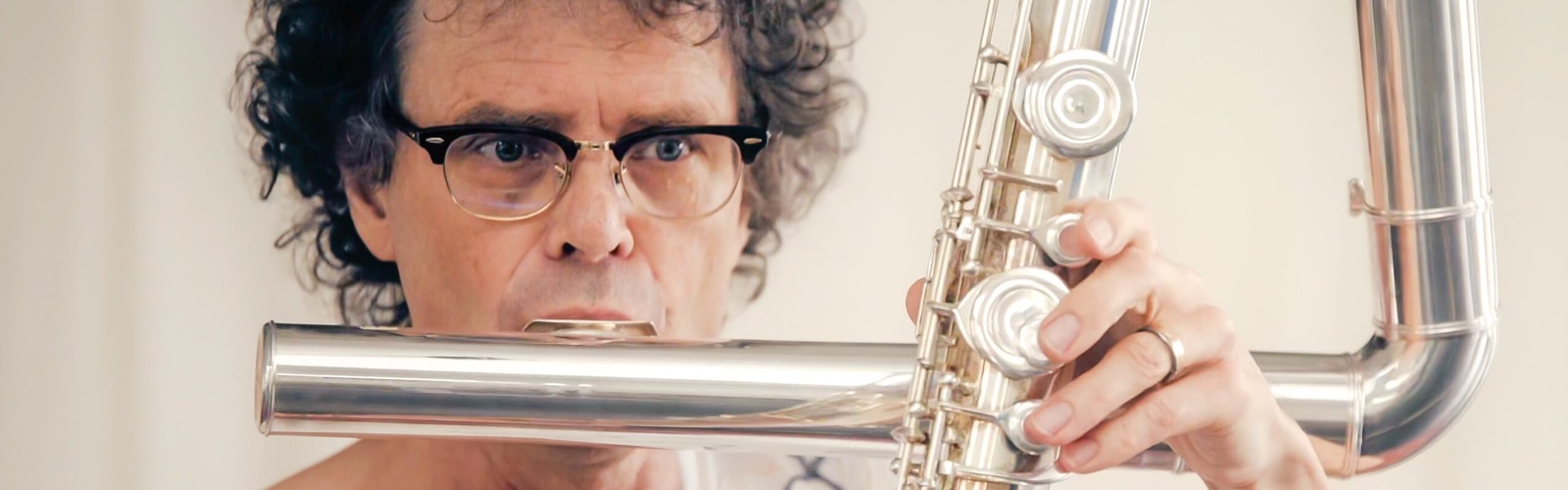

It’s not often that an artist’s work aligns so perfectly with the zeitgeist of a moment, but such was the case at this year’s NFA Convention in Atlanta. The theme was “Unity and Universal Oneness,” and no one seemed to embody this spirit more profoundly than Swedish flutist, saxophonist, and composer Anders Hagberg. His performances showcased everything from the rhythmic vitality of Circle no 2 on bass flute to the haunting, collective breath of his flute choir piece, The Circle is One. This confluence of events, along with the release of his new CD, With Hope (which I also review in this issue), created the perfect opportunity for a deeper conversation about his work—a powerful and timely response to our turbulent world.
Thematic Origins: Hope and Sorrow
I began by asking about the album’s central theme: the powerful duality of finding hope amidst sorrow.
Robert Rabinowitz: You’ve mentioned the album is filled with “sadness” in response to world events. A review in Paris Move, however, made a distinction, describing the music not simply as sad but as “piercing, lucid, and stoically poetic.” I’m interested in that contrast. Personally, my first impressions were how beautiful the melodies were. Could you talk about the relationship between the sadness you intended to express and the poetic resilience the reviewer perceived?
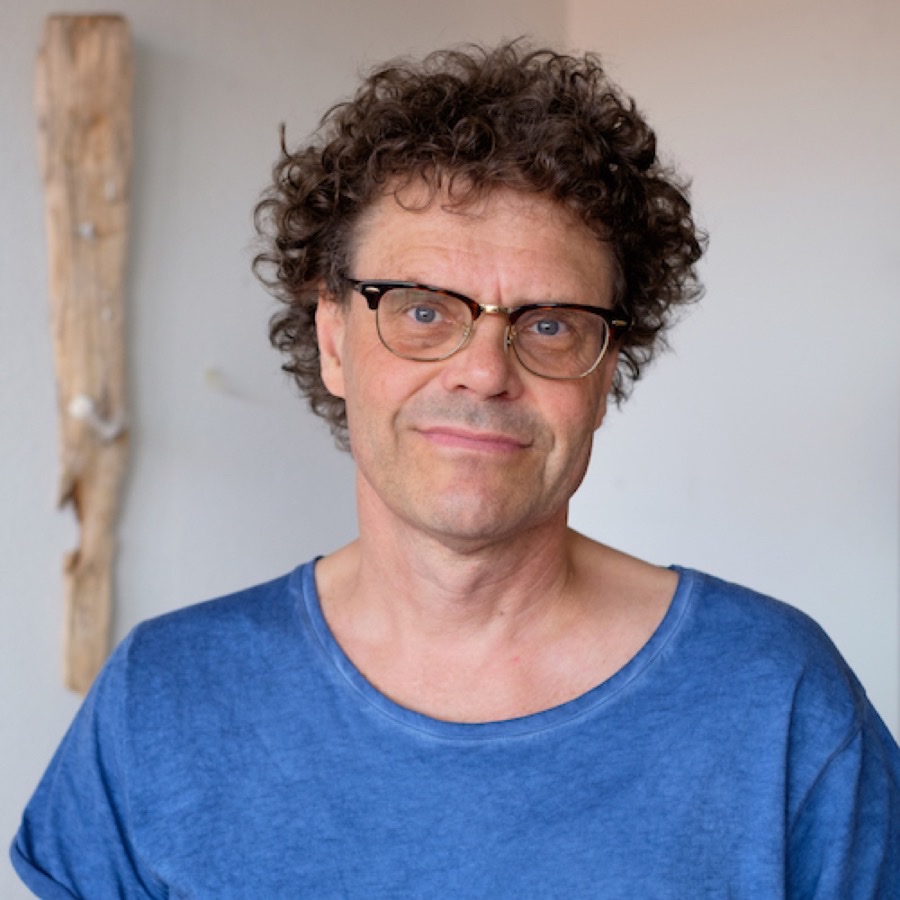
Anders Hagberg: There is a Swedish word, “vemod,” which means both sadness and joy—similar to the feeling of the blues or the Portuguese “saudade.” It’s a melancholy that also contains beauty and hope. So when the reviewer wrote about “poetic resilience,” that word—resilience—is very important to me. While I intended to express sadness about war, climate change, and a sense of helplessness, I also wanted the music to offer comfort. That’s why I named the album With Hope. The resilience the reviewer perceived is exactly what I wanted to express: the ability to adapt and find hope, even when things are hard.
A Global Dialogue
This theme is explored through a rich tapestry of global traditions woven into the album’s unique voice.
RR: The album weaves together disparate traditions, from Swedish, Swedes living in Ukraine, as well as Inuit drum songs and Swedish polska. What is your process for studying these traditions, and what were the main challenges in reinterpreting their essence for the ensemble that performs with you on the album?
AH: The Nordic heritage is a core part of my musical language. My process for studying traditions is almost always oral. I’ve learned about polska, herding calls, and Sámi joiks by collaborating with tradition bearers, and it was the same for the Inuit drum songs, which I learned from playing directly with Inuit drum dancers. The Ukrainian chorales were an exception, as I learned those from other singers and from transcriptions—a rare exception, as I learned those from singers and from transcriptions. It’s important to mention that I don’t want to be appropriating a heritage that I’m not part of; because I’ve learned and played this music with the tradition bearers themselves, I feel a deep respect for it.
Regarding the challenges, the main one is always how to honor a tradition’s essence while allowing our ensemble’s unique voice to create something new. This is eased by the fact that we all share a background in the Nordic jazz sound, which values melody and space and less defined roles between the instruments. I give a lot of freedom to the musicians because I trust them; they are strong individuals, but they always play for the whole of the music.
The Scribe’s Challenge: Notating Circle no 2
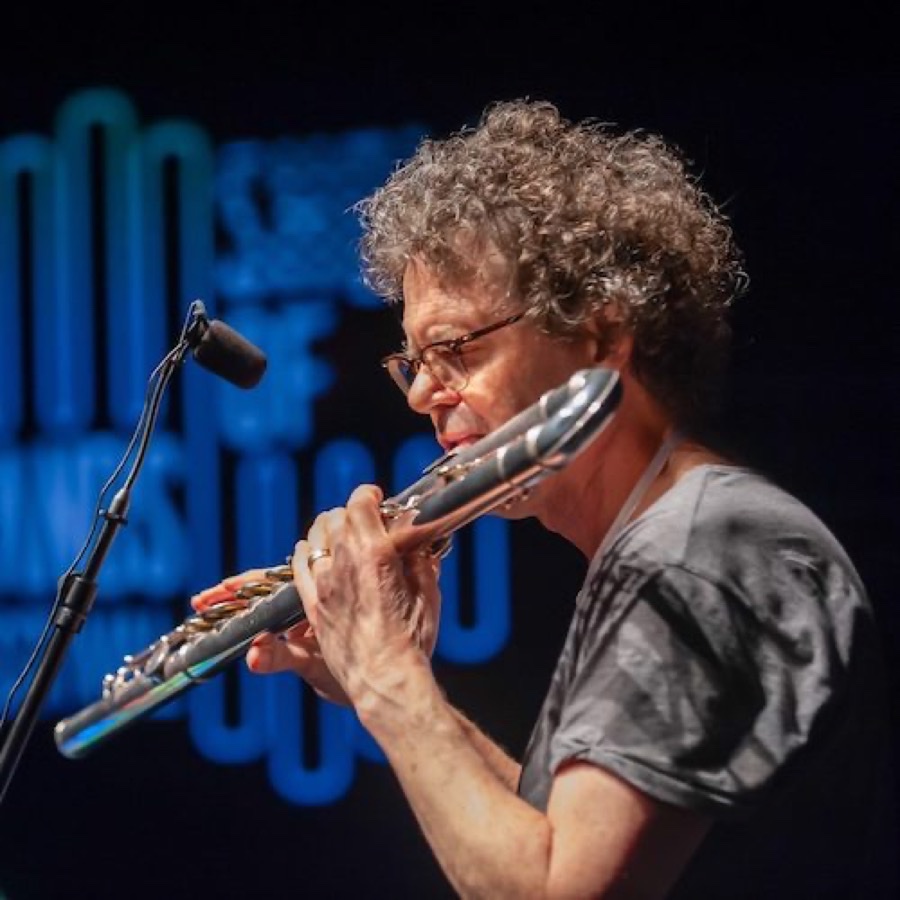
For flutists, the journey of “Circle no 2” from a fluid improvisation into a fixed NFA Competition text is especially fascinating.
RR: Could you describe the process of transcribing your own improvisation for Circle no 2? What were the challenges, and what do you feel is gained—or perhaps lost—in codifying such a fluid performance? As you’ve told me previously, it was something that you had internalized, and you mentioned that it changed over time, which of course is what happens with improvs.
AH: I’ve always been quite reluctant to notate exactly what I’m doing when improvising. For me, that is part of why music is so fascinating—that it’s never the same. But as I now meet a lot of classical flutists who are interested in my music, it’s a way of sharing what I’m doing. The good thing about this process is that it forces me to really refine the material and make decisions about what to include and what not to include. It gives me more inspiration to actually ‘through compose.’
(Author’s note: Anders and I talked about this topic in depth. He sees the transcription process as both a challenge and an opportunity: it requires him to distill his ideas, but it also risks losing the spontaneity of live improvisation. Ultimately, he values the chance to share his music more widely and to inspire others to make it their own.)
RR: As performers study this piece, what do you hope they’ll learn? To that end, could you offer any specific tips for mastering the toolbox (extended techniques) or point out common mistakes to avoid?
AH: I hope performers will approach the piece as a form of musical language—something to be internalized and expressed, not just read. I encourage flutists to make the piece their own, to listen deeply, and to connect with their own musical intentions. If you’ve spent years mastering the flute, you have a language, you have a grammar. And when we speak with words, we improvise, thus you can do it with your instruments.
My advice for mastering the techniques is to treat them not as something exotic but as part of your expressive vocabulary. For example, when I use key clicks, multiphonics, or singing while playing, it’s not just for effect—it’s about creating rhythm, color, and connection to the music’s emotional core. Practice them slowly, listen to the sound, and focus on touch and nuance. A common mistake is to treat these as technical tricks rather than as integral musical gestures. The goal is to make the instrument your voice, so the distance between your musical intention and the sound you produce is as small as possible.
RR: The score is rich with specific techniques. I’m curious about their function. For the keyclick F-sharp, for instance, is its purpose primarily rhythmic—like punctuation? Or does the specific pitch have another role? I’m also interested in how you developed the multiphonic fingerings and the textural role of the vocalizations.
AH: The techniques are always connected to the musical expression. With the keyclick F-sharp, it’s not simply rhythmic punctuation, though rhythm is a big part of it. I discovered that when you have the flute open and only click the F-sharp key, you get a very distinct, high-pitched sound. So, it’s both a rhythmic and a timbral choice.
RR: So that’s not just a key click on an F-sharp like hold a G and click the F-sharp. Everything’s open and you just click the F-sharp key only?
AH: F-sharp only per the score. To explain: With all the other keys open, clicking only the F-sharp key produces a unique, snare drum-like resonance that wouldn’t happen if other keys were closed.
RR: How did you develop the specific multiphonic effects, and what role do they serve in the overall texture of the music?
AH: When it comes to multiphonics, my approach is very much about exploring the instrument’s possibilities and integrating them into my own musical language. My first multiphonics actually came from singing a different tone while playing, rather than from special fingerings. I use these sounds to add harmony, texture, and sometimes a sense of distortion—almost like a guitar effect. For example, singing in falsetto while playing an octave apart can create a distorted, rich sound, and singing two octaves below gives another color entirely. They’re not “extras”; they’re part of my core toolbox.
The Expanded Voice: Performer and Educator
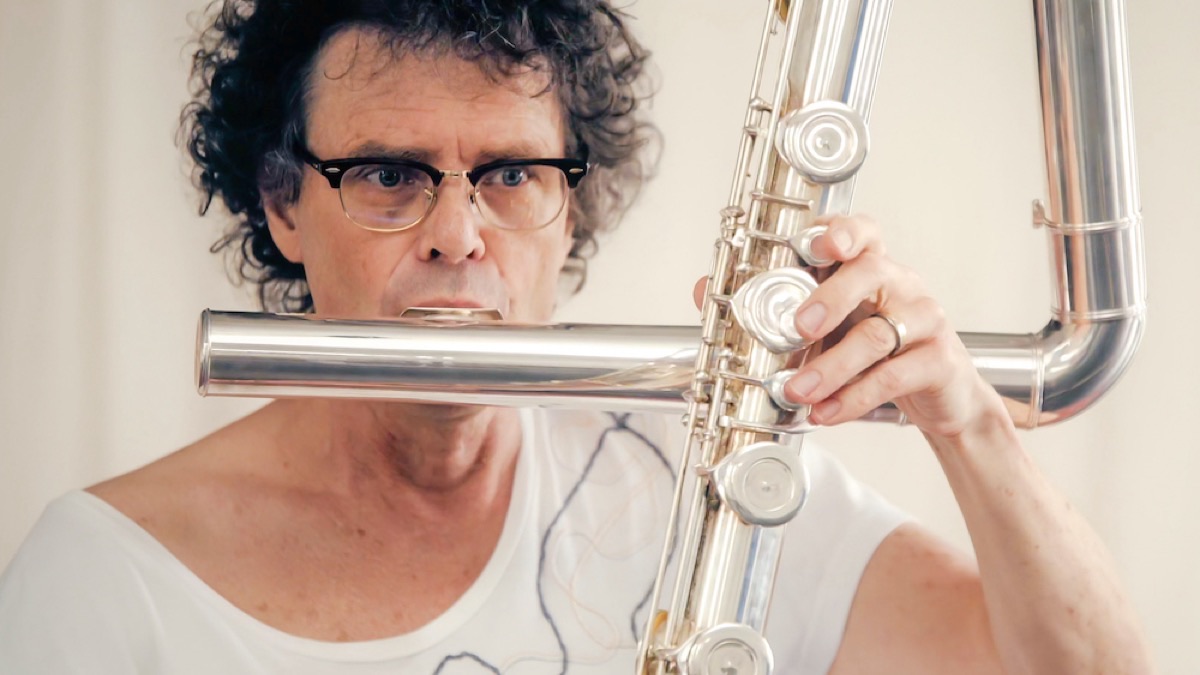
Finally, our conversation turned to his career as a leading voice for low flutes and his work as an influential educator.
RR: Beyond the rich cultural traditions you draw from, who were some of your key flutist (and non-flutist) influences as you were developing your own voice on the instrument?
AH: When I was a teenager in the 70s, I was very influenced by the merging of genres in groups like Weather Report, Return to Forever, Shakti, and Mahavishnu Orchestra. A key Swedish flute player was Björn J:son Lindh who played with very airy and rhythmic sounds and was very inspired by Arabian music. To mention a couple of flute players that come to mind, of course, Rahsaan Roland Kirk, who I understand was a role model for Ian Anderson. Joe Farrell’s flute playing on the early Chick Corea albums was also very formative for me. Later, the great bansuri master Hariprasad Chaurasia really inspired me. On saxophone, Wayne Shorter and Jan Garbarek were major influences who showed me that we can embrace the language of jazz but play it with our own dialect and aesthetic. These are some of my early influences, however I find new inspiration all the time. For me, the beauty with practicing music and an instrument is that I absorb new impulses continuously, and the development, movement and change just goes on, eternally.
RR: What first drew you to low flutes, and what are some of the practical, logistical challenges of making them your primary voice when touring?
AH: It started in 1986 when I saw the great Brazilian musician Hermeto Pascoal play a bass flute at a club here in Gothenburg. I had never seen one before. I bought one the next day, and that first instrument was with me for many years before I changed to a Kingma Three bass flute with three open holes. The contrabass flute, however, was a real turning point in my musical life. Eva Kingma brought one for me to try, and I played two notes and knew, “This is my instrument.” Its rhythmic and resonant possibilities, especially with looping, inspired me to compose in a new way and gave me the confidence to perform solo concerts. Despite the logistical challenges of touring with large, fragile instruments—negotiating with airlines, the risk of damage—the sound and the possibilities make it worth it for me.
RR: As the University of Gothenberg’s professor of musical performance/improvisation, what is your advice for the many classically trained flutists who admire your freedom? How do you recommend they begin their journey into improvisation?
AH: As I said earlier, I consider music a language. You and I have been improvising for hours now, just speaking together freely from a suite of questions and themes you composed. Improvisation is about reacting to the unexpected; the Latin word improvisus means “unforeseen.” If you can try to have that approach to your instrument as well, that’s a good starting point. Take a few notes and explore them. A good pedagogical exercise is to play a song you can sing but begin on a random note. You have to listen carefully and find the patterns on your instrument. This trains your musical intuition and helps make the flute truly become your voice.
For me, this is a mission as a pedagogue—to see that improvisation is an extra language you have, one you can use to communicate beyond words. We used the metaphor earlier: A person who only plays from a score is like someone who always speaks from a script. But as we all know, everyone speaks freely with their family or friends—we use our voices and language to communicate and improvise. This is what you can do with your instrument as well.
RR: Improvising, in its purest sense, just means playing without a score—playing whatever you feel like playing. Yes, you can get into jazz improvisation and all sorts of other things later, but the idea that someone says, “I can’t improvise”—all I’m actually saying by improvising is: play something that’s not written on the paper.
AH: Exactly. It’s about reacting to your environment and surroundings. As my friend Stephen Nachmanovitch writes in his book, The Art of Is, “to improvise, listen. You need nothing else.”
RR: You’ve performed at several NFA conventions, which is not a short trip from Sweden. What are your impressions of the conventions and your experiences performing for the American, and international, flute community?
AH: I started approaching the NFA when I saw the themes of the last few conventions—Beyond Borders, Flauta Mundi: Global Voices of the Flute, and this year’s Unity & Universal Oneness. These all resonate deeply with me, as my musical life has been about working in the borderland between genres. I must say, it’s super inspiring. I feel very welcomed into the international and the American flute community. It’s a big family of generous and beautiful people who contribute so much, not only musically but in terms of values we all need in society. I always leave filled with inspiration.
As our conversation concluded, I was left with a sense of profound respect for an artist who is not only a master of his instrument but also a deep thinker and a cultural bridge-builder. In his music, the lines between composition and improvisation, sorrow and hope, all dissolve. What remains is a singular, authentic voice that embodies the very theme, “Unity and Universal Oneness,” which framed the 2025 NFA Convention: He gives it a sound, and that sound is, above all, one of hope.
Anders Hagberg’s full discography is available on all major streaming services, including Tidal, Apple Music, and Spotify. For physical CDs, readers can checkNaxos Direct or contact Hagberg directly via email. The score for Circle No. 2 and other compositions are available physically from Svensk Musik (Swedish Music Information Centre); however, Hagberg notes that it is often easier to contact him directly for purchase.
Anders Hagberg: Selected Discography
Further Listening: Key Influences
Here are the key artists and albums Hagberg discussed as being formative to his musical development—a perfect listening guide for readers inspired by the conversation.
- Björn J:son Lindh: A pioneering Swedish flutist who inspired Hagberg with his airy, rhythmic, and world-music-influenced playing.
- Listen: Cous Cous
- Joe Farrell: Multi-instrumentalist whose flute playing on early Chick Corea albums was a major influence, along with his under-appreciated solo work.
- Hariprasad Chaurasia: The North Indian master of the Bansuri flute.
- Listen: Making Music
- Weather Report: The iconic fusion group, particularly the work of Joe Zawinul and Wayne Shorter.
- Listen: Tale Spinnin’
- Listen: Black Market
- Jan Garbarek: The seminal Norwegian saxophonist known for defining the “Nordic sound” in jazz.
- Listen: My Song (with Keith Jarrett)
- Focus: The Dutch progressive rock group noted for their advanced, suite-like compositions featuring flutist Thijs van Leer.
- Listen: Live At the Rainbow
- Pioneers of 70s Fusion: Groups that merged jazz, rock, and world music in groundbreaking ways.
- Listen: Mahavishnu Orchestra – Visions of the Emerald Beyond
- Listen: Shakti with John McLaughlin – Shakti
- Key Instrumentalists: Other major figures Anders mentioned as influences.
- Rahsaan Roland Kirk: Known for his incredible virtuosity and playing multiple instruments at once.
- Sonny Rollins: A foundational tenor saxophonist in the jazz tradition.
Sources
- Anders Hagberg’s Official Website
- University of Gothenburg: Anders Hagberg – flutes, soprano saxophone, composer, pedagogue.
- Paris Move: Anders Hagberg – With Hope Review
- Jazzfuel: Anders Hagberg | With Hope | October 3, 2025.
- UNESCO: Inuit drum dancing and singing
- Svenskt Visarkiv: The Swedish Polska