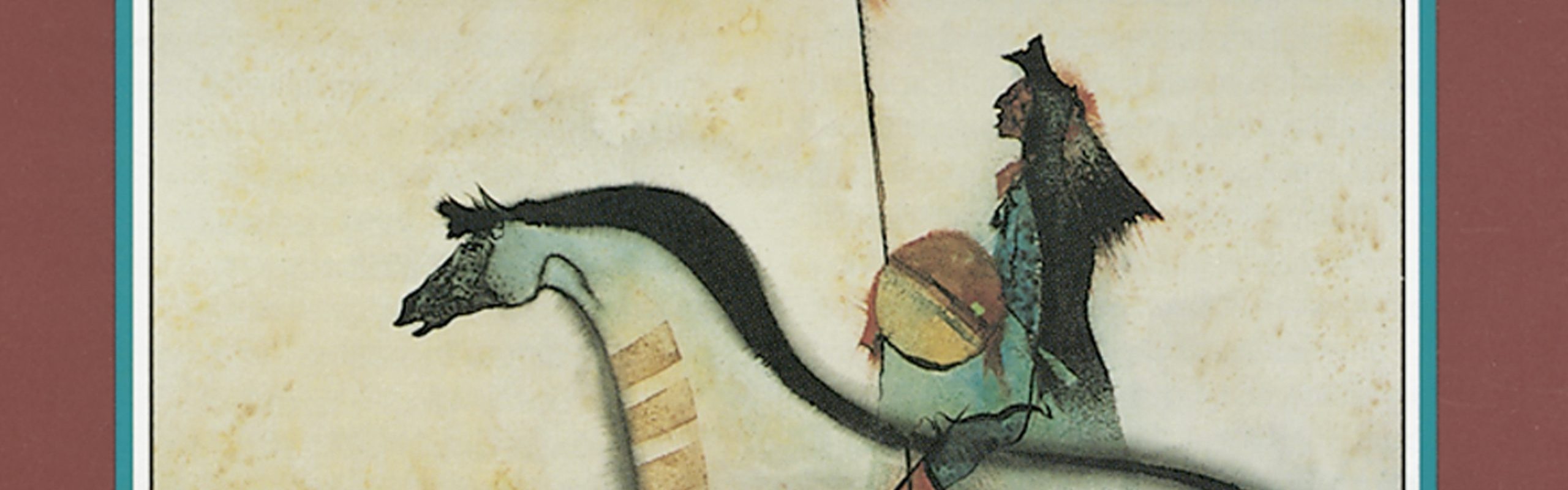

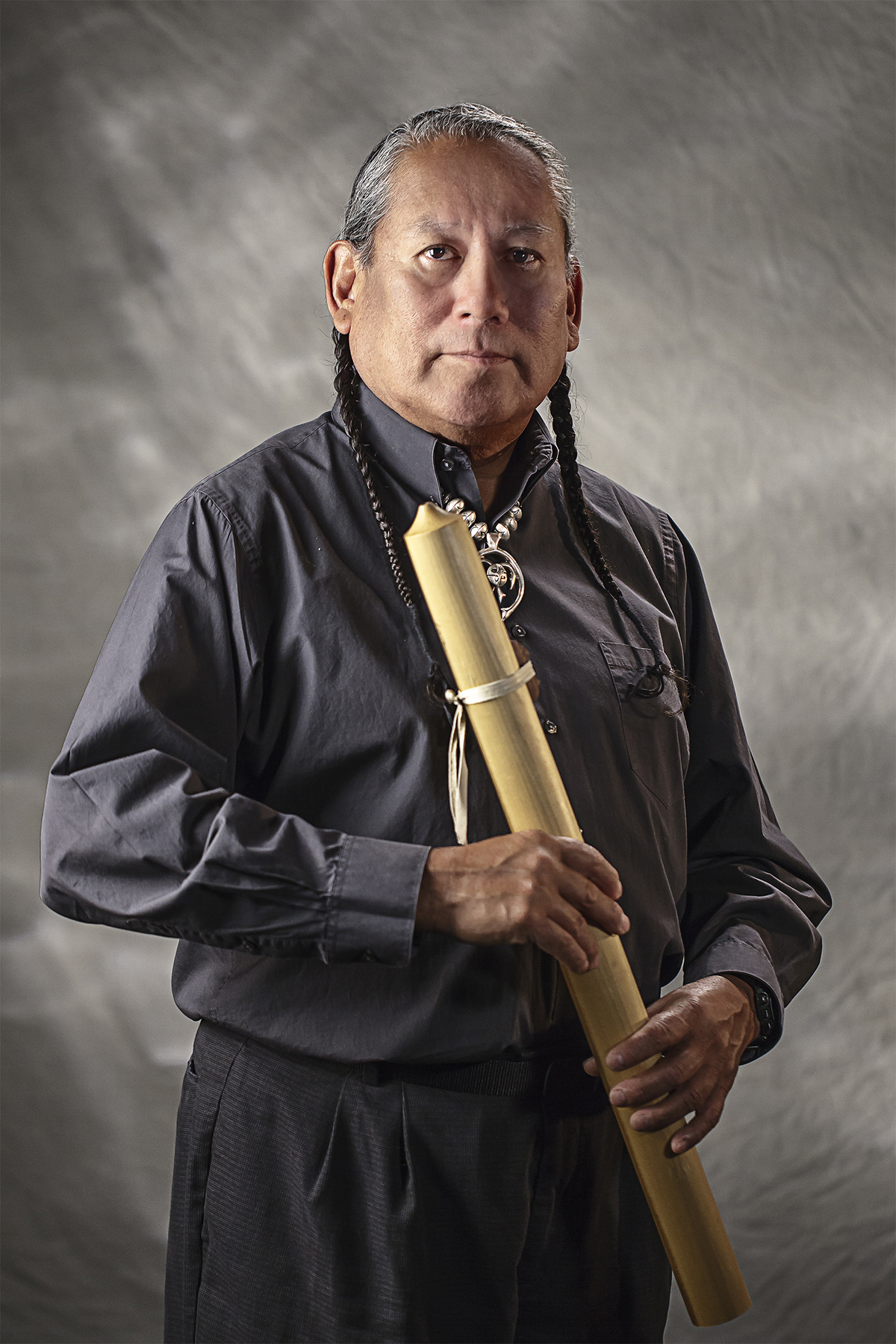
Composer James DeMars and Native American flutist R. Carlos Nakai’s collaborations have been a groundbreaking musical partnership that have brought new and exciting sounds to the world of music. Despite the challenges of combining their “two worlds,” they consistently pushed the boundaries of what was possible, creating beautiful music that blended those worlds seamlessly. It is perhaps sad to consider that the recently released Evensongs is the end of their journey together, yet that is the nature of journeys, is it not? The point is to arrive, and they most certainly did. And in doing so, they have left us all a legacy of wonderful music and perhaps a place from which to begin our own new journeys.
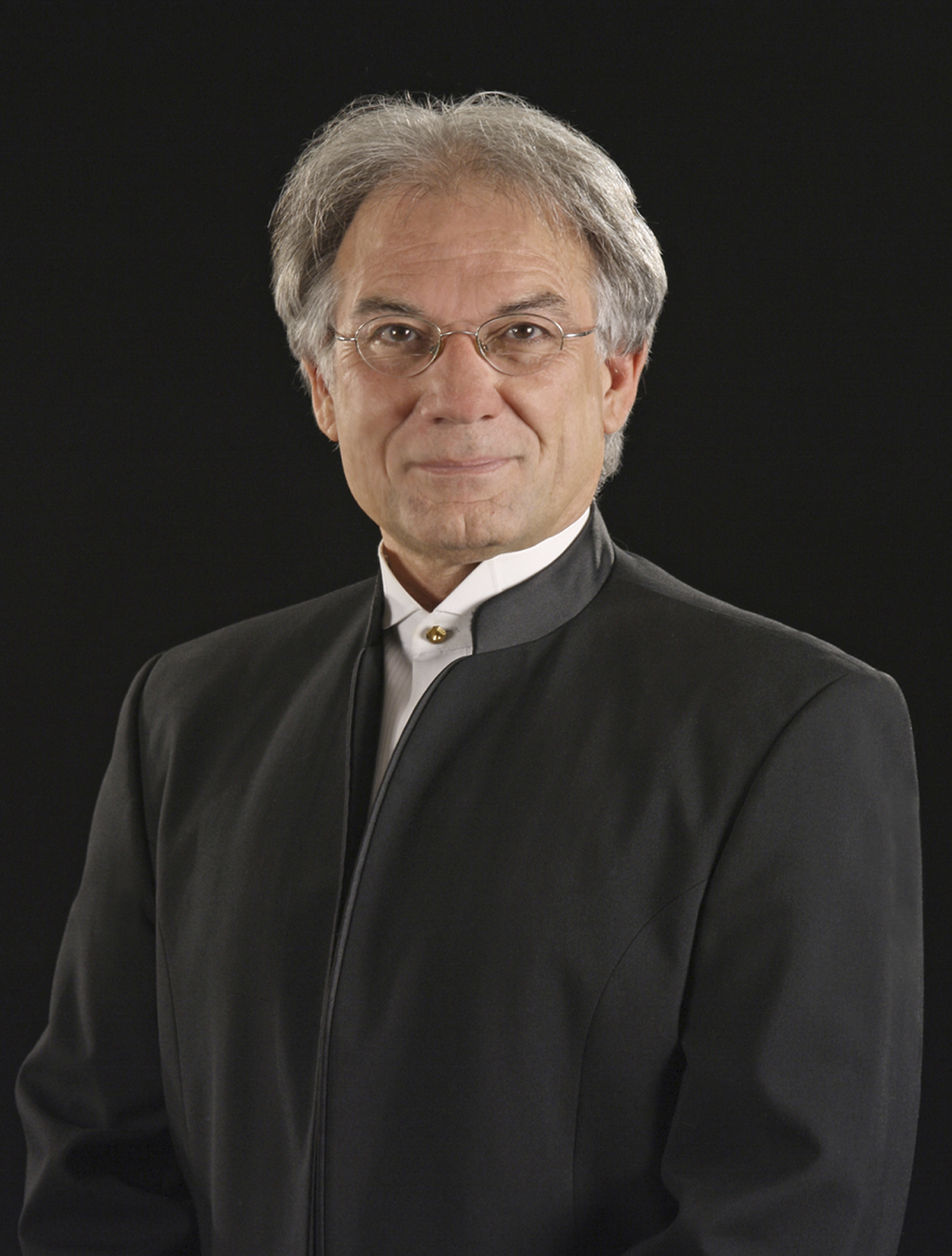
When 2023 Convention Program Chair Ali Ryerson asked me to interview DeMars about his many collaborations with Nakai (RC), I didn’t hesitate to say yes. DeMars was my friend, my graduate advisor, and one of my composition professors at Arizona State University back in the 1980s, shortly before he met RC.
Everything DeMars shared with me suggests how much he respects and values his friendship and collaboration with both RC and Canyon Records President Robert Doyle (Canyon Records has underwritten the 2023 NFA Convention appearances of both R. Carlos Nakai and Tony Duncan). Their 40-year relationship has resulted in some truly great music, as well as two Arizona Governor’s Arts Awards: one to DeMars (the first composer ever to be so honored) and one to RC. Also worthy of mention are RC’s 11 Grammy nominations and two gold records (one of which achieved platinum status, a remarkable feat for an indigenous performer on a small label).
This interview has been edited and condensed. The full discussion is available here.
Robert Rabinowitz: Tell me about meeting RC and the beginning of your collaborations. You, Joe Wytko, and Mark Sunkett formed the TOS ensemble at ASU a couple of years before I left and moved back to NYC. You and Mark played on the very first dance piece I had been commissioned to compose, Outside The Four Walls, in early 1983, and around that same time Joe had commissioned my piece for alto saxophone and eight voices (Echoes of Forever). Shortly after you formed TOS, I remember an early rehearsal where we played your piece This. In fact, I still have my copy of the music.
James DeMars: Yes, and in 1984 we did the recording with TOS of Desert Songs, and that was before I met RC. Robert Doyle had come to me and said that Canyon Records wanted to commission me to write a piece. Robert gave me a Native American flute and a recording of Ed Lee Natay [the Navajo singer who was Canyon Records’ first artist]. He’s a great singer—I liked his album very much. So that’s what I had, and I started working.
My time with RC when I first met him was very congenial. We were both young, early in our careers. I went to see RC, and one of the critical things that occurred in our first meeting, when we were talking about Spirit Horses [the first concerto ever composed for Native American flute], was that he held up the [cedar] flute and said, “I don’t want it to be another silver bracelet.” I think what he meant was he didn’t want it to be trite. He wanted to create music that was new and different.
RR: How did you deal with the challenge of intonation between the Native American flute and orchestral instruments?
JD: They stayed pretty close to pitch, and one of the reasons is that in the premiere I had a synthesizer in the background (that part still exists if people want it). The synthesizer was a fixed-pitch instrument, and I tuned the orchestra to it so that an ostinato pedal tone could be laid down and RC could play all of that expressive music above it.
In some ways music has become sterilized. We don’t use intonation like other cultures. I had an Egyptian student that was trying to teach me to sing in quarter tones. I couldn’t do it. There’s a lot out there to do with intonation, and there’s a lot to be done with independent rhythms and multiple layers of rhythms.
RR: You said that RC didn’t want the piece to be another silver bracelet?
JD: Yes, my impression was that he was concerned about the Navajo culture being reduced to a static past where people think, “There’s an Indian and he’ll have a silver bracelet I can buy.” RC wanted it to be a living, vital thing, and he’s worked for that. His career has been a wild one. He’s all over the globe. Good for him.
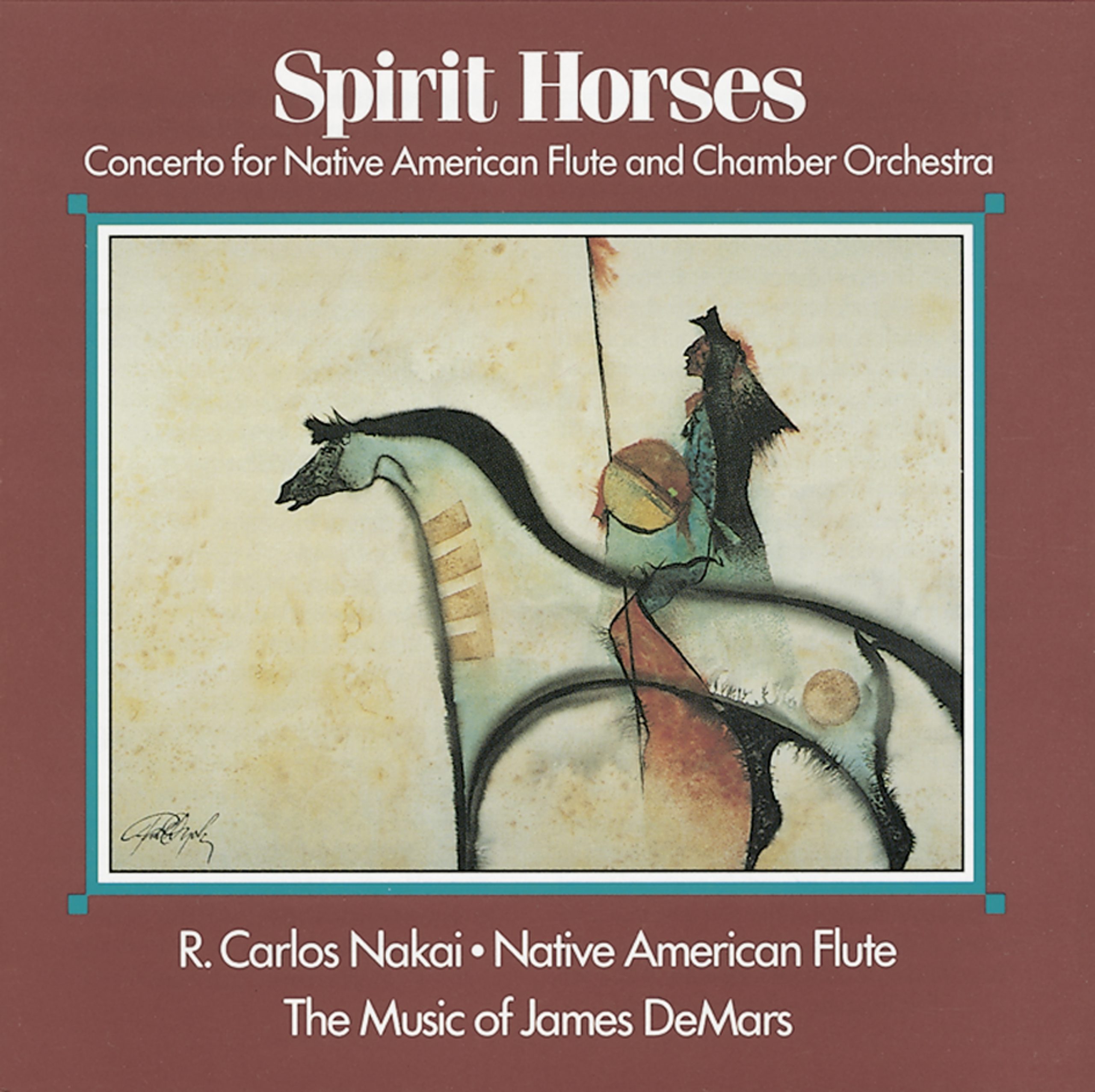
RR: You used pedal tones in Spirit Horses. Were pedal tones used in your other collaborations to give him that kind of freedom, or was it different all the time?
JD: It creeps into the other pieces too, along with other elements, such as African drums. I like those exotic orchestras. The hardest thing is the balance of sound. For example, Two World Concerto was quite different. With any concerto you have those moments when you take the orchestra away to hear the soloist for a while, so we had those spots for RC. In that concerto, the most popular movement by far, which now has many different arrangements, is “Lake That Speaks.”
RR: Where does the title “Lake That Speaks” come from?
JD: The French are the ones that first went into Minnesota, where I’m from. Lac qui Parle is a lake located in western Minnesota, and that means “lake that speaks.” On one of my trips back to visit, I was driving through there and I thought, that’s a very cool thing. The piece is quite impressionistic and it’s fun. I’ve always liked the part when the orchestra returns with bowed crotales and high harmonics and it feels like it just floats. Then the flute comes in—it’s a nice moment.
That movement has extensive chromatics for the Native American flute, which I worked out pretty much by the convenience of the fingers because one of the nice things about that flute is you can alter any pitch by how you place your fingers⎯there’s not just one fingering for the notes. You can get them a variety of ways and with slightly different intonations. I found that there’s a little trick that allows you to move to a chromatic half step and back; I just played with that for a while.
RR: I got my own Native American flute from Ken Light of Amon Olorin Flutes. [RC and Light collaborated on the design of Light’s flutes.]
JD: Is yours in F-sharp? I think this is important to know; RC’s favorite flute is the F-sharp, and the notation he prefers is in F-sharp, so much of what I write is in F-sharp. There’s a fundamental pentatonic that’s kind of built into this flute, but as people learn to play it, they expand what’s available. The “money” notes—the solid notes in that flute—are usually the pentatonics, and a lot of melodies are pentatonic. Now, here’s the deal: Because RC was often playing in F-sharp, then with every piece that I wrote, especially a long piece like a concerto, there’s a point you want to get out of that F-sharp key somehow.
In the concerto, he starts with a G flute, switches to an F-sharp flute, goes back to the G. I did the same thing in the piece Spirit Horses. It would go back and forth between the two flutes and almost everything I’ve written, except the most recent piece, is for either the F-sharp or G flutes.
RR: I can’t say that F-sharp is necessarily the favorite key of most silver flute players.
JD: That’s an issue, too. When I do transcriptions, I usually transpose up a half step. There’s a version of Colors Fall for cedar flute in G. I think originally it was transcribed for violin and flute. Another performer preferred it for viola and cedar flute.
RR: Tell me how you came up with the title Colors Fall.
JD: My wife was visiting family in Iowa and I was driving to see her. It was a long drive and at the time the fires in Yellowstone were happening. I remember I was looking to the west as I was driving south, and I remember seeing the haze hang in the air, and I started thinking about some music I had to write, and I kept thinking about it and looking at the haze out the window and memorizing it so that when I got there, I could write it down. And that became Colors Fall.
In writing a piece of music, it’s important to have a sense of a mood or an atmosphere, a frame of mind. You can call it a variety of things. It’s the same thing that you get when you’re reading a book. You kind of get into the mentality and sensation of the moment.
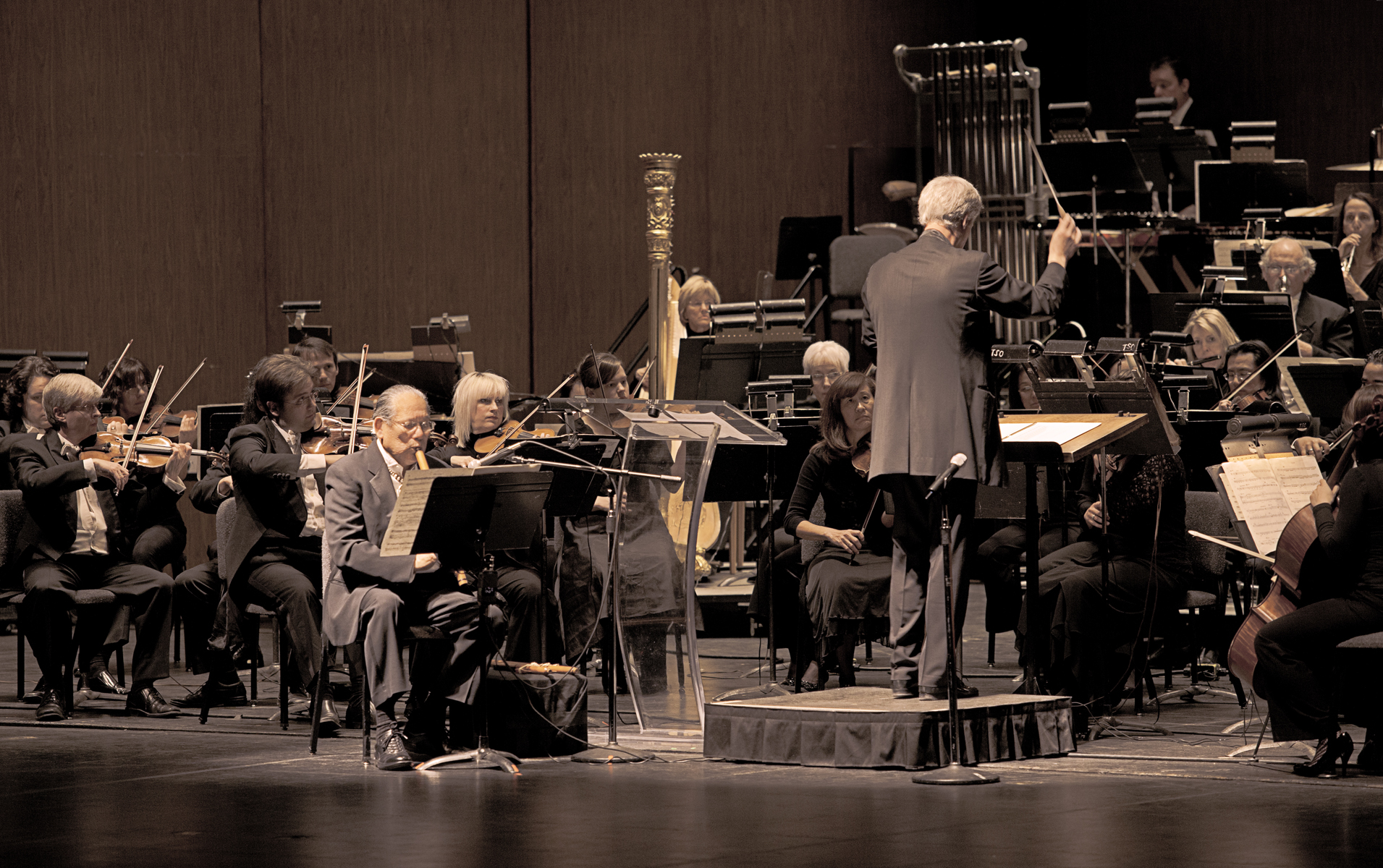
RR: Let’s touch on the book you co-authored with RC, The Art of The Native American Flute.
JD: I tried to incorporate the looseness of the rhythm of the flute, because the only time that it really sounds bad is when it’s locked into Franconian music notation, where we tap our foot and keep the beat, and that’s not the nature of the instrument. In the book, I used notation that was akin to what Olivier Messiaen uses. I was always looking at ways to incorporate, as well as teach, different levels of rhythm and levels of control. That’s what I use in all my music. I would loosen it up in certain areas.
RR: The last time the NFA held their convention in Phoenix was 1998, when they commissioned your piece Big Two-Hearted River, a concerto for alto flute performed by Eric Hoover and members of the Phoenix Symphony Orchestra with you conducting.
JD: One of my favorite writers, for better or worse, is Ernest Hemingway. I am just struck by how he can establish a mood so strongly. One of his short stories that I’d always enjoyed is called Big Two-Hearted River.
Two Hearted River is a river in northern Michigan. Hemingway’s story recalls a person going home after being in the war and returning to the places he knew as a child, now reflecting on it after the experiences that he’s been through. It’s a very moody and ultimately complex short story. The piece is itself moody. I still have a fondness for it. I think it captures something, a certain moment.
Crow Wing [on the album Native Tapestry] is the title of the Minnesota River my recently departed father grew up on. These are places where I grew up.
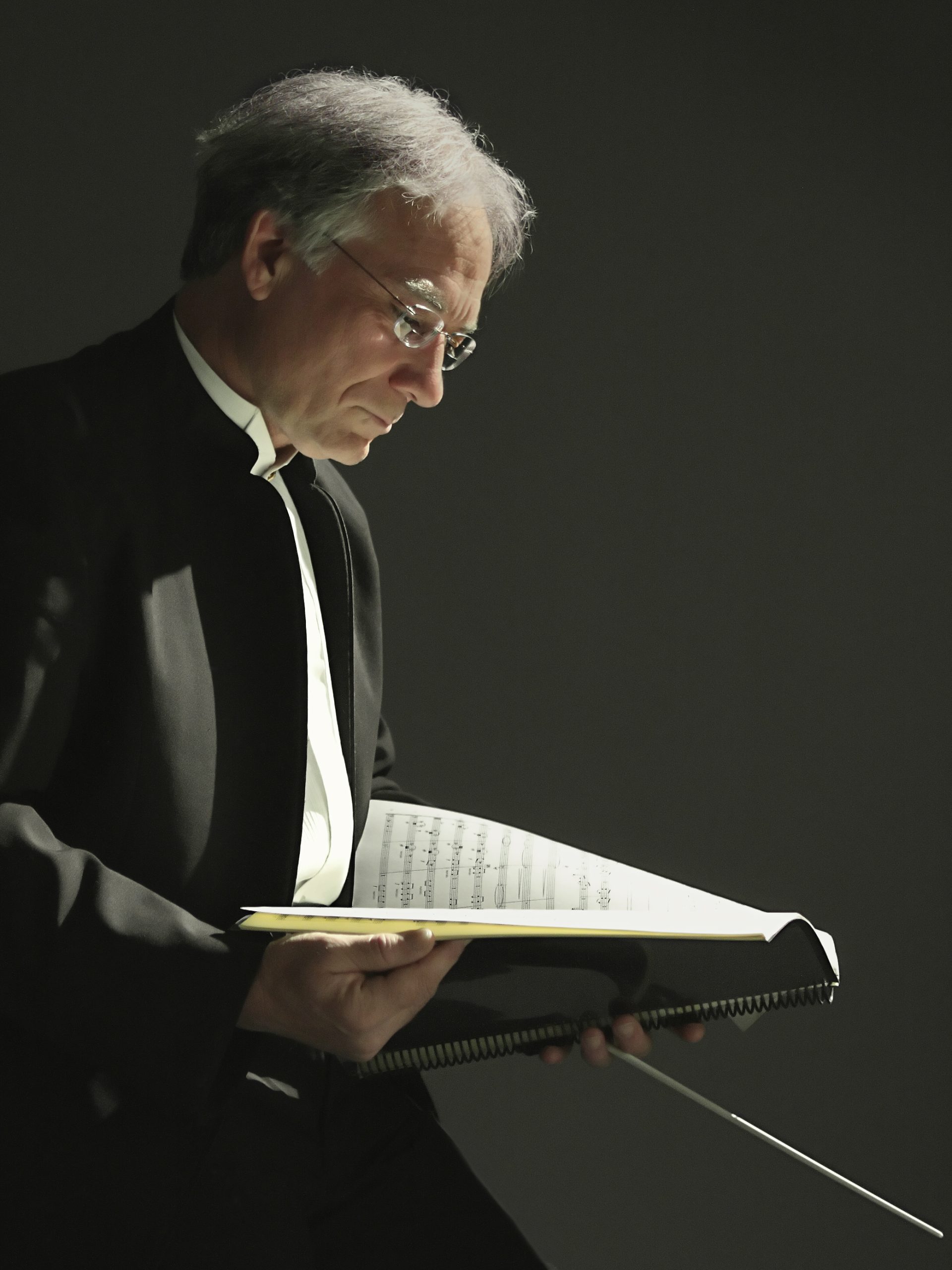
RR: On the idea of the mood/atmosphere of a piece being important, perhaps we could talk a bit more about the album Spirit Horses, specifically Premonitions of Christopher Columbus.
JD: Premonitions of Christopher Columbus is a reworking of an earlier piece of mine. Of course, the horrors of Columbus are well known, but it closes with an optimism for hope of, I guess, mutuality. It was very interesting what RC brought to that piece [compared to the earlier version], and his contribution was critically important because the piece itself is like a voyage and an arrival in a new world. There must be no denying the brutality brought by Columbus; it must be remembered, but RC made a decision to move beyond the past, beyond fostering generational hatred, and engage in an optimism for the possibilities of the uniquely Western multicultural reality into which we have been born. With RC, the arrival in the new world is mutual engagement and one of hope, a positive sense as it transitions.
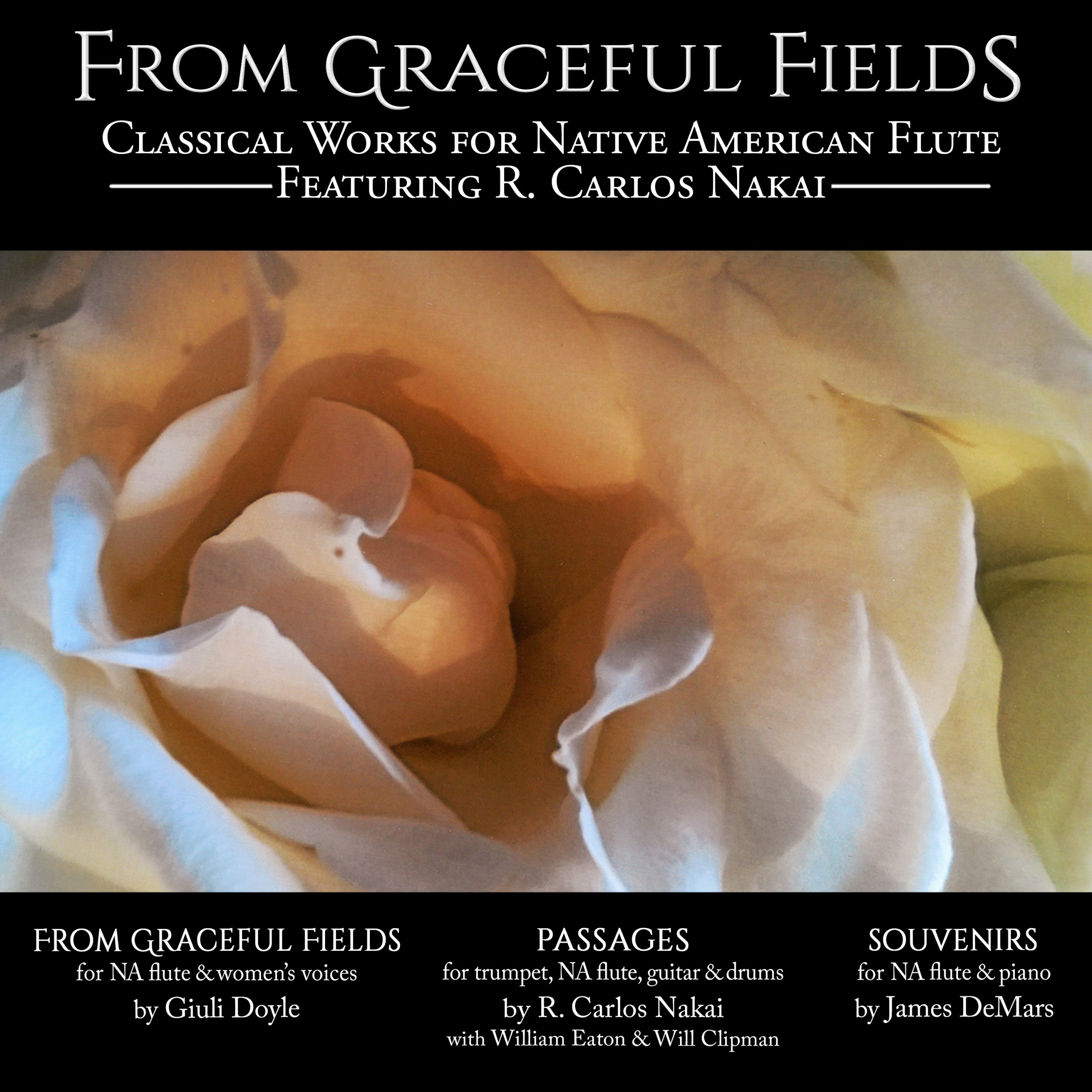
JD: Growing up in Minnesota, my heritage and my wife’s is French-Canadian. Evensongs (Souvenirs d’été) [“summer memories”] has two titles, and one is not a translation of the other. [The album’s titular work] From Graceful Fields is by Giuli Doyle and is one of the nicest pieces I’ve heard. It’s for women’s voices and Native American flute, and they worked that piece until they got it right.
RR: These are your most recent pieces and the last collaborations between yourself and RC and Robert Doyle and Canyon Records?
JD: The works are really a gift from Canyon Records, a very thoughtful opportunity for RC and I to conclude our collaborations. It was a joy and a pleasure. Robert and RC had decided it was time to wrap things up, and I agree. Robert is one of my best friends. He is a very hard worker and a remarkable individual. I can’t say enough good things about him and about the many projects we’ve collaborated on.
RR: Any advice for flutists wanting to play Native American flute or any non-Western flute with different tuning/intonation, along with other instruments in “standard” tuning?
JD: Learn to play the instrument well and to your liking. Establish your own unique character before joining other instruments. Then carefully check your tuning so you know what to expect when playing in an ensemble. If intonation and rhythm conform to Western standards, then the instrument is pretty much the same as a recorder and has lost its character.
RR: Any advice for composers?
JD: It can work well, but unisons can be harsh—some composers may want this, of course—but I felt more comfortable avoiding unisons and octaves or would add dissonance to the accompaniment⎯for example, adding a half step to a piano chord if a unison with the flute was needed. Also, the third of a triad is a variable for many instruments other than keyboards, so I tended to use an open fifth and let the flute play the third; this way we could enjoy the bending or irregularities of intonation.
I also try to avoid having the flute play in a strict rhythm. I tried to avoid the endless drones and tedium of the early New Age music by incorporating sections of faster rhythms that used asymmetric meters while the flute played a solo line in a relatively free rhythm. Near the end of the solo, the ensemble would have a short repetitive “vamp” where the conductor could hold the orchestra before cueing the next section.
In highly complicated situations like the opera I wrote [Our Lady of Guadalupe], I provided a cue line in the parts for RC and others, as well as having prompters in the pit orchestra.
RR: Any advice for flutists who might want to play any of your pieces, like Colors Fall, where one flute is silver and the other is Native American?
JD: Spend time with the Native American flute and learn the subtleties; if you are playing the accompanying part, be flexible.
RR: What do you think most composers would want a musician to consider before playing one of their pieces?
JD: I hope they would work on the music long enough to make real music of it; the score is just the tool we use to find and share the musical experience.
Want to know more? Here are some links to get you started:
jamesdemars.net
rcarlosnakai.com
canyonrecords.com
Recordings and Videos:
Desert Songs
Spirit Horses (Canyon Records, CR-7014)
• This recording combines classical, ethnic, and jazz elements and presents the haunting sound of the flute and Native American song forms in new and compelling ways. Includes the first concerto composed for Native American flute: Spirit Horses. James DeMars, R.C. Nakai, Mark Sunkett (African percussion), Michael Hester (alto saxophone), Xiaozhong “Alex” Zheng (cello), Eric Hoover (silver flute), Robert Kaplan (synthesizer)
Native Tapestry (Canyon Records, CR-7015)
Two World Concerto (Canyon Records, CR-7016)
Two World Concerto (Video) 2017 Performance by NKU Philharmonic Orchestra, R. Carlos Nakai cedar flute, Dr. Amy Gillingham conducting
Lake That Speaks from Two World Concerto
Cello and flute version of Lake That Speaks (Video): Dawn Avery & R. Carlos Nakai
Guadalupe, Our Lady of the Roses featuring R. Carlos Nakai, Isola Jones, and Robert Breault
• Recorded live at the world premiere May 16 & 17, 2008.
• On YouTube: Excerpt
Sabar Concerto for Orchestra and African Drum Ensemble
• ASU Symphony conducted by James DeMars featuring a Senegalese drum ensemble led by Mark Sunkett; the work was commissioned by the Phoenix Symphony Orchestra in 2001; the premiere performance was conducted by Robert Moody.
From Graceful Fields (Canyon Records, CR-7103)
• Evensongs is the third piece on the album and comprises movements “Silence of Past Days (Silence des jours passés)” and “Child’s Game (Jeu d’enfant).”
Bowers/DeMars/Stockhausen by Zeitgeist
• This album contains the first “pre-Nakai” version of Premonitions of Christopher Columbus, which was premiered by Zeitgeist at the Walker Art Center in Minneapolis in October 1979.
Canyon Trilogy reached Platinum in 2014, (over 1 million units sold), the first ever for a Native American artist performing traditional solo flute music.
Earth Spirit (Second Gold Record for Native American music)
Ed Lee Natay, Navajo Singer
Echoes for Forever by Robert Rabinowitz
Outside The Four Walls by Robert Rabinowitz
Duplex by Zeitgeist
THIS, referenced at the beginning of this article as one of the first pieces rehearsed by TOS, is described on the album as “(a contracrostipunctus) for Frederic Rzewski and Douglas Hofstadter.”
Scores:
Colors Fall for cedar flute in G and silver flute (or violin)
Colors Fall for cedar flute in F-sharp and silver flute
Colors Fall for cedar flute in G and viola
Crow Wing for cedar flute in G and E-flat saxophone
Big Two-Hearted River (Concerto for Flute and Chamber Orchestra)
Sabar: Concerto for Orchestra and African Drum Ensemble (Orchestral Score)
Other Orchestral Scores
Publications:
The Art of The Native American Flute by R. Carlos Nakai and James DeMars, with additional material by David P. McAllester and Ken Light
Additional Information:
One World, Many Voices: The Artistry of Canyon Records
Canyon Records label is more than “empty words”
Valley organizations team up to support Native American caregivers through music
R. Carlos Nakai will be making multiple appearances at the NFA’s 2023 convention in Phoenix, including during the Friday Night Gala, in the ‘Zona Arts Space on Saturday at 2:30 p.m., and the Sunday Gala. Some of his instruments will also be on view in the Native American Flutes collection room.
All photos courtesy Robert Doyle.