
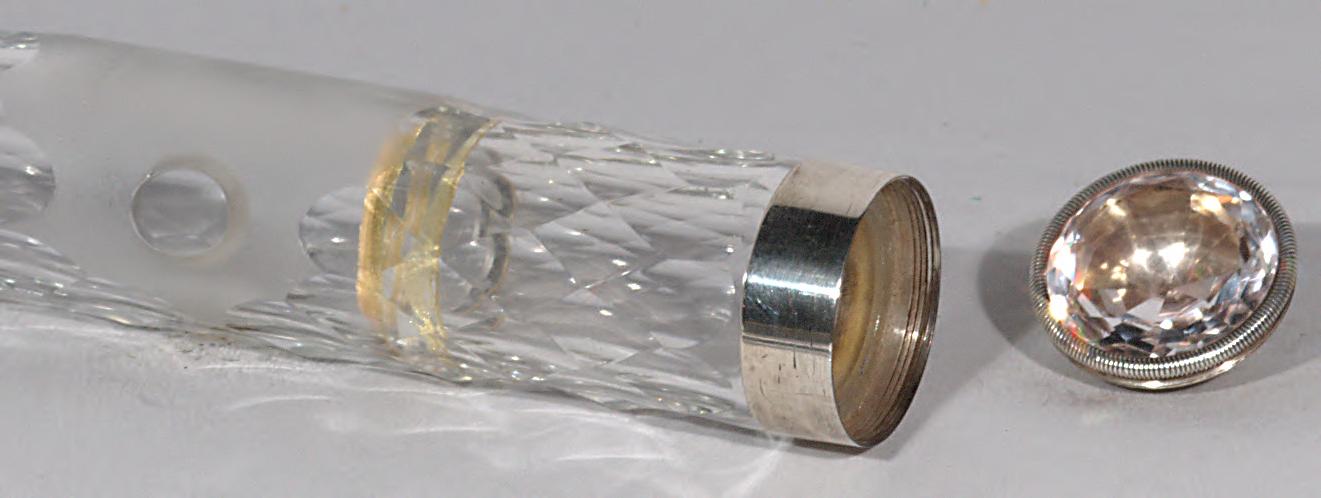


Claude Laurent’s exquisite glass flutes, symbols of 19th-century innovation and luxury, famously gifted to world leaders, remain among the most remarkable instruments in flute-making history. Their beauty, technical design, and historical significance continue to captivate musicians, historians, and collectors. To explore the deeper aspects of these unique artifacts, I spoke with Carol Lynn Ward-Bamford, curator of musical instruments at the Library of Congress, discussing her research and discoveries.
A leading authority on historical musical instruments, Ward-Bamford’s responsibilities include curating the renowned Dayton C. Miller Collection, with which we’re partnering on this continuing Flutist Quarterly series. She collaborates with scientists, musicians, and historians to analyze rare musical instruments, including Laurent’s glass flutes, providing groundbreaking insights into instrument composition, craftsmanship, and historical significance.
The Allure of Glass Flutes
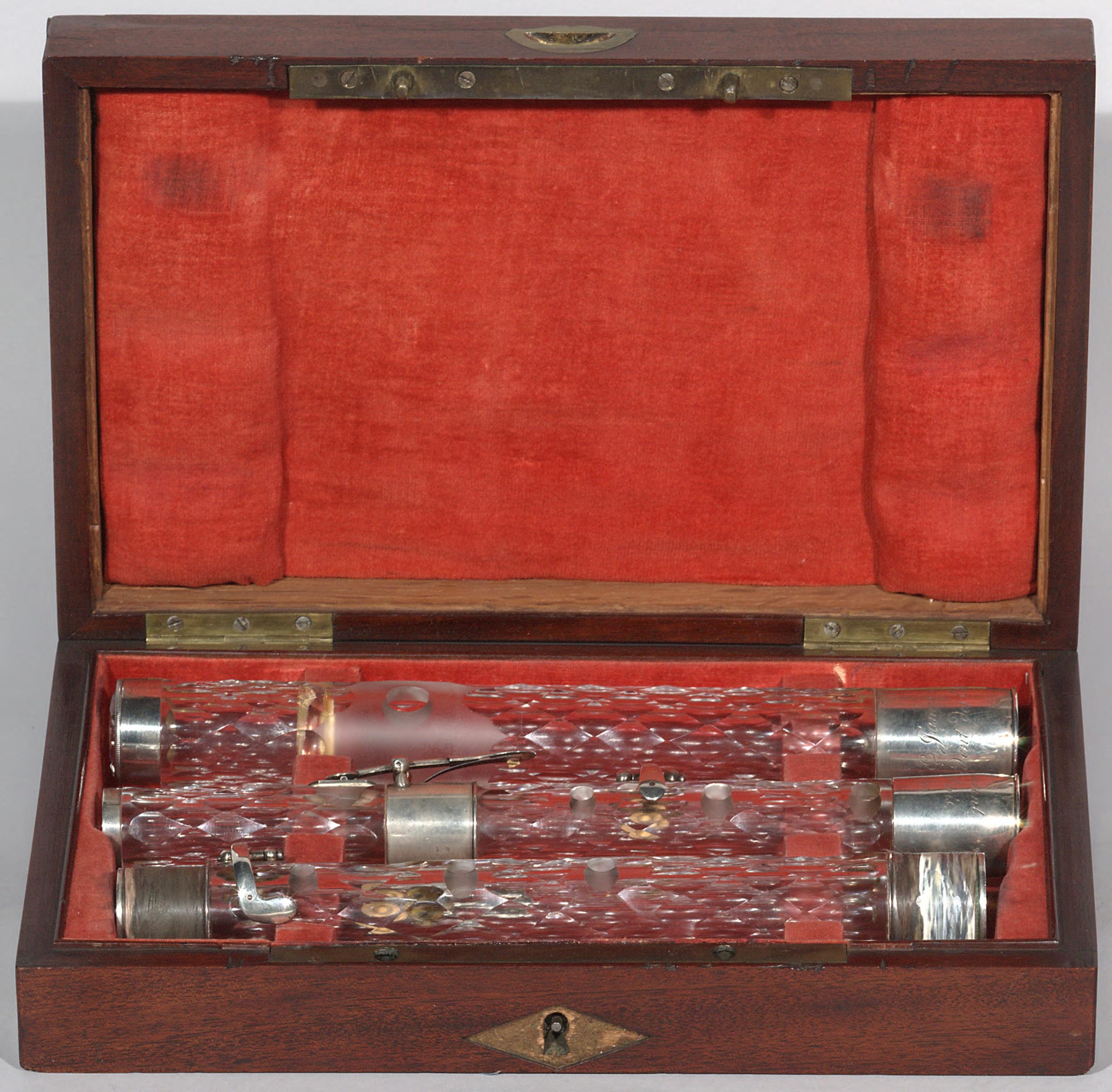
In the early 19th century, the flute was undergoing significant transformations. Innovations in materials, key mechanisms, and bore design were changing how the instrument was played and heard. Amidst this experimentation Claude Laurent, a clockmaker from France, began making flutes from a remarkable material and with an innovative key design.
Using a microscope and a portable X-ray fluorescence spectrometer (XRF), Ward-Bamford and Research Chemist Lynn Brostoff made the startling discovery that most of the DCM Laurent flutes are not made of “crystal glass” (i.e., leaded glass, as has been commonly assumed) but of an unstable type of alkali silicate glass called potash glass. This finding was surprising because Laurent was awarded a patent in 1806 for “flûte en cristal,” and there is no known mention of the maker selling glass instruments made of any other type of glass material. The finding is significant because potash glass is well known to be prone to instability and clearly is associated with deterioration (from glassatrisk.com).
His creations quickly gained notoriety, not only for their striking beauty but also for the scientific ingenuity behind their construction. While they never replaced wooden or metal flutes in mainstream performance, Laurent’s instruments became treasured possessions of aristocrats and statesmen, and today they hold a unique place in museums and collections around the world.
Robert Rabinowitz: How did you first become interested in the Dayton C. Miller Collection and, specifically, Laurent’s glass flutes?
Carol Lynn Ward-Bamford: My introduction to the Dayton C. Miller Collection was a fortunate coincidence. As a graduate student studying library science, I had the opportunity to create an online catalog of the collection. When I first encountered these flutes in Miller’s archives, I was astounded. The very idea of a glass flute seemed almost impossible to me. Miller had painstakingly collected every variant of Laurent’s glass flutes that he could find. The flutes’ craftsmanship and design were so unique, and I couldn’t help but be drawn to them.
These flutes weren’t just musical instruments to Miller—they were objects of beauty, symbols of luxury, and testaments to technical achievement. The more I studied them, the more I realized how essential these instruments were to understanding the cultural and scientific advances of the time.
RR: What was the most surprising discovery you made studying these flutes?
CLWB: One of the most unexpected discoveries occurred when we analyzed the glass material itself. When I first opened the drawer to examine the Laurent flutes, I was alarmed to see that they were no longer the clear, brilliant crystal I had expected. They had turned cloudy with age, and I initially thought I might be handling them incorrectly. I reached out to our preservation division and sought the expertise and collaboration of a scientist (Lynn Brostoff). This led to an in-depth chemical study that revealed some surprising findings.
The first major surprise was that these flutes were not made of crystal as I had believed. Only the Madison flute—one of Laurent’s most famous pieces—contained lead, making it a true crystal flute. The other flutes, while mimicking the appearance of crystal, were actually made of potash glass, a material that was less expensive and more durable than leaded crystal. This discovery added a new layer to the flutes’ history and revealed just how cleverly Laurent had marketed his creations.
RR: How did scientific testing reveal this information?
CLWB: The testing process was incredibly intricate. We used non-invasive techniques like microscopy and chemical analysis to study the flutes without damaging them. This allowed us to closely examine the glass’s composition and texture. Through these methods, we found that most of the Laurent flutes were made from potash glass, which, while visually similar to crystal, is chemically distinct. Potash glass doesn’t have the same lead content as true crystal, and as a result, it’s much more susceptible to deterioration due to environmental changes.
Interestingly, the cloudiness that appeared over time in many of the flutes could be attributed to the lack of lead, which would normally help preserve the glass’s clarity. Without lead, the glass was more vulnerable to the effects of humidity and temperature. This was one of the critical pieces of information we were able to uncover through our tests.
RR: Could you elaborate more on the concept of luxury and the role it played in Laurent’s work?
CLWB: Absolutely. The idea of luxury is deeply embedded in the history of Laurent’s glass flutes. These instruments were not just tools for making music—they were symbols of status and sophistication. In the early 19th century, the elite sought out objects that demonstrated wealth, taste, and exclusivity. The fact that Laurent’s flutes were made of glass, a material often associated with opulence, played a significant role in their appeal.
But Laurent also understood that luxury wasn’t just about the appearance of the instrument—it was about the experience it offered. Glass, being a material both beautiful and fragile, conveyed a sense of rarity. A glass flute wasn’t something you’d see on the concert stage every day. It was a conversation piece, a treasure to be displayed and admired. And, of course, the fact that these flutes were custom made for high-ranking officials—like the King of Austria—only added to their allure.
RR: You mentioned the Madison flute before. Why is that flute so significant?
CLWB: The Madison flute is perhaps one of the most famous of Laurent’s creations in the Miller Collection. It’s not only historically significant, but it also carries a rich backstory. The flute was presented to President James Madison in 1813 and is one of the few surviving Laurent glass flutes made with true leaded crystal. The Madison flute is often cited as one of the finest examples of Laurent’s craftsmanship, and it has a unique place in American history due to its association with a U.S. president.
The flute’s crystal composition, its unique design, and the fact that it was a presidential gift make it a fascinating artifact. It’s often referred to as the “Madison Flute” because of its connection to President Madison, but there’s also an ongoing mystery surrounding its origins. There’s still much we don’t know about the exact circumstances under which it was made, and that’s part of what makes studying these flutes so exciting.
RR: In addition to the Madison flute, how else did Laurent’s flutes play a role in diplomacy and international relations?
CLWB: Laurent’s flutes were often more than just musical instruments; they were carefully crafted gifts meant to symbolize the relationships between France and other nations. These flutes were given to royalty, aristocrats, and important political figures, particularly during the reign of Napoleon and afterward. The flutes represented the luxury and artistic achievement of France, and they were highly coveted by the European elite.
One particularly fascinating story involves the gift of a glass flute to the King of Austria. This flute was created as a symbol of goodwill between Laurent and the Austrian court. The concept of exchanging such valuable items was common in diplomatic circles at the time, but the glass flute added a personal touch—it was an item not just of monetary value but also of artistic achievement. Laurent knew how to use his flutes as a way to solidify relationships and gain prestige.
RR: You mentioned the importance of collaboration with others at the Library of Congress. Could you tell us more about how the flutes are studied and preserved?
CLWB: The study and preservation of these glass flutes is a highly collaborative process. The Library of Congress is home to experts in many different fields, from preservation specialists to curators and chemists. When we study items in our collection, we have to take into account many factors—temperature, humidity, light exposure, and how different materials react over time.
For the Laurent flutes, preservation is especially tricky because of the glass. While glass is a beautiful material, it’s also very vulnerable. Over time, glass can become brittle, and environmental changes can cause it to cloud or crack. We use specialized equipment and techniques, like microscopy and chemical analysis, to study these flutes without causing any harm to them. This means working closely with conservators to ensure we’re maintaining the integrity of the instruments while learning as much as possible about their history and construction.
Collaboration also extends to our research team. We regularly work with outside experts to conduct technical studies, and we consult with musicologists, chemists, and historians to get a full picture of the flutes’ significance. The goal is not just to preserve the instruments but to continue discovering new information about them.
RR: Temperature and humidity seem to have a significant effect on the flutes. How does that influence their preservation?
CLWB: Yes, temperature and humidity play a major role in preserving these flutes. Glass, especially glass that’s not leaded, is highly susceptible to changes in environmental conditions. When there are fluctuations in temperature or humidity, the material can expand and contract. This can cause the glass to crack, become cloudy, or lose its original luster.
Humidity is particularly problematic for these glass flutes. As moisture in the air interacts with the potash glass, it can lead to the formation of deposits on the surface, which causes the cloudiness that we see today in many of the instruments. This was one of the major challenges we faced when we first began studying them. However, with careful climate control and the use of specialized storage conditions, we can slow down the deterioration process and ensure that these instruments remain preserved for future generations.
RR: What role did Laurent’s 1806 patent play in his flutes?
CLWB: Laurent’s 1806 patent is a critical piece of the puzzle when studying his glass flutes. In the patent, Laurent outlined his method for creating flutes made from glass. He was incredibly innovative in his approach, and the patent demonstrated his understanding of both the scientific and artistic aspects of flute-making.
The most important aspect of the patent was his design for the bore of the flute, which was crucial to the instrument’s playability. Laurent’s flutes were carefully calibrated to ensure they produced a sound that was as good as, or even better than, wooden or metal flutes. He understood that creating a glass flute wasn’t just about the appearance; the instrument also had to perform well musically.
While the patent itself was significant, the materials he used were just as important. Laurent was very careful about the type of glass he used for his flutes, as the material had to be both durable and acoustically suitable. His decision to use potash glass for most of his flutes was, in many ways, a practical one—it was less expensive and easier to work with in flute manufacture.
RR: How do Laurent’s glass flutes compare to other instruments from the same era?
CLWB: Laurent’s glass flutes were in a category of their own. During the early 19th century, the flute underwent significant transformations, but most flutemakers were focused on refining the traditional wooden design. The introduction of glass was a bold departure from the norm, and it marked Laurent as a true innovator.
Compared to other instruments of the period, Laurent’s flutes stood out for their luxurious materials and meticulous craftsmanship. While many other flutes were made of wood or metal, Laurent’s glass flutes combined beauty with a new type of technical expertise. The decision to use glass was a risky one, but it gave the instruments a unique sound and aesthetic.
RR: What makes the study of Laurent’s glass flutes important for modern musicians and collectors?
CLWB: The study of Laurent’s glass flutes gives us a window into the past, allowing us to understand not just the history of the flute but also the history of craftsmanship, material science, and the cultural significance of luxury goods. For modern musicians, these instruments are not just relics—they represent a moment of creativity and ingenuity that shaped the flute world we know today.
For collectors, the value of these flutes is artistic and historical. The rarity and beauty of the instruments, combined with the fascinating stories behind them, make them highly sought after. But beyond their monetary value, these flutes remind us of the incredible possibilities that emerge when musicians, scientists, and artists work together.
RR: How did the Madison flute become a focal point in your research?
CLWB: The Madison flute is one of the most significant pieces in the collection. It’s a piece of history, not just because it’s a rare Laurent flute, but because of its connection to the United States. It’s widely known as James Madison’s crystal flute, which makes it incredibly important in both American and international contexts.
The flute’s history and ownership by President Madison make it a symbol of diplomacy, national identity, and the rich cultural exchange between France and the United States during the early 19th century. As I began researching its origins, I realized just how much the story of this particular flute could tell us about Laurent’s role in global diplomacy and about the craftsmanship and technological challenges involved in making such an instrument.
Claude Laurent himself originally presented the flute to President Madison in 1813, and it remained in the Madison family for many years. When it came to the Library of Congress, it was in remarkably good condition, which allowed us to conduct thorough examinations. Through those studies, we confirmed that the flute was made of true leaded crystal, which was a significant discovery that deepened our understanding of Laurent’s work.
RR: Could you elaborate on the connection between the Madison flute and the use of microscopes in the research process?
CLWB: Absolutely. Microscopy has been crucial to the research process, especially when examining the materials and fine details of these flutes. The Madison flute, in particular, has undergone a series of detailed studies using microscopes to examine its surface, construction, and any potential repairs or modifications that might have been made over the years.
What we found was fascinating: the flute’s surface showed signs of wear and aging, but there were also minute details that we could only see under magnification. This level of scrutiny allows us to better understand Laurent’s craftsmanship and how his techniques evolved over time.
Additionally, microscopes have helped us examine the internal bore of the flutes, allowing us to determine the precision with which Laurent crafted each note chamber and the overall shape of the instrument. This has been invaluable in understanding the acoustics of his glass flutes and why they were so highly regarded.
RR: Can you explain how Laurent’s work influenced modern flutemaking techniques or how it compares to contemporary flutemaking methods?
CLWB: While Laurent’s glass flutes were not widely adopted by professional musicians, they still had a significant influence on the development of flutemaking. His commitment to precision in the crafting of the flute’s bore and key mechanisms was ahead of its time. In fact, some of his innovations—like his work with the design of the key system and the way he addressed the challenges of using glass—laid the groundwork for later advancements in flute construction.
The use of alternative materials, like glass, pushed the boundaries of what was possible in terms of flutemaking. Today, modern flutemakers continue to explore new materials and techniques, building on the innovations of their predecessors, including figures like Claude Laurent.
RR: How has Laurent’s legacy been preserved through modern efforts?
CLWB: Laurent’s legacy is being preserved in several important ways. First, through institutions like the Library of Congress, which holds a significant number of Laurent’s flutes and other historical instruments. We continue to study and preserve these objects using the latest conservation techniques, ensuring that they remain in good condition for future generations.
Secondly, the academic and research communities carry Laurent’s legacy forward. Scholars and musicians alike are still fascinated by the complexity of his work, and there’s a great deal of interest in understanding the historical context in which these instruments were created. Researchers continue to publish studies, present papers, and share findings about Laurent and his flutes, keeping his contributions to music and craftsmanship alive.
Finally, through exhibitions and public outreach, we help share Laurent’s story with a wider audience. The more people know about him and his extraordinary glass flutes, the more his legacy will continue to resonate in the world of musical history.

Claude Laurent’s Innovations
| Innovation Category | Laurent’s Glass Flutes (Potash Glass) |
| Background | Parisian watchmaker and mechanic, not a traditional flute maker. Likely saw a market opportunity for luxury instruments. |
| Material | Patented the first crystal flute (1806). Most flutes actually potash glass (not leaded crystal), aiming to address pitch instability from temperature/humidity changes in wooden flutes. Some, like the Madison flute, were leaded crystal. |
| Design | Varied colors. Faceted/fluted exterior (to reduce weight and enhance ornamentation). Precision-ground interior. Silver-secured joints; some with quartz crystal end-caps. |
| Key Mechanism | Introduced the system of mounting flute keys on pillars and posts, a design which became a standard in flute construction and is still in use today. |
Visual Exploration
A closer look at the craftsmanship and sound of Laurent’s glass flutes with Cambridge University’s Tom Oakes.
Feature Comparison
| Feature | Laurent’s Glass Flutes (Potash Glass) | Traditional Crystal Flutes (Leaded Glass) |
| Material Composition | Potash glass (non-leaded) | Leaded crystal (with high lead content) |
| Durability | Susceptible to cloudiness and environmental damage | More stable, but heavy and prone to breaking on impact |
| Sound Quality | Clear but not as resonant as crystal due to material differences | Richer resonance, more brilliant tone due to higher density |
| Cost & Accessibility | More affordable, easier to work with for mass production | More expensive due to lead content, more difficult to work with |
| Historical Use | Luxury objects, limited performance use | Common in luxury instruments and for concert performance |
| Sensitivity to Temperature & Humidity | More vulnerable to changes in humidity/temperature | More stable, less affected by environmental factors |
Additional Resources
- Glass at Risk: Information about the risks and preservation of glass objects.
- Claude Laurent’s Glass Flutes: Specific details about the flutes and their construction.
- Articles: Technical Study of Laurent Flutes, Magical Flutes: Uncovering the Secrets of a National Treasure, The Mystery of James Madison’s Crystal Flute
- Laurent’s original 1806 patent (with translation)
- Laurent Flutes in the collection of the Library of Congress
- Library of Congress Video Series, Science Meets Music: Technical Studies of Musical Instruments: Recent in-depth studies that serve as models of collaborations among curators, conservators, and cultural heritage scientists in the field of musical studies. Part of a National Endowment of the Humanities (NEH) Preservation and Access Grant-funded, collaborative research project.
- Claude Laurent and the Madison Flute: Discoveries through Archival Research: A report detailing archival research on Laurent and the Madison flute by Dorie Klein, supervised by Carol Lynn Ward-Bamford.