
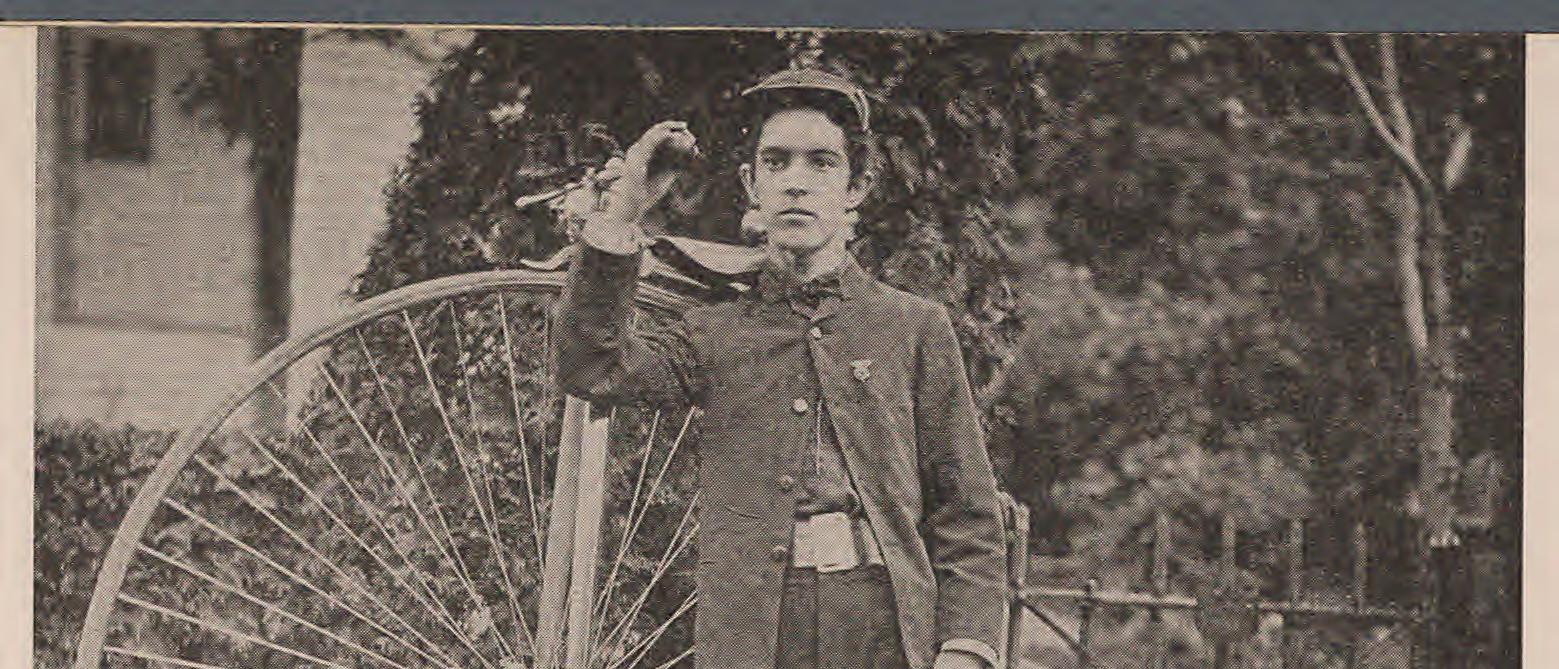


In the annals of the flute, there are innovators, virtuosos, and scholars. And then there is Dayton C. Miller—a category all his own. He was a distinguished physicist whose work probed the fundamental laws of the cosmos, yet he harbored a lifelong obsession with the flute that led him to amass one of the most significant musical archives in the world: the Dayton C. Miller Collection at the Library of Congress.
As we continue our series for The Flutist Quarterly, produced in partnership with the Library of Congress, we turn our focus from the collection’s artifacts to the man himself. To explore the deeper aspects of Miller’s life and motivations, I had the distinct pleasure of speaking again with Carol Lynn Ward-Bamford, curator of musical instruments at the Library of Congress and the passionate steward of Miller’s legacy.
The Genesis of a Polymath
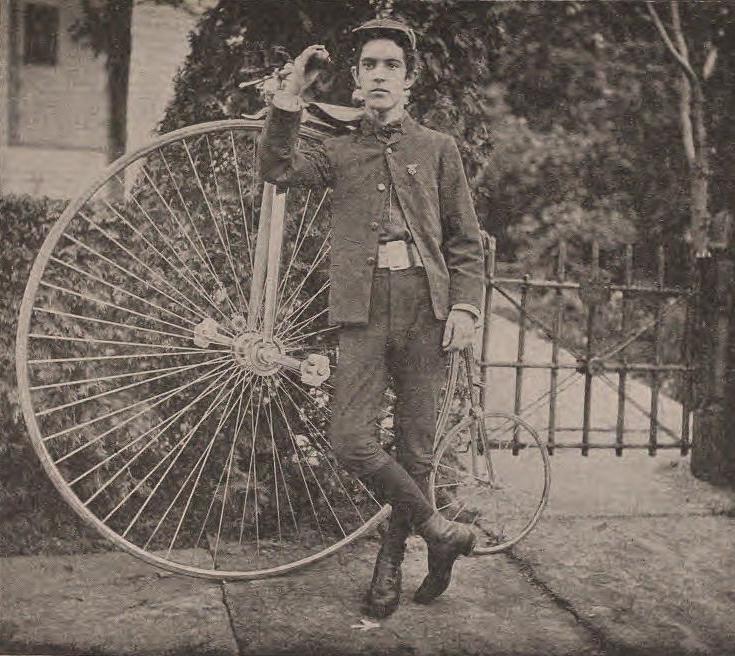
Every great story has its origins, and Miller’s begins in a small Ohio town, where the twin paths of science and music emerged not in conflict but in parallel. From his earliest days, these two currents ran through his life, shaping a singular, formidable intellect.
Robert Rabinowitz: Can you tell me more about Dayton C. Miller’s early life and education?
Carol Lynn Ward-Bamford: Dayton C. Miller was born in 1866. His family had a store in a small town in Ohio that sold dry goods and home goods. His father was also a farmer. This gave Miller easy access to information and materials related to mechanical things and science, such as those found in Scientific American. His family, particularly his grandparents, had visible wealth, and his grandfather’s estate, called “The Homestead,” included the post office and store.
Miller grew up playing the flute for pleasure, not professionally, and also studying science, particularly math and the natural sciences in high school. This dual interest continued into his college education. He attended Baldwin Wallace College in Ohio, focusing more on science while continuing to play the flute.
Around 1887, he went to Princeton for a PhD, studying astronomy under the esteemed Charles A. Young. After earning his doctorate, an issue with a telescope prevented him from working with the famed astronomer, which led him to Case Western Reserve University in Cleveland, Ohio. Far from an amateur, he arrived as a formally trained scientist, walked into the science department looking for a job, and was hired as an assistant professor of math. He stayed at Case for his entire career, eventually becoming chair of the physics department for over four decades and writing the first laboratory manual in physics for the university.
Hearing Ward-Bamford lay out this timeline, it becomes clear that these weren’t just hobbies. They were deep-seated, co-equal passions. It made me wonder about the fundamental nature of his genius.
RR: You’ve mentioned Miller’s dual interests. In your view, which came first—the flutist or the physicist? Or were they always intertwined?
CLWB: That is the bigger question, isn’t it? Was it that he had an amazing talent for math and science, went into physics, and happened to play the flute for pleasure? Or was it that he was a flutist who heard the sounds of the instrument as a young boy and then became fascinated by how that sound was produced from just a tube with some holes in it? I actually don’t know what the order might be. It could just be a parallel interest that he developed from childhood.
This profound duality wasn’t just a biographical detail; it was a core part of his public identity, beautifully captured in a single, telling moment from his youth.
RR: Is there a specific story that really illustrates how he combined these two passions early in his life?
CLWB: Yes, there’s a rather well-known capstone to his undergraduate education. At the graduation ceremony, he read a paper on a scientific topic and he played a piece of music on the flute. He did both. Most people are lucky if they get asked to do one thing at their graduation, but he was asked to showcase both passions of his life. It speaks volumes about how he was perceived even then.
That ceremony perfectly illustrates his dual identity, but it still leaves a fundamental question: of all the instruments in the world, why the flute? As Ward-Bamford explained, the answer lies in a simple object from his earliest childhood, a direct link to his father and to American history.
RR: Do we know why he chose the flute as a child?
CLWB: Yes, he wrote about this. His father played the fife in the Civil War, and he put that fife in Miller’s playpen. The story is made even more poignant by Miller’s own records. In the ledger for his massive collection, the fragment of that very fife is listed as item “No. 1″—the documented start of his entire life’s obsession. He was fascinated by it, eventually got to make sounds on it, and, as Miller himself wrote, it was soon “broken because I was banging it around.” It just happened to be there at the right time, I guess.
The Collector Emerges
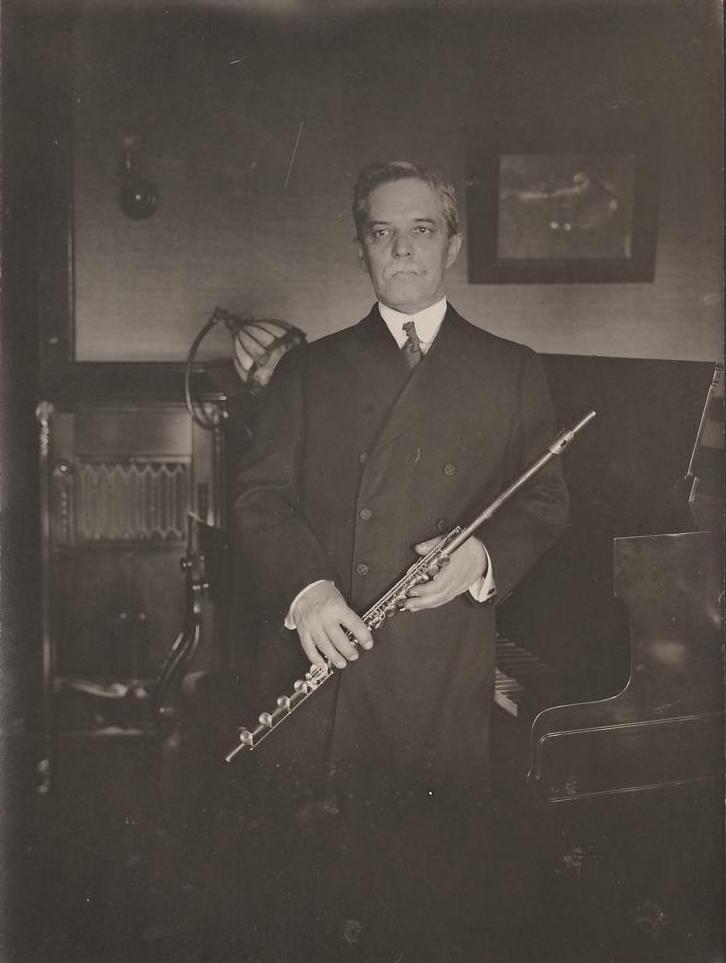
With his professional career in physics established, one might have expected Miller’s musical pursuits to recede. Instead, they intensified. His journey from passionate player to obsessive collector began not with a grand plan but with the proactive curiosity that defined him, reaching out directly to the prominent American flutemakers of the era.
RR: Before his pivotal trip to London, was he already interacting with the flute world in a serious way?
CLWB: Absolutely. During his college years, he wrote to American flutemakers, people like Alfred G. Badger (1814–92). He would say, “I’m really interested in getting a flute from you, can you tell me what you sell?” And they would handwrite a letter back to him saying, “Well, I can make you a flute, it will take x amount of time, and it will get delivered to you in a case.” It’s really kind of cool to see this personal transaction between Miller—this young guy no one’s ever heard of—and the flutemakers that eventually we’ve all heard of.
While these early interactions show his initiative, it was a single trip to London that served as the true catalyst. His visit to the renowned shop of Rudall Carte & Co. opened his ears to the possibilities of metal flutes and set him on a new, more intensive path. He was, as Ward-Bamford put it, a “nobody in the flute world” at the time and, she recalls, was apparently so nervous about entering the famous shop that he had secured a letter of introduction that he likely never needed to use. I asked her to elaborate on the significance of this pivotal encounter.
RR: What was Dayton C. Miller’s relationship with Rudall Carte & Co.?
CLWB: He had a significant and lifelong relationship with them. His first flute purchase from their London shop was a pivotal moment for him, “opening his ears” to the sound of metal flutes and inspiring him to experiment with different materials and build his own instruments. After acquiring the flute, he wrote back to the company with very detailed criticisms of the instrument. He noted specific issues, such as the flute’s pitch being a problem, and provided instructions on what needed to be corrected for the flute to sound better. This level of detail demonstrates his deep understanding of flute construction and acoustics.
This flute wasn’t just an instrument; it was an inspiration that unlocked a new level of personal dedication, revealed in a letter he sent back to the Carte shop.
RR: What did that correspondence reveal about his dedication back then?
CLWB: The letters are fascinating. After he gets the flute, he writes back to the shop, “Oh, I love this flute so much. I practice four to six hours a day.” That tells you something else about him, right? Here he is with a budding career in science, yet he’s still able to find time to practice that much and be so delighted with it. It shows a level of dedication far beyond a simple hobby.
The Scientific Method Applied
Now truly inspired, the physicist in Miller took over. This wasn’t a casual interest; by this point, Miller was one of the world’s preeminent acousticians. His primary published work was his opus, The Science of Musical Sounds,[1]Note: The Science of Music Sounds is a compilation of eight lectures given at the Lowell Institute in 1914 under the title “Sound Analysis.” These lectures were rewritten and expanded to … Continue reading and his expertise was sought for projects ranging from analyzing the human voice to consulting for piano manufacturers. His work had dramatic applications as well. During World War I, he took his phonodeik (see more below) to the Sandy Hook Proving Grounds at the request of the government to analyze the intense pressure waves from artillery guns, contributing to the crucial study of “shell shock.” It was only natural that he would turn this immense scientific firepower toward his personal passion. He wasn’t content to simply feel that one flute sounded better than another. He had to know why.

RR: Can you talk about Dayton C. Miller’s theories on flute materials and sound?
CLWB: His curiosity was about what made the best sounding flute. Not the best flute but the best sounding. He wanted to measure the quality of the sound on a scientific basis, something that he could measure and see and understand to inform what the best sound was. Inspired by the metal flutes he heard in London, he began to build his own, starting with silver and then, in 1902, constructing a flute with a 22-karat gold tube. Believing his gold flute had a superior sound, his quest became to prove it, leading to a groundbreaking invention.
Her distinction between the “best flute” and the “best sounding flute” is a crucial one, highlighting Miller’s focus not on mere mechanics or brand reputation but on the empirical and aesthetic qualities of the tone itself. To conduct this research, he didn’t adapt an existing tool; he invented one from scratch.
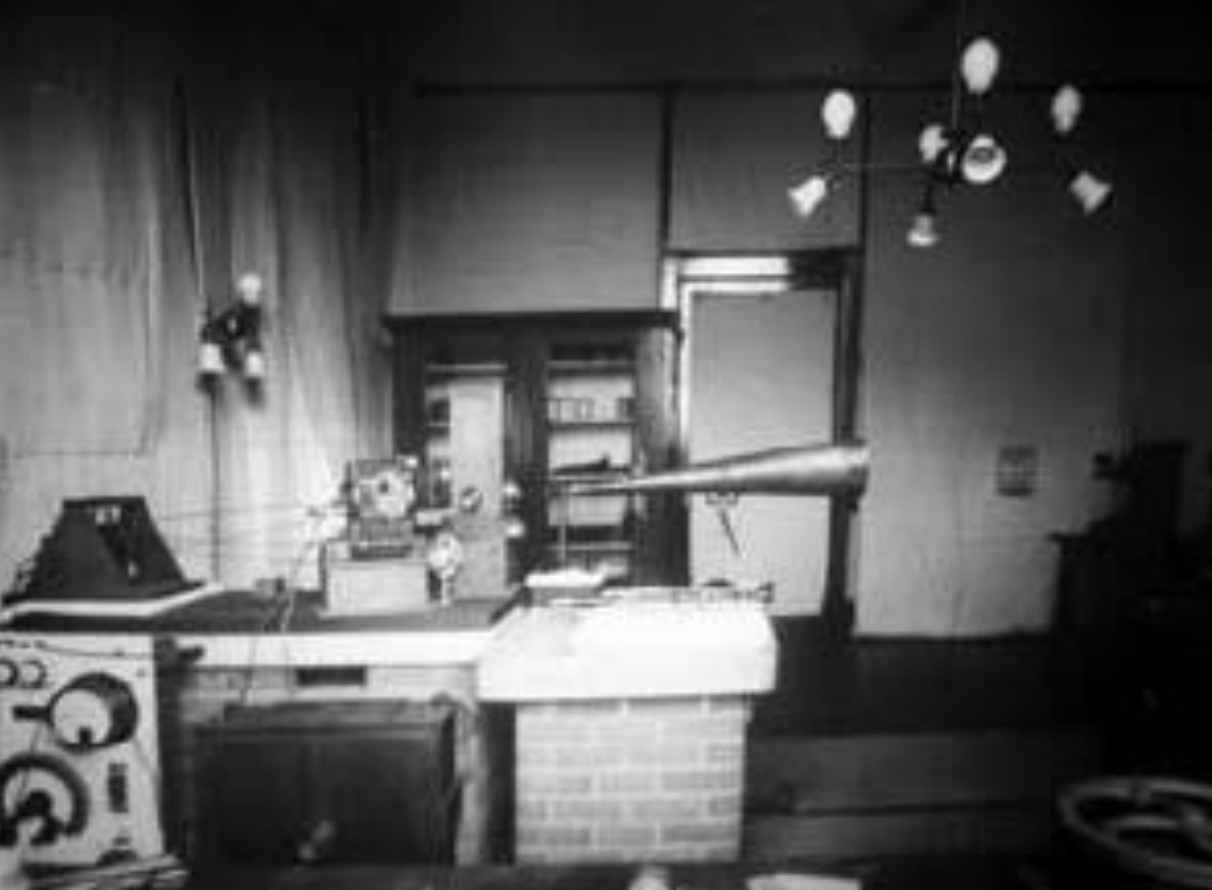
RR: Can you tell me more about Dayton C. Miller’s work with the phonodeik and his findings regarding flute materials?
CLWB: To conduct his research, in 1908 Dayton C. Miller invented a machine called the phonodeik.[2]Note: The phonodeik is a quite complicated device, including fast moving film that traces all types of sound. Perhaps the best way to describe it is to quote from “Miller’s Waves: An Informal … Continue reading This device used a receiving cone (similar to others used in pre-electric recording), along with a glass, a magnifying glass, and a mirror to translate the sound it heard into sine waves or other visual representations of overtones. Miller used the phonodeik to study the sound produced by flutes made of different materials. His research led him to the finding that the overtones produced by a gold flute were “purer” than those from flutes made of other materials. This scientific observation reinforced his personal belief that gold was the superior material.
This apparent conflict between Miller’s findings and modern science raises fascinating questions about the very nature of sound, perception, and belief. I asked Ward-Bamford how she reconciles these two perspectives.
RR: How do you make sense of his results versus what we’re told today about the material not making a significant difference?
CLWB: You know, I can see both sides of the thinking. Miller looks at it and says, “Oh, it’s got to sound better because the acoustics show me that it’s better.” On the other hand, if you look at other instruments—say, the stringed instrument family—where people say certain makers are the best sounding… Well, are they, or is it the player’s perception? Perhaps there isn’t a bias when you don’t know what you’re playing. He was very open and very honest. He would have never tried to deceive anybody.
It’s a point every musician can appreciate. There’s the science of what a machine can measure, but also the physical reality of what our ears can truly distinguish. And as we discussed, there is the undeniable art of the maker—a master craftsman is likely to produce a superior instrument regardless of the material, not least because, as a practical matter, you don’t give your most precious materials to an apprentice.
Miller’s sincere belief, backed by his scientific authority, had a tangible impact that rippled through the flute world. The story of his findings spread in the science and music circles and preeminent American makers like the William S. Haynes Company, who early on had made a gold flute in 1896, received more orders, and, as Ward-Bamford noted, “…once Haynes was making them, it became a thing.” The fame of his personal gold flute grew to the point that it was exhibited in New York and played at Severance Hall in Cleveland, Ohio.
Anatomy of a World-Class Collection
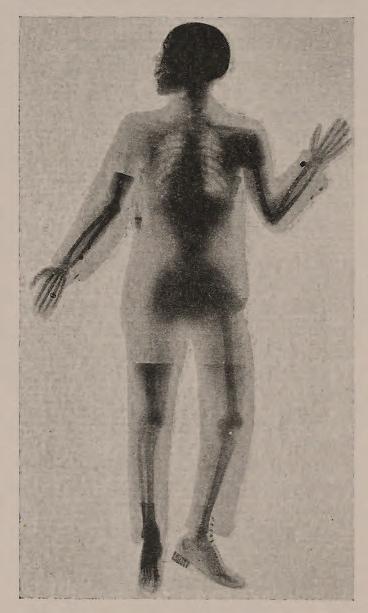
Miller’s relentless collecting soon grew to an astonishing scale. The practical question is immediate and obvious: how did a university professor afford to acquire nearly 1,700 flutes and thousands of books, scores, and works of art?
RR: We touched on how he afforded his collection, but can you elaborate on the role his family’s wealth played?
CLWB: It’s nuanced. His father did give him some money for that first flute, with the rest coming from his own savings, and it’s very likely he did inherit money, stocks, and land. He also tried working as a cashier in his uncle’s bank for a year after high school but hated the nine-to-four life and realized he didn’t want to be a banker. He wanted to pursue his passions. His rising scientific career also allowed him to travel the world for conferences, and these trips served as opportunities where he could look for and acquire more flutes.
This drive to collect went far beyond acquiring pristine, concert-ready instruments. As I learned, Miller’s approach was that of a true historian and scientist, valuing information above all else, and his collecting was not without a grand purpose. Miller had a unique and ambitious vision for how to share his life’s work with the world.
RR: Why did he ultimately choose the Library of Congress, and how did the collection get there?
CLWB: His great hope was for it to be a “living collection,” where the instruments would be played, studied, and used to teach.[3]The Library of Congress Music Division’s primary mission is to acquire, preserve, and make accessible the world’s largest and most comprehensive collection of music materials, serving as … Continue reading
The collection he built was more than a warehouse of instruments. It was a library, a laboratory, and a complete scholarly ecosystem. One of his most enduring contributions was not as a collector but as a translator, bringing a foundational text of the flute world to a new audience.
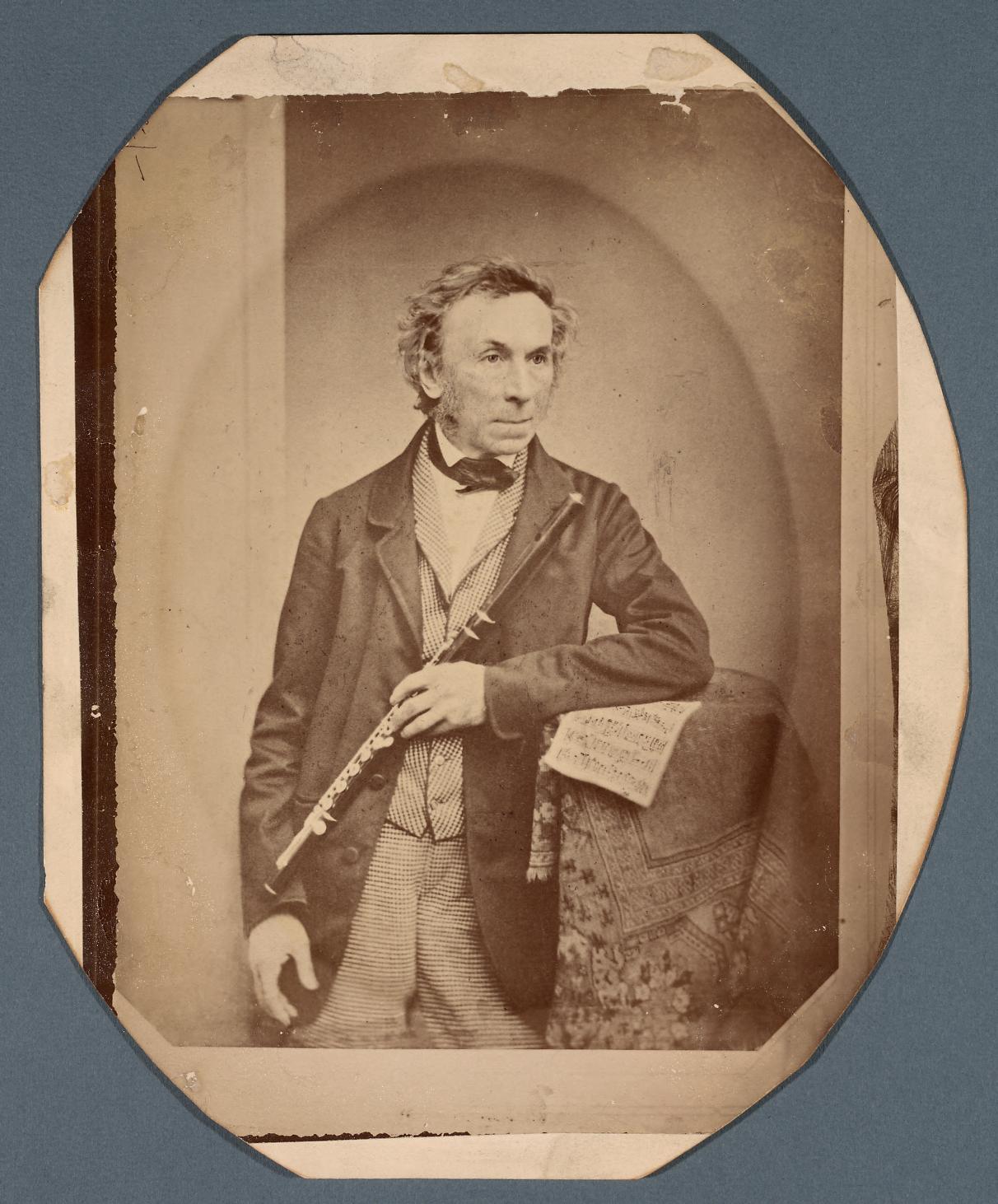
RR: What was the significance of Dayton C. Miller translating Theobald Boehm‘s The Flute and Flute-Playing? (Now in the public domain.)
CLWB: The translation was significant for several reasons. It made the important work of Theobald Boehm accessible to a wider English-speaking audience and deepened Miller’s own understanding of Boehm’s genius. He also annotated the second edition with information drawn from his own extensive collection, making the work even richer. Finally, the translation project gave him direct access to the Boehm family, which proved invaluable in his efforts to acquire more flutes and materials.
Yet even beyond the instruments and books, there is another layer to his collection, a vast and visually stunning resource that remains one of its best-kept secrets.
RR: Can you tell me more about the musical iconography collection?
CLWB: The musical iconography collection includes artwork related to the flute; it’s a vast and rich resource that is not as well-known or explored as other parts of his collection. It offers a visual perspective on musical history, instruments, and culture. The collection is significant because it can show details about the flutes being held in the artwork or the music being portrayed in paintings or etchings. Much of it is accessible online through scans.
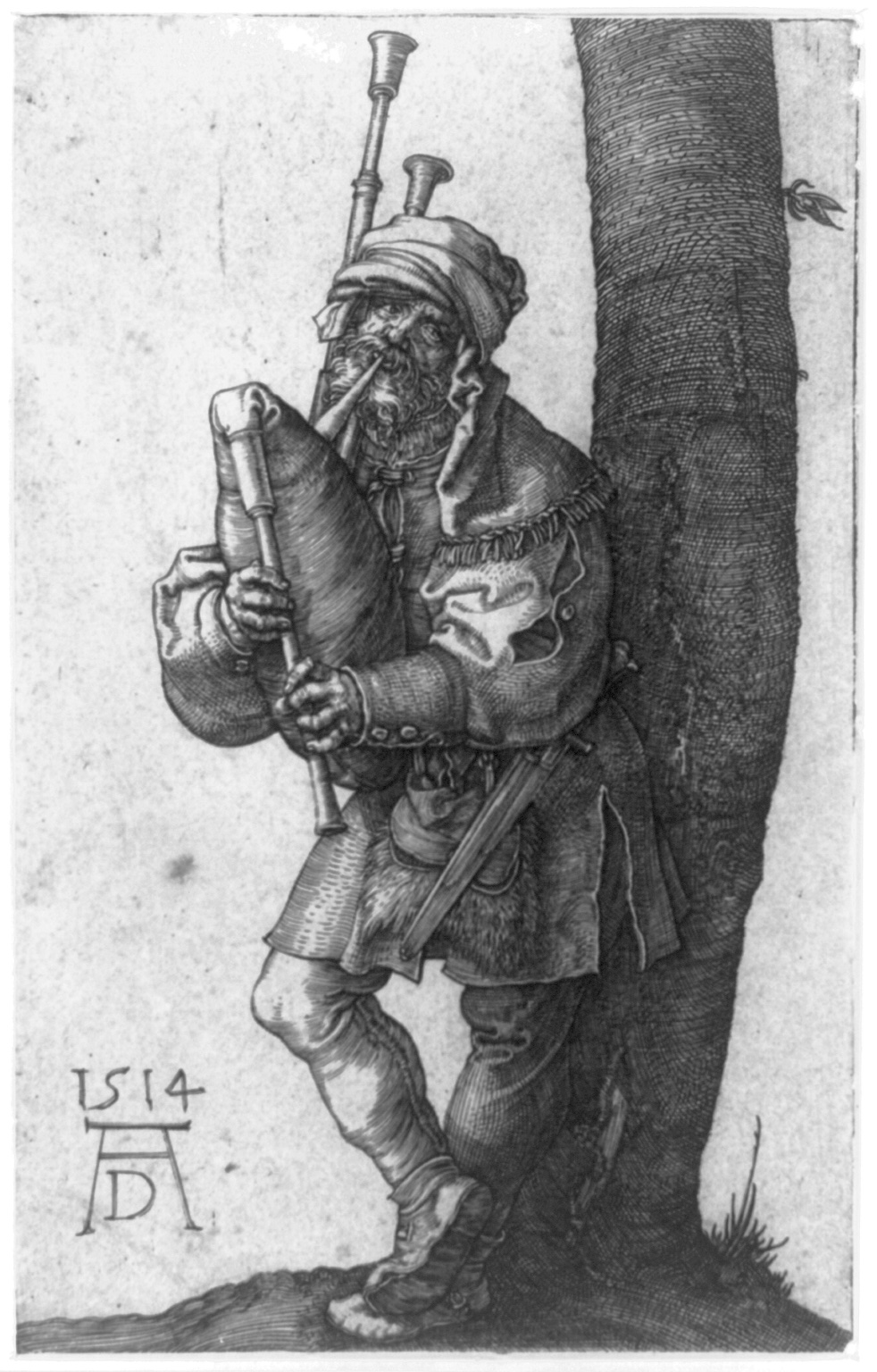
RR: What are some examples of what the musical iconography collection contains?
CLWB: The collection contains drawings of recorder lessons, pastoral scenes with a flute, and other musical depictions. It also features works by notable artists like Albrecht Dürer. Miller organized the collection by subject, with categories such as animals, caricatures, and exhibition items.
RR: What does it mean to the Library of Congress to have this collection?
CLWB: It means we are the world’s most comprehensive research collection about the flute. And that’s pretty good. We get researchers from around the world. We get to use it as a teaching tool to help others and to engage our public. It’s just amazing what he found over time and was able to acquire.
To understand Dayton C. Miller is to understand a man driven by a profound need to know, to document, to connect, and to preserve. His life was the ultimate expression of the belief that art and science are not opposing forces but two sides of the same coin of human curiosity. Understanding the man—his passions, his rigor, and his incredible dedication—provides the essential context for the collection we will continue to explore. He was more than a collector; he was the architect of a world that we, as flutists and historians, are still privileged to discover.
Dayton C. Miller’s story is therefore not just about one man’s passion; it is also a powerful testament to the vital role of our great cultural institutions. It is in places like the Library of Congress that a private obsession is transformed into a public treasure, a legacy preserved and made freely available for future generations of researchers, musicians, and the simply curious. Miller’s decision to entrust his life’s work to a public institution underscores a truth that is more important than ever: these archives are not static but are living ecosystems that depend on our continued support. This support comes from priceless donations of historical instruments, documents, and iconography from collectors who, like Miller, understand that the ultimate value of these objects is in their shared story. We all become stewards of our collective cultural heritage, ensuring these stories are told for centuries to come.
For Further Information
- Visiting the Library of Congress: The Library’s magnificent Thomas Jefferson Building is open to the public Tuesday through Saturday. While entry is free, visitors are required to reserve a timed-entry pass online in advance. You can find hours, reserve passes and get the most up-to-date visitor information on the Library’s website.
- Viewing the Dayton C. Miller Collection: Some of the Miller flutes are on public display in the Jefferson Building, in the Whittall Pavilion, when the room is available to the public, while many of the flutes and other instruments of the Dayton C. Miller Collection are housed in the Madison Building, where they may be viewed by researchers and interested parties by appointment only. To make arrangements, please contact the Music Division directly. It is recommended to make inquiries well before your potential visit. Contact information can be found via the Performing Arts Reading Room.
- The Dayton C. Miller Collection Online Portal: The official portal to the collection, with search tools, articles, and essays.
- Miller’s Musical Iconography Collection: A direct link to search the Library of Congress’s online catalog for Miller’s vast collection of artwork related to music.
- Theobald Boehm, The Flute and Flute-Playing: A version of Dayton C. Miller’s 1922 English translation of Boehm’s seminal work. (This public domain work is available as a free PDF download)
- The Phonodeik: An article and photos from Case Western Reserve University detailing Miller’s sound-analyzing invention.
- Miller’s Waves: An Informal Scientific Biography by William Fickinger, Professor Emeritus Department of Physics, Case Western University. This is a fascinating read for anyone interested in how one physicist/flutist simultaneously pioneered the modern science of acoustics while also leading a famous, decades-long experimental challenge to Einstein’s theory of relativity.
Endnotes
| ↑1 | Note: The Science of Music Sounds is a compilation of eight lectures given at the Lowell Institute in 1914 under the title “Sound Analysis.” These lectures were rewritten and expanded to create the book. The book explores the scientific aspects of musical sounds, covering topics like pitch, timbre, and resonance, and provides a deep understanding of the physics of music and the mechanics of sound. |
|---|---|
| ↑2 | Note: The phonodeik is a quite complicated device, including fast moving film that traces all types of sound. Perhaps the best way to describe it is to quote from “Miller’s Waves: An Informal Scientific Biography” written by William Fickinger, Professor Emeritus Department of Physics, Case Western University, pages 65–66: “The sound enters the collecting horn and strikes a thin mica diaphragm. A tiny thread attached to the center of the diaphragm wraps once around a sapphire-jewel-mounted shaft on its way to a spring that holds the string in tension. A one-millimeter-square mirror is glued to the shaft. A very narrow beam of light is reflected by this mirror toward a camera with film moving as fast as one-thousand feet per second. The sound moves the diaphragm, which pulls the thread, which turns the shaft, which rotates the mirror, which directs the light to the moving film. The results are astounding!” |
| ↑3 | The Library of Congress Music Division’s primary mission is to acquire, preserve, and make accessible the world’s largest and most comprehensive collection of music materials, serving as a resource for Congress, scholars, and the public. |