
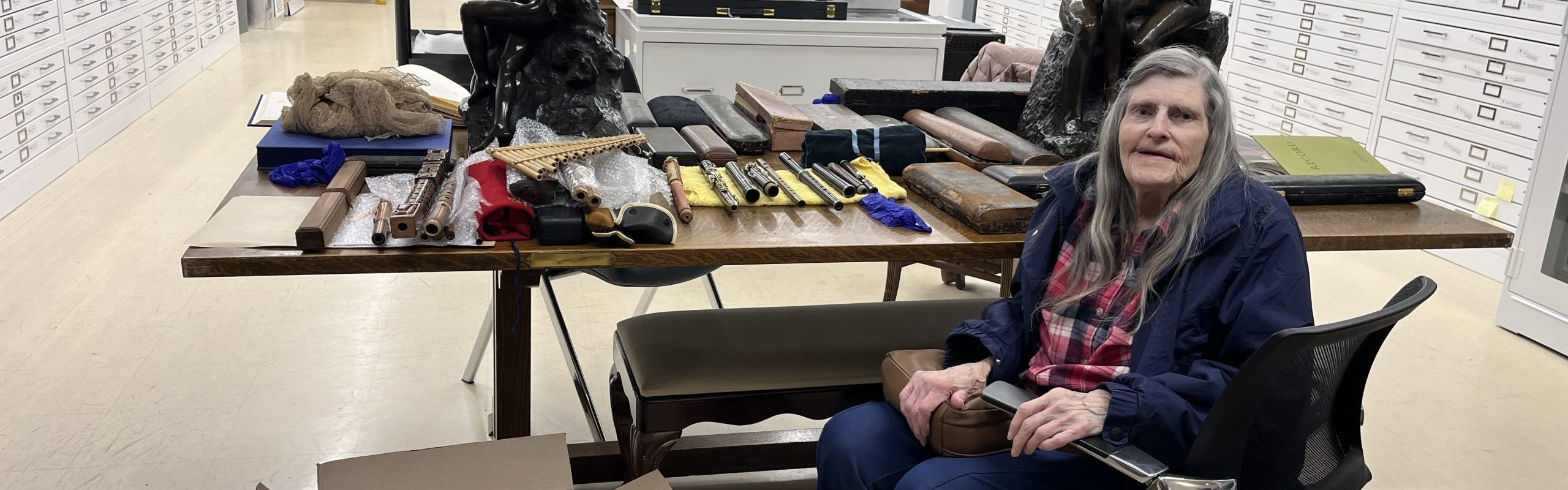


This is the second in our ongoing series of articles that FQ is doing in collaboration with the Music Division, Library of Congress. This one is also part of the publication’s 50th anniversary, highlighting the varied career and generosity of one of its former editors.
Also, if you in the Washington, D.C., area, there are a limited number of free tickets available for NFA members to the LoC’s Founder’s Day concert featuring Emi Ferguson and Ruckus on Wednesday, October 30, 2024, at 8 p.m., celebrating the 160th birthday of the Library’s founding benefactor Elizabeth Sprague Coolidge. For tickets, email Anne McLean at amcl@loc.gov.
“It all began with a dream. A dream of a sixth-grade kid listening to a junior high school band concert presented to encourage us to join the band program the following year. I watched and listened intently as the band director introduced each instrument and had each first chair player demonstrate it. I knew the boy who was the first chair flutist. When it was his turn, the band director said that one thing the flute did in music was imitate bird calls. Ronnie played the bird calls and I was hooked. I HAD to get a flute and learn how to play it.”
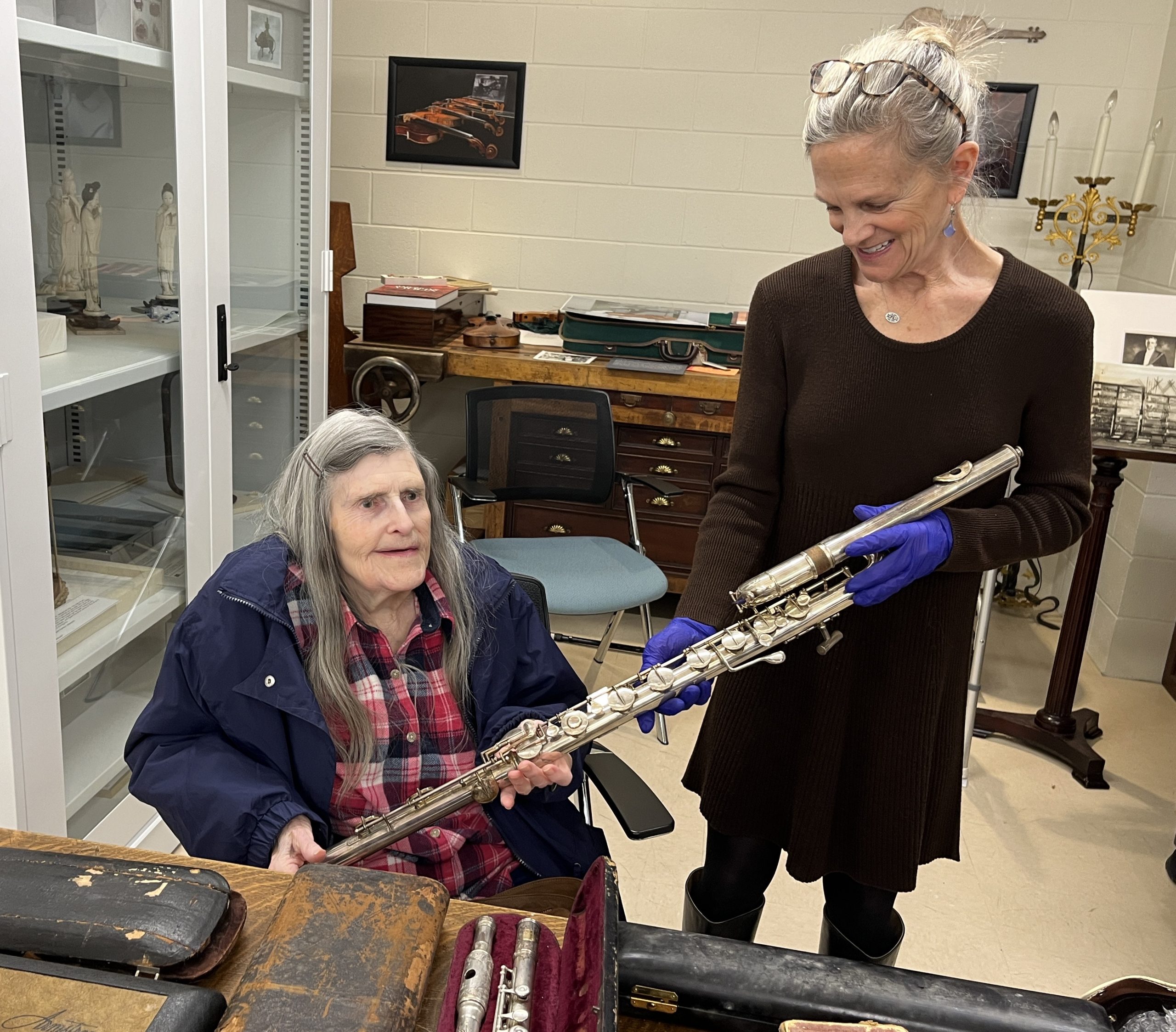
So begins the autobiography that Mary Jean Simpson provided to the Library of Congress (LoC) along with her recently donated flute collection. The Mary Jean Simpson Flute Collection is a testament to the enduring power of passion, mentorship, and collaboration. Her gift to the Library ensures that Simpson’s legacy as a musician, researcher, and educator will continue to inspire future generations.
Mary Jean Simpson did get that flute she wanted, she did learn how to play it and, along the way, she amassed a remarkable collection. Each flute has its own story and each one reflects her discerning taste and the evolution of her musical journey, which also included a fascination with the history of flute-making. To this end, Simpson wrote her dissertation on 19th-century American flutemaker Alfred Badger while earning her DMA at the University of Maryland, College Park.
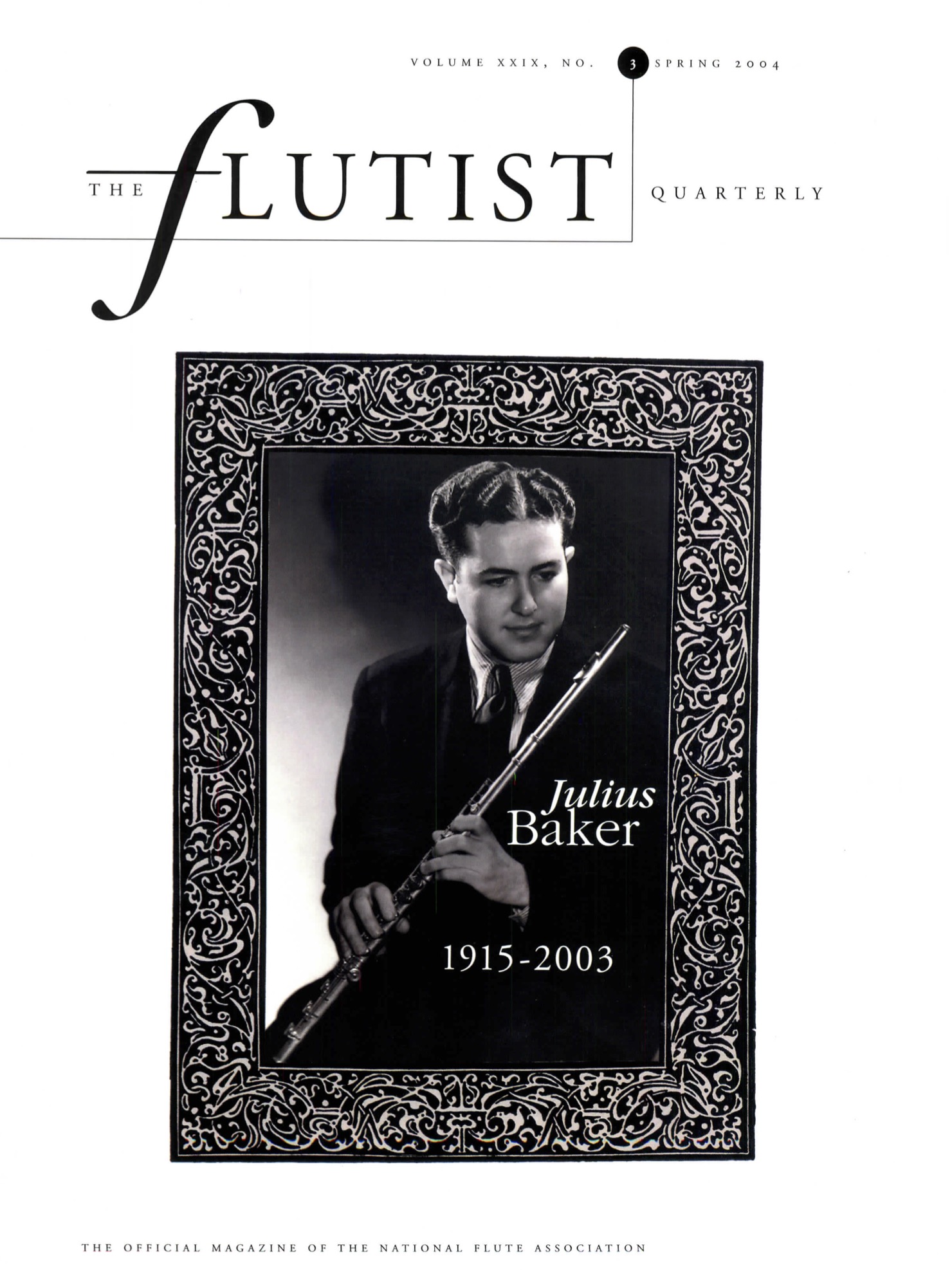
Born in 1941, Mary Jean Simpson’s lifelong passion for the flute was sparked after seeing that junior high school band concert. She started on a beginner flute, then in high school moved on to a sterling silver Selmer flute, then a handmade Powell, which became her prized possession. Her early collection grew even more when her brother gifted her a recorder flute from Amsterdam. She earned her bachelor’s from Juilliard, where she studied with Julius Baker, and received valuable feedback during an audition with Leopold Stokowski. She also purchased a rare Hans Reiner handmade grenadilla wood piccolo.
Simpson’s performing career was the driving force behind her lifelong pursuit of exceptional flutes. From her early days as a budding musician in school bands to her professional engagements with renowned orchestras and ensembles, each step in her journey fueled her desire to find instruments that could match her growing skill and ambition. Among others, she performed with the North Carolina Symphony and L’Orchestre symphonique de Québec, served as principal flute with the Shreveport Symphony, and joined Lloyd Farrar’s 19th-Century Social Orchestra, for which she played historical instruments at period-themed events.
Simpson’s dedication to teaching was a cornerstone of her musical legacy. As an assistant professor of music at the University of Montana, she imparted her knowledge and passion for the flute to countless students. Her teaching philosophy was rooted in a holistic approach to music education. She believed in fostering not only technical proficiency but also a deep appreciation for the flute’s history and cultural significance. Her students were encouraged to explore diverse musical styles and periods from Baroque to contemporary and to develop their own unique voices as performers. Simpson’s influence extended far beyond her time at the University of Montana, as her former students continue to make their mark in the world of music, carrying forward her legacy of excellence and passion for the flute.
In addition to teaching, performing, and being an integral part of the NFA, she spent countless hours at the Library of Congress and the Miller Collection Catalog (a highlight of her career and one that she calls “an extraordinary opportunity”), taught professional writing at the University of Maryland, and published her flute arrangements through Pan Publications (later acquired by ALRY).
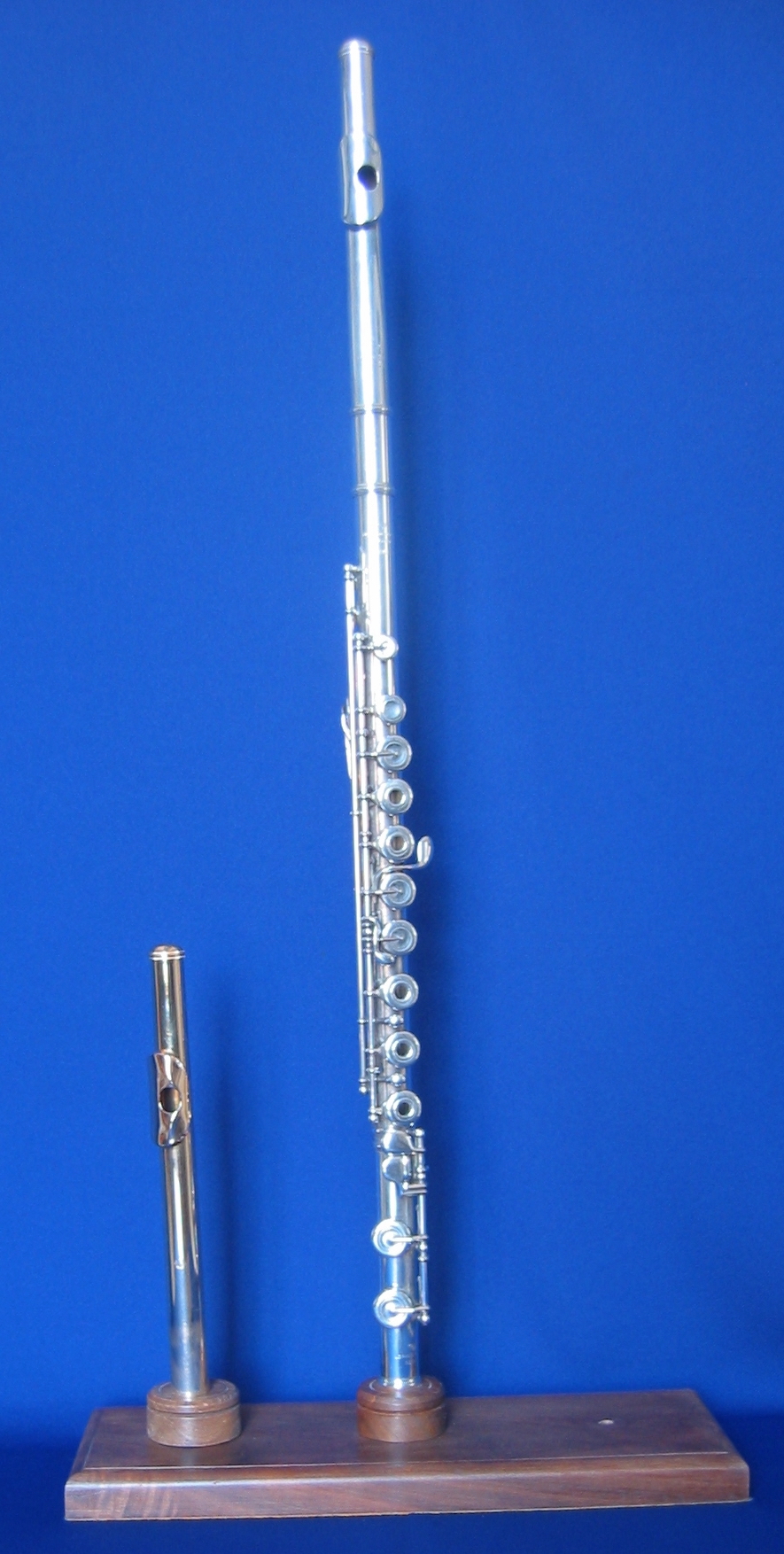
Throughout all of this her collection grew: Among other things she received a set of panpipes from friends when she was living in Shreveport, commissioned a custom-made white gold Armstrong flute specifically designed for orchestra performances, purchased a Rudall Carte bass flute, and acquired Badger flutes, notably two previously owned by William Kincaid.
That young girl’s resolve to “get a flute and learn how to play it” became her lifelong passion.
Now retired, Simpson resides in Virginia, where she can be closer to family. She provided the extensive autobiography she completed in January 2024 to the Library of Congress to go along with her generous flute donation. We’ve transformed selected highlights into a Q&A for FQ.
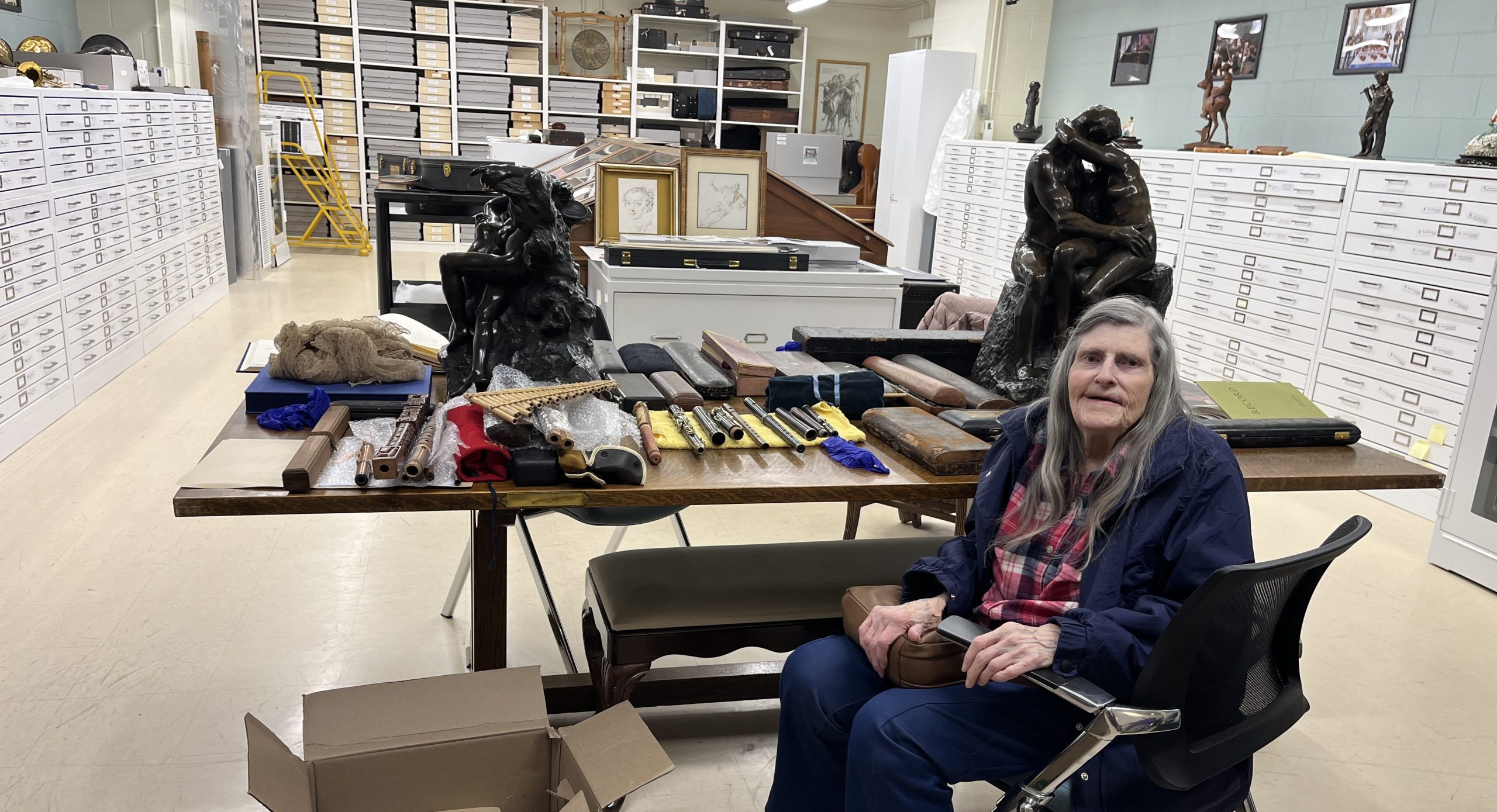
What inspired you to donate your flutes to the Dayton C. Miller Collection at the Library of Congress?
Mary Jean Simpson: As a lifelong flutist who has spent many happy hours researching in the Flute Vault, I felt a deep connection to this esteemed collection. Donating my instruments and research materials felt like the perfect way to give back to the flute community and ensure their preservation for future generations. I hope my collection will inspire and educate flutists, researchers, and music enthusiasts, just as the Miller Collection has inspired me throughout my career.
What is the most unique flute in your collection, and what is its story?
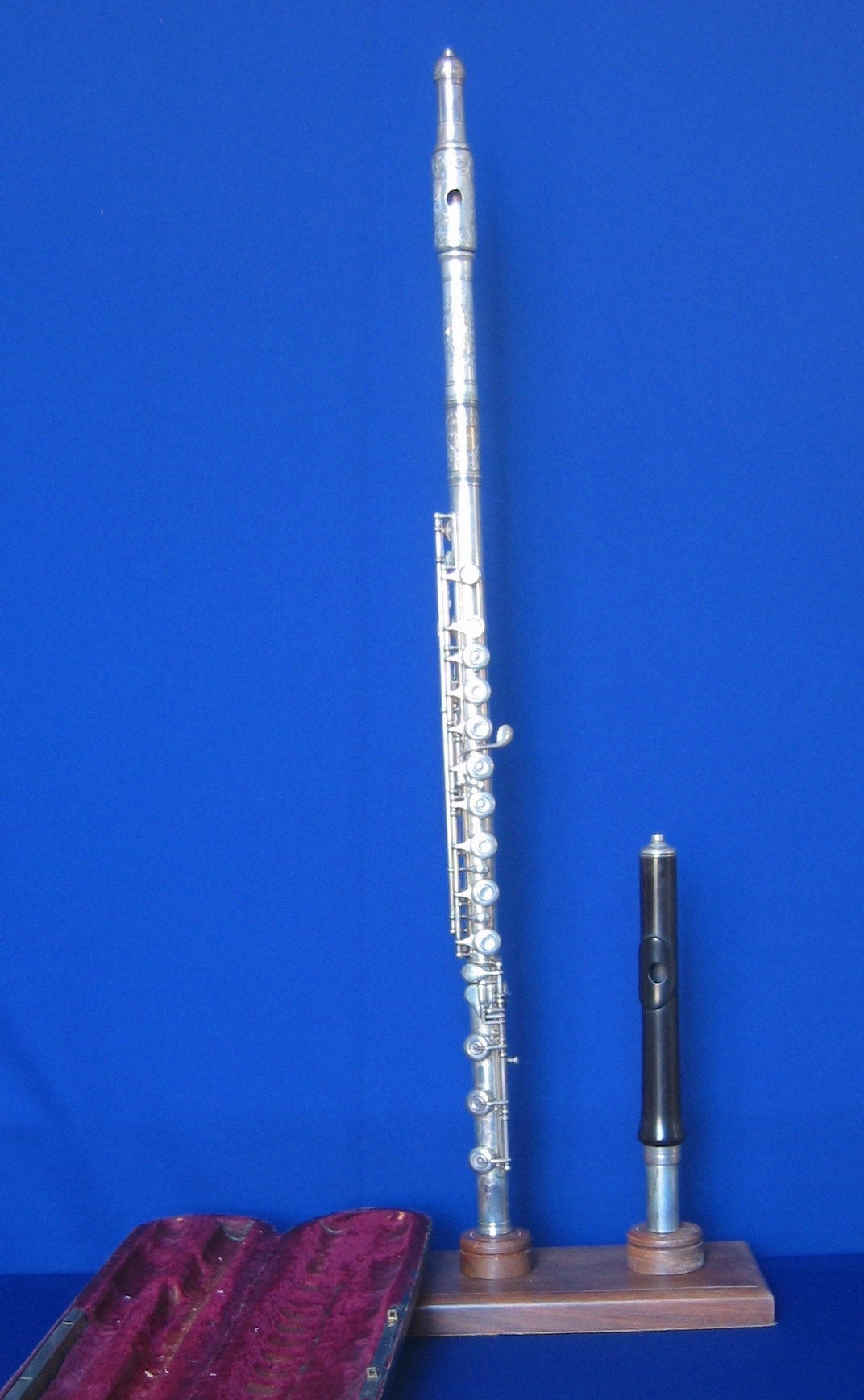
MJS: One standout piece is my Badger flute with an ebonite head joint. This unusual instrument was acquired from the estate of William Kincaid, the famed principal flutist of The Philadelphia Orchestra. The flute is a testament to Badger’s fine craftsmanship and embrace of innovative materials and shows his eagerness to welcome innovation and push the boundaries of flute-making.
How did your research on Alfred Badger, which began with your doctoral dissertation, shape your understanding of flute history?
MJS: Before beginning my research, Alfred Badger was a little-known figure in flute-making history. My research led me to uncover a wealth of information, including rare photographs and historical documents, that brought his life and work into focus. My dissertation established me as the leading expert on Badger. Through my research, I gained a deeper appreciation for the evolution of the flute and the contributions of lesser-known figures like Badger.
Your collection includes flutes from around the world. Could you elaborate on the significance of having such diverse instruments represented?
MJS: While my collection features a range of traditional flutes, such as my cherished handmade Powell and my rare Badger alto, I also acquired flutes from different cultures over the years. For instance, my collection includes a recorder-type flute from Peru with intricate carvings, a Japanese shakuhachi, and South American panpipes. The Peruvian flute and the Japanese shakuhachi were both acquired at NFA conventions; the panpipes were a gift from dear friends in Columbia. These instruments represent my broader interest in the flute as a universal instrument found across various cultures and time periods.
Tell us a bit about your arrangements of church music for flute. What motivated you to create these arrangements, and what impact have they had?
MJS: My late sister-in-law, Carole, was a wonderful vocalist. She became choir director for our church and frequently asked me to play my flute for special hymns and other church-related music that formed part of our services. I was disappointed by the lack of existing arrangements and took it upon myself to create my own arrangements for flute. These eventually found a home with Pan Publications (and later ALRY). When they published them, Irene and Robert Maddox, owners of Pan Publications, took my arrangements to the NFA convention. After that I noticed a new crop of compositions and arrangements for church music the following year!
What were the highlights of your teaching career?
MJS: I had the privilege of teaching flute and music history at the University of Montana. It was a fulfilling experience to guide and inspire young musicians. I particularly enjoyed performing as a soloist and with the faculty woodwind quintet and as principal of the Missoula Symphony.
How did your performing experiences influence your choices in acquiring flutes for your collection?
MJS: My performing career significantly shaped my instrument choices. The challenges of projecting my sound in large concert halls, especially when playing under renowned conductors like Stokowski, led me to seek flutes with unique capabilities. For instance, my custom-made Armstrong flute, designed for orchestral power and projection, exemplifies this quest for instruments that could meet specific musical demands. Additionally, my deep engagement with historical performance practices, particularly through my involvement with Lloyd Farrar’s 19th-Century Social Orchestra, fostered an appreciation for the unique qualities of period instruments, leading me to acquire flutes like the 13-key wooden flute.
Are there any specific performance experiences that stand out in your memory?
MJS: Two performances hold a special place in my heart. The first was my solo performance with an orchestra at the inaugural National Flute Association convention. The second was a performance of Brahms’ Symphony No. 1 with the Missoula Symphony, where I was able to showcase the incredible power and projection of my custom-made Armstrong flute.
***
Beyond mere tools, Simpson’s flutes became extensions of her musical expression, each chosen to enhance her performance and unlock new possibilities. Her collection, a testament to her illustrious career, reflects not only her discerning taste but also the intimate connection between a performer and their instrument, a bond forged through countless hours of practice, rehearsal, and the sheer joy of making music.
And as for the concluding words of Mary Jean Simpson’s autobiography:
And this is the story of how a sixth-grader’s dream of playing bird calls on a flute became an amazing and extraordinarily wonderful adventure that over a lifetime took [a] young dreamer places she could never have imagined.
… let Mary Jean’s words be the start of many more dreams for many more dreamers.
Mary Jean Simpson would like to thank her brother and sister-in-law, William and Donna Simpson, for their invaluable help with her cherished flute collection.