



The Library of Congress is a vast repository of knowledge, memory, and culture, housing millions of books, manuscripts, photographs, and recordings. As their mission statement proclaims, the Library aims to “engage, inspire, and inform Congress and the American people with a universal and enduring source of knowledge and creativity.” And it also has a remarkable collection of musical instruments. Within this collection lie intriguing mysteries and captivating stories waiting to be uncovered. Recent investigations have unearthed fascinating details about the history of these instruments, revealing hidden connections and intriguing possibilities.
Have you ever wondered about your instrument’s history? Often we buy an antique or a previously owned instrument without asking, or knowing, who else owned and played it. Later, you might find yourself looking at that beautiful object and wondering who else might have done the same. Or you might find yourself playing that flute and marveling at the gorgeous tone, imagining who else might have experienced what you are feeling, and who those other flutists may have played for.
We go to museums and appreciate being in the presence of such amazing objects. We are further enriched by learning about them, about their provenance. (Noun: 1. Place of origin or earliest known history of something. 2. The beginning of something’s existence; something’s origin. 3. A record of ownership of a work of art or an antique, used as a guide to authenticity or quality.) Why wouldn’t we want to do so with the things we cherish and value the most?
This article delves into the hidden histories and provenance of a few such instruments in the Library’s collection: the enigmatic Burghley flutes, the mysterious Sutter flute, and a flute in low F made by George Haynes in 1919. All are part of the Dayton C. Miller Collection. We’ll also explore the renowned Cassavetti viola, made by Antonio Stradivari in 1727, a prized possession in the Whittall Collection in the Music Division. All the information here—and indeed, any and all the information you’ll see on the Library of Congress website or at any such institution or museum—was either saved and passed down through generations of owners and collectors or simply researched and gathered by interested curators or hobbyists. With the tools at our disposal now, researching your own instruments is within your reach.
The Sutter Flute: A Musician’s Companion?
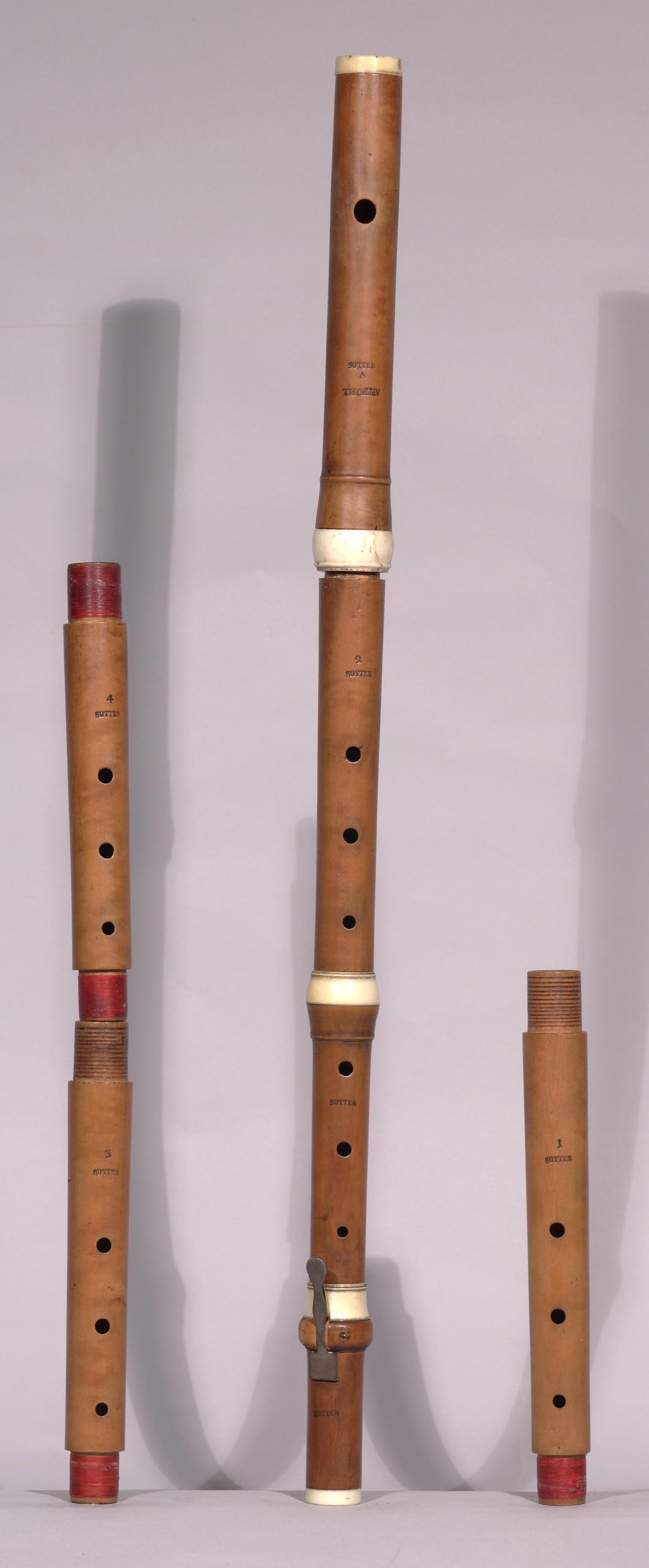
The Sutter flute, a simple boxwood instrument with a single silver key, bears the inscription “Sutter / A / Appenzell.” This unassuming flute may hold a fascinating connection to a centuries-old castle in Switzerland. Could this flute have belonged to a member of the Sutter family, who once resided in Appenzell Castle, a 16th-century stone building? The inscription and style suggest it was made in Appenzell in 1787. Research reveals that Johann Baptist Fortunat acquired the castle in the early 18th century. Interestingly, his wife, Johanna Maria Marzia, was a violinist. This musical connection adds another dimension to the story.
Perhaps Johann presented the flute to Johanna as a token of affection. Or it could have been a gift for their daughter, Maria Franziska Josefa, upon her marriage to Franz Karl Alois Mathias Muller. These scenarios invite us to explore the musical traditions and social customs of 18th-century Appenzell. Perhaps, over time, it became a cherished family heirloom, passed down through generations, and one of their descendants eventually emigrated to the United States, bringing the Sutter flute along.
Although the exact origins and ownership of the Sutter flute remain a mystery, its potential connection to Appenzell Castle, the Sutter family, and their musical interests offers a tantalizing glimpse into the past. This seemingly simple instrument invites us to imagine the melodies it may have played and the hands that may have held it centuries ago, providing a tangible link to connect the past with the present.
The Enigmatic Burghley Flutes
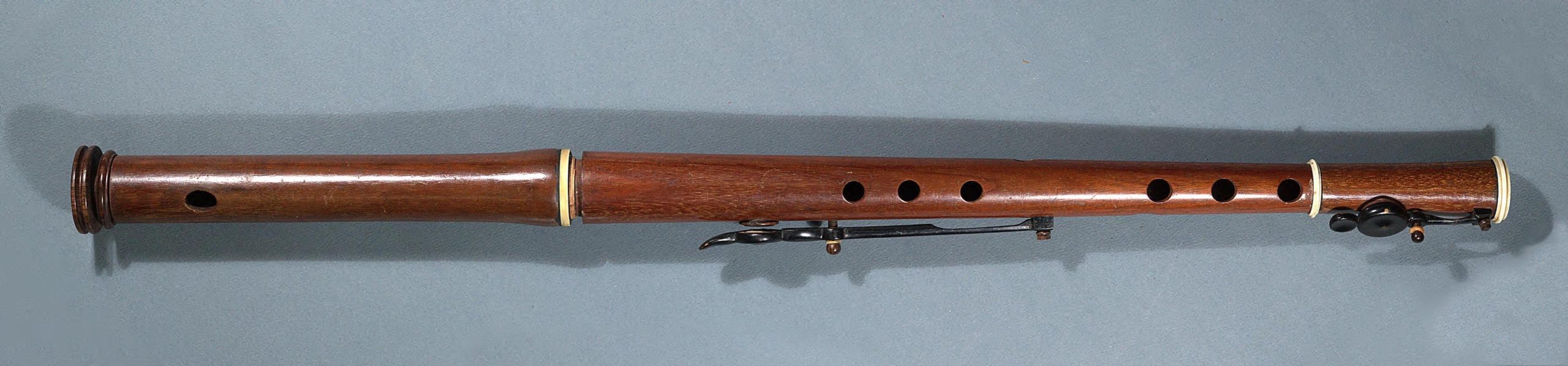
In contrast to the singular Sutter flute, the Dayton C. Miller Collection houses a remarkable set of eight flutes crafted by a maker known only as Burghley. These instruments, attributed to the mid-19th century, around 1845, present an enigma that has captivated researchers for decades. Dayton C. Miller, the collection’s namesake, was fascinated by these unconventional flutes. He attempted to uncover Burghley’s identity, tracing him to Camden Town, England, and gathering information suggesting that Burghley might have been a doctor. Despite Miller’s and others’ efforts, further details about this elusive maker remain scarce to this day.
A Close-up Examination: Commonalities and Clues
Upon close examination of the information provided by the Library of Congress, several commonalities and intriguing clues emerge regarding the Burghley flutes:
Materials and Construction:
- The Burghley flutes contain no metal elements at all. Their wooden keys are equipped with wooden pegs utilized in a way so as the keys themselves act as their own springs. This suggests a preference for traditional materials and possibly a desire to explore the acoustic properties of wood.
- Many of the flutes feature japanned wood keys, indicating a specific aesthetic choice and possibly a link to a particular workshop or tradition.
- Ivory and bone are used for ferrules[1]A “ferrule” on a flute is a small ring or band that is placed around the end of a flute’s headjoint to provide added strength and protection against wear and tear, particularly on … Continue reading, key components, and decorative elements.
- The flutes exhibit unusual key mechanisms, including wooden pegs, screws, and spring designs integrated into the keys themselves.
- Several flutes feature a “crutch” or support for the right hand, made entirely of wood.
Design Features:
- The flutes display a variety of experimental designs, including keyless models, angled headjoints, and extended foot joints with vent holes.
- Some flutes have chromatic finger-hole arrangements, indicating an interest in alternative fingering systems.
Clues and Speculations:
- The variations in the maker’s mark (“R. Burghley,” “Burghley,” or “Burleigh”) might indicate different periods of production, collaborators, or simply inconsistencies in stamping.
- The possible association with a “Dr. Burghley” suggests that the maker may have had a scientific or medical background.
- The consistent dating of the flutes to around 1845 suggests a specific period of activity for the maker or a focused collecting effort by Dayton C. Miller.
- The Bate Collection of Musical Instruments in Oxford lists three Burghleys.
Haynes: Flute in Low F
Dayton C. Miller, the flute collector, was also passionately interested in the history of the flute and the individual histories of each flute in his collection. Here is an example of how Miller traced the origin of drawn tone holes[2]A “drawn tone hole” on a flute refers to a type of tone hole where the opening is created by punching a hole in the tube and “drawing” the metal from the flute’s body … Continue reading on a flute without a maker’s mark.

In 1919, Miller bought a flute (DCM 0118[3]DCM = Dayton C. Miller, and DCM 0118 refers to the accession number in his original ledger.) from Harry Baxter of Los Angeles, who told Miller that George W. Haynes made the innovative flute in F in Los Angeles in 1898. But there was no maker’s mark on the flute to confirm this story. George W. Haynes was the brother of William S. Haynes. Miller knew both Haynes brothers very well, and he also kept detailed notes on all his purchases. Baxter had also told Miller that the Boehm system flute of silver with a gold embouchure had been made for Murray M. Harris. Harris was responsible for the massive 10,000-pipe art organ built for the St. Louis Exposition of 1904. (This organ is so large it is still the world’s largest functioning organ, now housed in Philadelphia, PA, where it is called the “Wanamaker Organ.”)
Baxter also told Miller that Harris asked George Haynes to build him a flute in F with a 26mm bore to secure a large tone. This size is more like an organ pipe than a flute tube! As Miller noted, the tone holes were drawn from the tube and not soldered on. Miller then went back to George Haynes for proof of his manufacture and, in fact, George Haynes told Miller that he was the first to make a flute with drawn tone holes and that he had made the flute that Miller purchased, the one with the gold embouchure, using gold that was made from a $20 gold piece. Miller asked George Haynes if he could engrave the flute as follows:
George W. Haynes / Los Angeles / 1898
Haynes consented, and we now know, through Miller’s research, the history of the remarkable flute in F!
The Cassavetti Viola: A Masterpiece’s Journey
Beyond the Miller Collection, the Library of Congress houses a broader collection of musical instruments, sparked by a remarkable donation in 1935. Gertrude Clarke Whittall gifted the Library five Stradivari instruments: the “Betts,” “Ward,” and “Castelbarco” violins, the “Castelbarco” cello, and the “Cassavetti” viola. This generous act marked the beginning of the Library’s musical instrument collection and established the “Whittall Strads” as its cornerstone. The provenance of the Cassavetti viola, crafted in 1727, stands out as a particularly intriguing instrument with a rich history.
Early Provenance and the Cassavetti Era
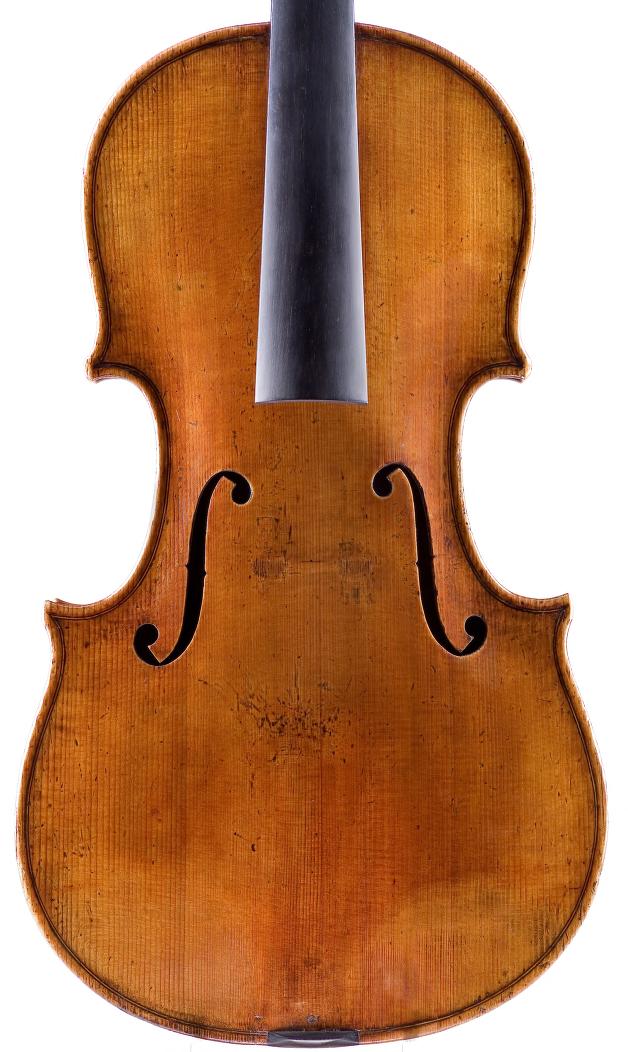
The viola’s early history is shrouded in mystery. It surfaces in records in 1854, owned by Luigi Tarisio, an Italian collector and dealer. From Tarisio, it passed to Jean-Baptiste Vuillaume, a French luthier, who held it until 1872. It briefly belonged to J. N. Durand before being auctioned in Paris.
In 1875, Alexander Cassavetti (or Alexandros Cassavettis), a Greek-born London attorney, acquired the viola. Born in 1854, Cassavetti belonged to a prominent Greek family that settled in London’s thriving commercial district of Finsbury Circus. Like many from diverse backgrounds, he adopted the anglicized form of his name. His family’s involvement in professional and cultural pursuits likely influenced his appreciation for the arts. His ownership, from 1875 to 1885, solidified the viola’s distinct identity. It is believed to be named after him because he was the first owner who was not involved in the business of selling instruments.
A Journey through Collectors
Following Cassavetti, the viola passed through various collectors, including Charles James Oldham, a British ophthalmic surgeon, and Baron Johann Knoop, a Russian-German collector residing in London. (Read more about Knoop in The Strad, on Tarisio, and on Wikipedia.)
Arrival in America and the Whittall Legacy
In 1928, Rodman Wanamaker, an American businessman, acquired the viola. Although the exact circumstances remain unclear, it’s believed the viola may have been played in landmark concerts at the Wanamaker store in Philadelphia in 1927, marking its first documented public performance. Its journey culminated in 1936 when Gertrude Clarke Whittall acquired and donated it to the Library of Congress. Born in Nebraska, she married businessman Matthew John Whittall and, after his death, became deeply involved in music philanthropy.
Residence at the Library of Congress
Since 1936, the Cassavetti viola has resided at the Library of Congress, meticulously cared for and played by renowned musicians, including the Juilliard String Quartet. As a Stradivarius instrument, the Cassavetti viola holds immense historical and cultural value, further amplified by its rarity.
Concerts and Performances
The Cassavetti viola has graced numerous concerts and recordings. It has been featured in the Whittall Stradivari Concerts at the Library of Congress since 1936.
Unraveling the Mysteries: A Call for Exploration
The stories of the Sutter flute, the Burghley flutes, and the Cassavetti viola are just a few examples of the hidden histories waiting to be discovered within the Library of Congress—or with your own musical instruments! By sharing these narratives and highlighting the ongoing research, we hope to inspire fellow enthusiasts and researchers to delve deeper into the stories surrounding these instruments. Perhaps someone, somewhere, holds the missing piece of these historical puzzles. Could it be you? Through a link in Ancestry.com, a trip to your local library, or a meeting at the local historical society, you might uncover a vital clue.
These instruments, with their rich and sometimes enigmatic pasts, remind us that music history is not just about famous composers and celebrated performers. It’s also about the instruments themselves, the hands that crafted them, and the individuals who played and cherished them throughout the ages. Each instrument has a story to tell, a journey to share, and a legacy to preserve. Moreover, these stories invite us to engage our imaginations and bring history to life. We may not have all the answers, but we can speculate about the Sutter flute as a gift, envision the Cassavetti viola being played at the Wanamaker store, imagine that first meeting between organ builder Harris and flute maker Haynes, and ponder the multiple possibilities behind the Burghley stamp. Through research, speculation, and a touch of imagination, we can weave together the fragments of the past and create a richer understanding of these instruments and the people who played them.
A Challenge to Our Readers
Can you, dear reader, uncover Burghley’s true identity? If you can provide any additional information beyond what we’ve written about here or that can be found on the LoC web pages, then please write to the editor of The Flutist Quarterly. You’ll not only have our sincerest thanks but also the satisfaction of knowing that you’ve helped support the library’s mission to “engage, inspire, and inform Congress and the American people with a universal and enduring source of knowledge and creativity.”
Burghley flutes in the Library of Congress

Additional Resources
Cozio Archive
Violins and Violinists (1941)
“The London Greek Diaspora and National Politics.” Doctoral Thesis dissertation by Georgia Kouta (2018)
National Portrait Gallery UK (Cassavetti family portraits): Euterpe Cassavetti, John Cassavetti, Julia Mary Sheridan
Your Uncle Sam in Washington by Myrtle Cheney Murdock
Library of Congress Information Bulletin (1981)
“Masters at The Beginning of The Art: Stradivari Society Director Lectures at the Library” Library of Congress Information Bulletin 1999
Hellweg and Clouterier; Cassavetti Viola page
Tarisio’s Cassavetti viola page
Puleo, Tom. “How the U.S. Government Hid Its Treasures From Hitler.” POLITICO Magazine. September 11, 2016.
Adrian MgGee’s “Flutes at the Royal Military Exhibition, London, 1890.”
“The ‘Tuscan-Medici‘ Stradivari Viola.” Library of Congress. Accessed November 13, 2024.
Endnotes
| ↑1 | A “ferrule” on a flute is a small ring or band that is placed around the end of a flute’s headjoint to provide added strength and protection against wear and tear, particularly on wooden flutes; it can also sometimes be used for decorative purposes on each section. |
|---|---|
| ↑2 | A “drawn tone hole” on a flute refers to a type of tone hole where the opening is created by punching a hole in the tube and “drawing” the metal from the flute’s body itself, rather than soldering a separate piece of metal onto the body to create the hole. It is milled flat, and the edge is rolled over to form a smooth surface for the key. There is no solder seam like on soldered tone hole flutes. This is an efficient and cost-effective manufacturing method. |
| ↑3 | DCM = Dayton C. Miller, and DCM 0118 refers to the accession number in his original ledger. |