

Remember? Maybe it was the focused quiet of a practice room, that moment when a difficult passage finally yielded. Or the electric silence filling a hall just before the first note of a beloved concerto swelled into being. Perhaps it was hearing a master flutist live for the first time, the sound inhabiting the space in a way recordings never could, fundamentally shifting your understanding of what the instrument—and music itself—could achieve. As musicians, as lovers of the flute, our deepest connections are often forged not just in playing, but in listening.
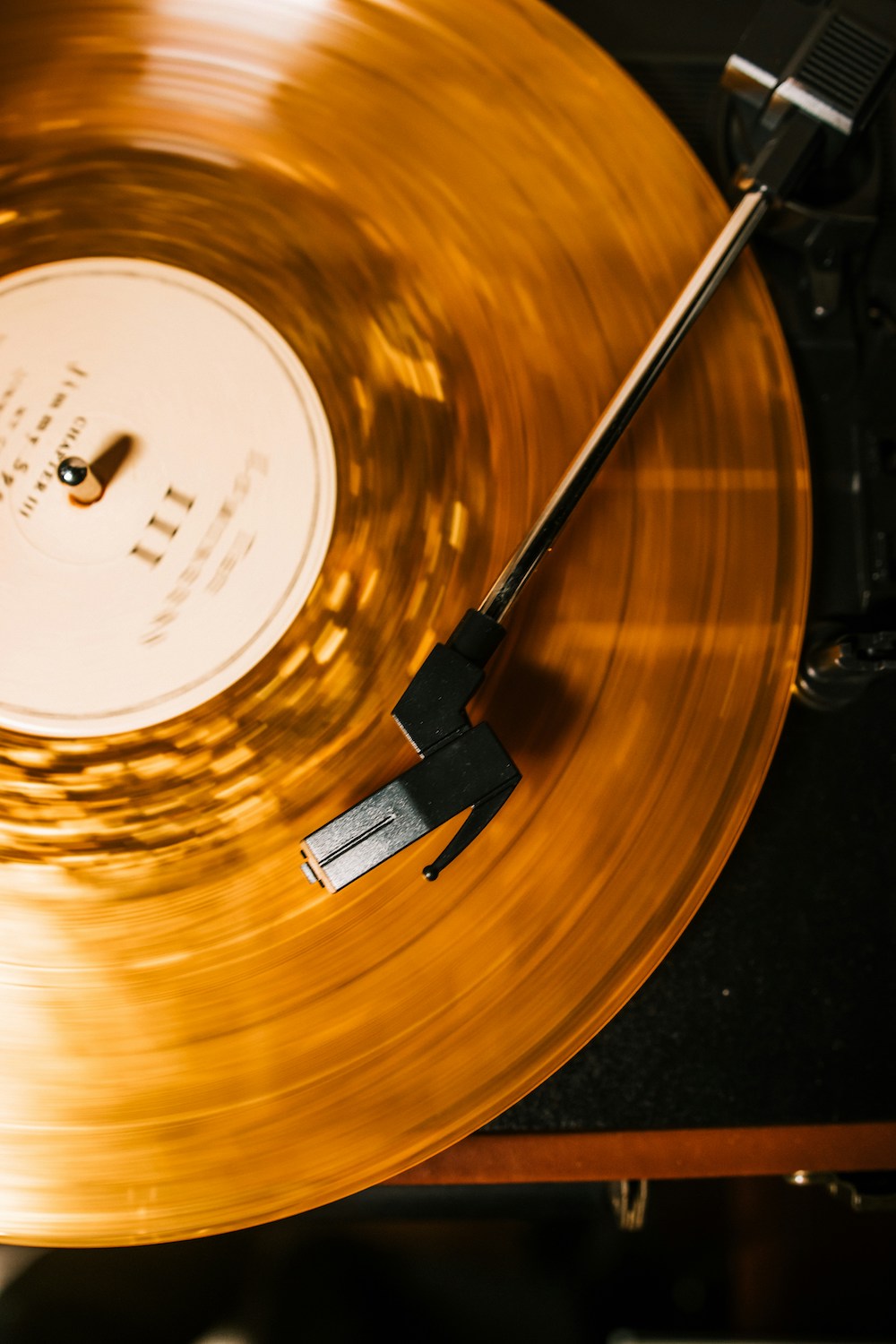
For many of us of a certain age who have dedicated our lives to music, it wasn’t always just there, an inexhaustible utility at our fingertips. Before entire libraries materialized with a click, engaging with music often involved a tangible quest. Picture this: Saving up for an album, the trip to a record store becoming an event in itself, the artwork poured over like a sacred text. Or imagine the patient vigilance by the radio, cassette recorder poised, hoping to capture a fleeting favorite when it was selected by a DJ. Listening itself often carried a certain ritual—the careful handling of vinyl, the deliberate placement of a needle, or friends gathered around a shared stereo to experience a new release together. These weren’t merely quaint habits; they were acts of engagement that framed the music, often demanding anticipation, patience, and a singular focus. Because access wasn’t infinite; each encounter with music could feel precious, an experience to be savored rather than simply scrolled past.
This landscape of deliberate seeking and focused engagement fundamentally shaped how many of us connected with sound. For those whose musical awareness dawned in today’s age of instant streaming and personalized algorithms, this “old way” might seem almost unthinkably slow, perhaps even bewildering. Yet it fostered a particular kind of attention, a depth of immersion that contrasts sharply with our current reality.
Now, consider the present. Music is undeniably everywhere. Technology delivers infinite streams, entire libraries nestled in our pockets, our days saturated with sound—sometimes curated, sometimes simply ambient noise. As many of us prepare to gather for the upcoming 2025 National Flute Association convention in Atlanta this August, we might observe this paradox firsthand. Even amidst the vibrant energy of many hundreds of colleagues, it’s common to see individuals cocooned in a personal sonic bubble, earbuds delivering practice tracks or private playlists. It’s a marvel of access, certainly. But in this constant availability, this effortless control, have we inadvertently let the profound, unifying art of listening become diluted, perhaps even lost? Is our ability to truly hear—the music, the world, each other—becoming another casualty of an attention economy that thrives on skimming rather than absorption?
The Shifting Landscape of Listening

In this era of personalized soundscapes, music too often slips into the role of sonic wallpaper. It’s the background hum accompanying our work, the rhythmic pulse driving a workout, the ambient filler at dinner parties, the barely-noticed soundtrack to our commutes, frequently delivered through those ubiquitous white wires or sleek wireless buds. We consume music voraciously, constantly, yet often passively. It flows around us, a pleasant but often indistinct current, sometimes sealing us off from the world we move through. We might tap our feet, hum along absently, but enclosed in our private audio stream, are we truly listening?
Think about the modern concert experience, even within our own community. In a space dedicated to performance, our attention can easily fracture. Are we sometimes more focused on capturing the perfect video clip for social media, angling for a selfie with the stage glow, or ensuring our companion is suitably impressed? The music unfolds, live and visceral, yet our engagement becomes mediated, diluted by the impulse to document rather than experience, to broadcast rather than absorb.
This isn’t about judgment; it’s about noticing a cultural shift. Music is now ubiquitous and hyper-personalized thanks to technology. Yet this very availability can lead to indifference, and the focus on the individual can subtly isolate us from our shared environment. Multitasking feels like the air we breathe, our attention sliced thin across countless demands. In this climate, deep, focused listening—the kind required to fully appreciate music’s intricacies and emotional depth—often gets short shrift. Music risks becoming just another input stream, occupying the auditory channel while our minds are busy elsewhere. Let’s be honest: if you’re listening while primarily doing something else—even if that something else is mentally critiquing a performance—you might not be engaging with the music’s full potential.
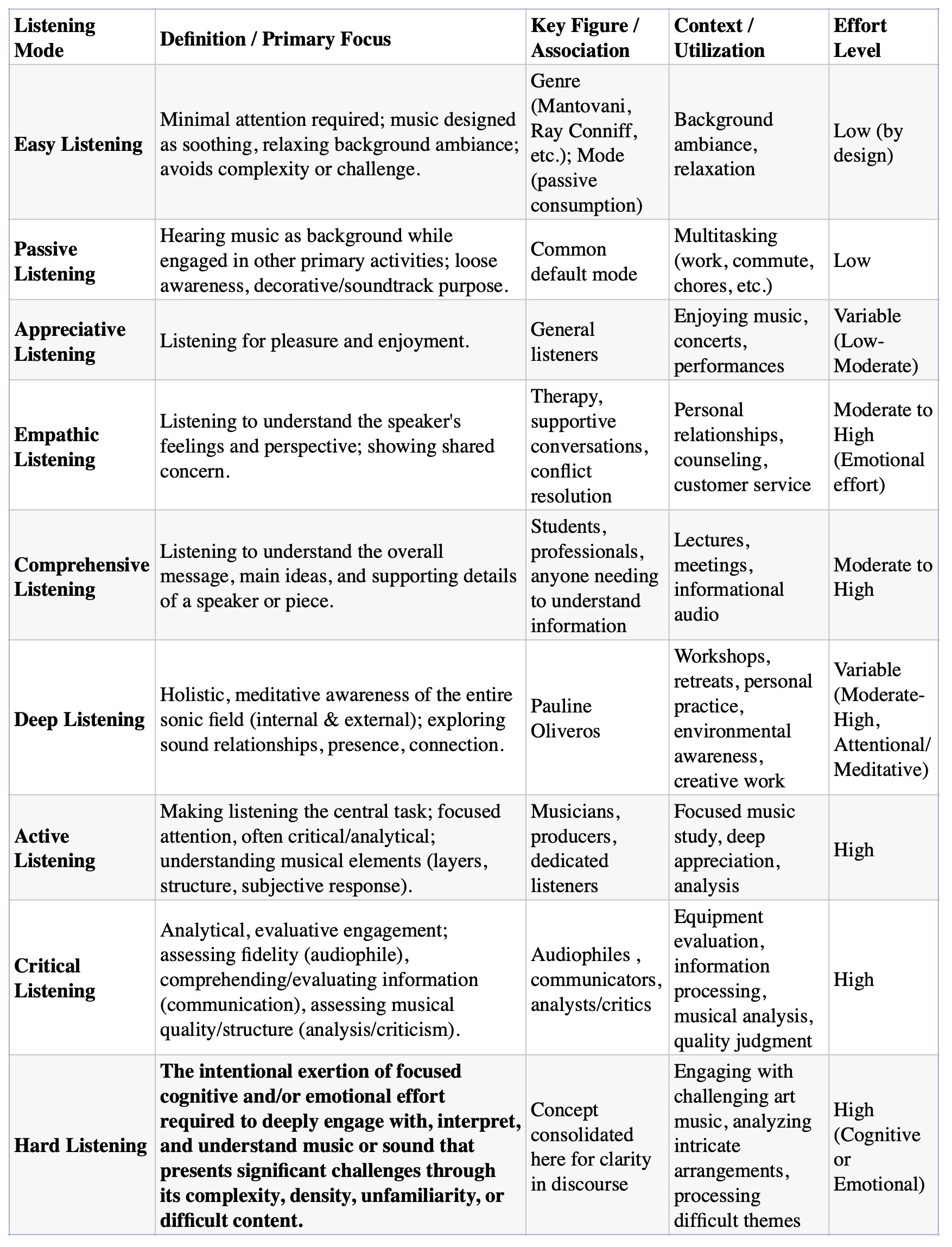
Of course, some music is designed for minimal engagement. The genre aptly named “Easy Listening,” for instance, was crafted to be pleasant, unobtrusive background sound. And there’s certainly a time and place for that. The danger, however, lies in applying this passive “easy listening” mode to all sonic experiences. When we treat complex new compositions, nuanced interpretations of standards, or performances on historical instruments as mere ambiance, or listen only through the narrow filter of our immediate goals (judging, networking, comparing), we inevitably miss the richness beneath the surface. Habitually choosing only what’s easy or familiar, or listening only for what serves our immediate purpose, can stunt our growth and understanding. Likewise, constantly plugging into our personal audio streams, however enjoyable, means we are actively choosing not to listen to the world around us, potentially missing the complex, unpredictable, and sometimes beautiful symphony of everyday life.
This year’s NFA convention theme, “Unity and Universal Oneness,” offers a beautiful lens through which to view this. It invites us to consider our profound interconnectedness. What better way to explore this theme than through the simple, yet deeply challenging, act of listening? Perhaps true oneness begins with truly hearing each other and the diverse sonic expressions within our community, unburdened by preconceptions. What if we chose, deliberately, to reclaim our attention for sound, both at the convention and in our daily musical lives?
Reclaiming Our Sonic Attention
A starting point is simply choosing to make listening the primary activity, consciously moving beyond passive hearing. This is the heart of “active listening.” It means dedicating focus, whether to a live performance, a recording, or even a colleague sharing an insight. It involves engaging intentionally. This might mean analyzing musical layers—harmony, rhythm, timbre, form—or listening subjectively, noticing our own emotional responses and trying to trace their musical origins. As musicians, analysis comes naturally, but active listening also means allowing ourselves to be fully present to the experience of the sound itself.
Another path entirely is “Deep Listening,” a practice pioneered by the visionary composer Pauline Oliveros. Deep Listening isn’t just about music; it encourages a holistic awareness of the entire sonic environment, both internal and external. It’s about expanding perception beyond the notes to include the ambiance of the hall, the subtle sounds of performers’ breathing, the rustle of an audience, even the landscape of our own thoughts, fostering a profound connection with the totality of the sonic moment. This demands “radical attentiveness,” a presence that involves listening with our whole being. While often meditative, its principles—openness, connection, awareness—can enrich how we engage in any listening situation. Taking out your earbuds and truly tuning into the sounds of the street, the park, or even your own home is a practical step onto this path.
Listen to Pauline Oliveros’s “Tuning Meditation”
Recorded live in 3D binaural audio at The Met Cloisters.
Listen on WQXRThen there’s the kind of focused engagement required when we deliberately grapple with music that challenges us. While the term “hard listening” might sound demanding—and indeed, it requires effort—it’s precisely this intentional exertion that unlocks deeper rewards. While the term has surfaced occasionally in different contexts, it often lacks a consistent definition. To provide clarity for this discussion and perhaps add a useful distinction to the ongoing dialogue about how we engage with sound, let’s consolidate the concept.
Hard Listening: The intentional exertion of focused cognitive and/or emotional effort required to deeply engage with, interpret, and understand music or sound that presents significant challenges through its complexity, density, unfamiliarity, or difficult content.
This is the work involved in navigating intricate counterpoint, absorbing dense electronic textures, following the unpredictable turns of free jazz, or connecting with the raw emotion in blues laments or politically charged lyrics. It means resisting the knee-jerk dismissal, leaning into the discomfort or confusion, giving the music multiple chances, and striving to understand it on its own terms. It requires persistence, curiosity, and a willingness to move beyond our initial reactions.
How might we bring these ideas alive at the NFA convention in Atlanta? This gathering, brimming with performances, lectures, masterclasses, and social buzz, is a perfect environment for experimenting with our listening.
- Seek the Unfamiliar: Make a point to attend a performance or lecture on a topic, genre, or composer outside your usual orbit, maybe something you’ve previously dismissed. Catch a recital featuring an instrument you rarely hear (alto flute, contrabass, baroque traverso). Engage actively to grasp its language, or apply hard listening to wrestle with its challenges. Can you find a point of connection, a moment of insight, even if it doesn’t become a new favorite?
- Listen Beyond the Familiar Face: When your friend, teacher, or student is on stage, acknowledge the personal connection, then consciously try to shift your focus. Listen to the music itself—the interpretation, the sound quality, the phrasing—as if encountering it for the very first time.
- Suspend Judgment (for a Moment): In competitions or masterclasses, evaluation is often the goal. But try dedicating at least part of your listening time to simply receiving the performance. Absorb musical intention before activating the critical filter. What story is the performer trying to tell?
- Question Your Assumptions: Do you carry strong opinions about certain styles (baroque vs. contemporary), instruments (silver vs. wood), or composers? Find an opportunity to listen again with genuinely fresh ears, actively setting aside those ingrained biases to hear the music’s intrinsic qualities.
- Cultivate Presence: In lectures or workshops, notice the impulse to check your phone or mentally rehearse your schedule. Instead, try practicing Deep Listening principles. Be fully present. Absorb not just the words, but the atmosphere, the speaker’s energy, the shared focus (or lack thereof) in the room.
Investing this kind of conscious effort—whether through active, deep, or hard listening—offers significant rewards. It not only sharpens our analytical skills and deepens our musical understanding but also broadens our aesthetic horizons and cultivates empathy. Intriguing research even suggests that repeated, focused listening increases our liking and appreciation, even for complex or initially unfamiliar music. By pushing past our initial resistance, we build familiarity and unlock deeply meaningful connections.

Viewed through the lens of “Unity and Universal Oneness,” these listening practices gain even greater significance. Truly hearing the diverse voices and expressions within our vibrant flute community—across genres, generations, cultures, and instrument types—without immediate judgment requires conscious effort. It asks us to quiet the ego and open ourselves to connection. This kind of effortful, open-hearted listening might just be a fundamental practice for recognizing our shared humanity and interconnectedness, beautifully expressed through the universal language of music.
Gatherings like the NFA Conventions offer much more than performances and networking. They present countless invitations to practice the art of listening. Let’s challenge ourselves not just to be heard, but to truly hear. Let’s use these opportunities to consciously cultivate our listening skills, engage more meaningfully with the music and, crucially, with each other. By embracing the full spectrum of sound and experience with open ears and minds, we not only enrich our own musical lives but also take a meaningful step toward embodying the unity and oneness our community so powerfully evokes. The music—and the connection—is there, waiting. All we need to do is listen.
Modes of Listening: A Comparative Overview (Ordered by Typical Effort Level)
Further Reading:
- On Deep Listening:
- Oliveros, Pauline. Deep Listening: A Composer’s Sound Practice. iUniverse, 2005. (Provides exercises and philosophy behind the practice)
- Oliveros, Pauline. Sonic Meditations. Ministry of Maat, Inc. / PoPandMoM Publications, 2022 (Early text scores foundational to Deep Listening)
- Oliveros, Pauline. Quantum Listening. Spiral House Editions, 2024
- Loveless, Stephanie, ed. A Year of Deep Listening: 365 Text Scores for Pauline Oliveros. Terra Nova Press, 2025
- On Soundscape Awareness:
- Schafer, R. Murray. The Soundscape: Our Sonic Environment and the Tuning of the World. Destiny Books, 1993 (A seminal work on environmental sound awareness)
- Toop, David. Ocean of Sound: Ambient sound and radical listening in the age of communication. Serpent’s Tail, 2018
Online Explorations:
- Center for Deep Listening at Rensselaer: Explore resources, archives, and information about ongoing workshops and events related to Pauline Oliveros’s work at deeplistening.rpi.edu/.
- Interviews and Performances (Pauline Oliveros): A good starting point is searching platforms like YouTube or archive sites (e.g., UbuWeb, university archives) for “Pauline Oliveros interview” or “Deep Listening Band,” or performances searchable on YouTube. Hearing her speak about her practice can be illuminating. Some examples:
- “Open Ears: Pauline Oliveros,” “Classical California” series “Composers, Musicians, and Conductors who Deserve More Recognition”
- “Pioneering artist Pauline Oliveros recalled how she created her own instruments and how listening can help change how you hear in her 2016 Red Bull Music Academy lecture.“
- “The Difference Between Hearing and Listening,” Pauline Oliveros TEDxINDIANAPOLIS November 12, 2015
- “Deep Listening: The Story of Pauline Oliveros – Official Trailer,” Official trailer for the 2023 documentary about Pauline Oliveros
- Additional videos (not on YouTube) available at thestoryofpaulineoliveros.com/videos.html
- Exploring Challenging Music: This is vast, but good starting points include:
- Contemporary Classical: Explore platforms like newmusicusa.org or ressources.ircam.fr/en (Institut de Recherche et Coordination Acoustique/Musique). Search for composers associated with complexity or experimentalism.
- Free Jazz/Improvisation: Look into archives or labels specializing in free improvisation, such as ecmrecords.com/ (though not exclusively free jazz, features much challenging improvised music) or searching platforms like Bandcamp for “free improvisation” or “avant-garde jazz.”
- Experimental Electronic: Explore platforms like Bandcamp (using tags like “experimental electronic,” “noise,” “ambient”), Soundcloud or labels known for experimental releases (e.g., Warp Records, Raster-Noton archives).
- Music Psychology Research: Academic databases like PubMed Central (PMC) and Google Scholar contain studies on music perception, emotion, attention, and listening effort for those interested in the scientific underpinnings. Search terms like “music listening attention,” “musical effort,” “aesthetic emotions music,” or “music familiarity liking” can yield relevant papers.