

Editor’s note: This is a follow-up to Robert’s article in the Summer FQ, which received such a good response he wanted to dive in further.
“There is no such thing as an empty space or an empty time. There is always something to see, something to hear. In fact, try as we may to make a silence, we cannot.” — John Cage
Every musician’s memory is a collection of small epiphanies—the focused quiet of a practice room when a difficult passage finally yields, or the electric silence filling a hall just before a beloved concerto swells into being. These are the moments of deep attention where we connect most profoundly with our art. But our individual collections are part of a larger whole. Every community creates a collective soundprint, a sonic signature as distinct as a fingerprint. Think of the quiet murmur of a museum, the boisterous energy of a stadium, or the focused hush of a concert hall just before the first note.
For the flute community, this soundprint recently manifested on a collective scale. Let’s tune into one such example: the NFA’s national convention in Atlanta. Can you hear it? Not a memorable performance or a stunning recital, but the vast, immersive sound of our community. Recall the exhibit hall: a sonic tapestry woven from simultaneous conversations. Here, a student, guided by their teacher, draws the first tentative notes from a new flute that will carry them through college. Over there, a professional tries a series of headjoints, listening for that elusive spark of resonance. Parents shepherd wide-eyed children marveling at the abundance of Superflutilisticness™ around them. Seasoned players stand in thoughtful consideration of a new bass or even a contrabass flute. It was the collective sound of possibility, of curiosity, and of community being forged in real-time. (I’m ™’ing this thing right here, right now.)
Add to this the polyphony of reunited friends, the murmur of lobbies, and the percussive rhythm of rolling cases on the hotel’s polished floors. This was the true soundscape of our convention, the theme of “Unity and Universal Oneness” made audible.
All of this, collectively, was the sound of OUR community.
Now, here is the question for the individual within this community. Were you listening? Did you hear all that I just described? It is a beautiful thought that we all walked through that hall with our awareness fully open. But it is likely that for many of us, it was simply noise, a necessary byproduct of a few thousand people on a shared mission. For many of us, it is only in reading these words that we begin, retroactively, to appreciate the symphony we were in the middle of. It is only by pausing to consider what was there to be heard that we begin to understand what we might have missed.
And that is perfectly understandable; it is the very reason for this series. For those of us who began to explore the ideas from our first article, the convention was a vast sonic laboratory. But for all of us, the risk is that the potential for such awareness gets packed away with our luggage. The real work, the deeper practice, begins now. It is the work of cultivating that expansive listening and weaving it into the fabric of our daily musical lives.
Listening with, and through, the Body
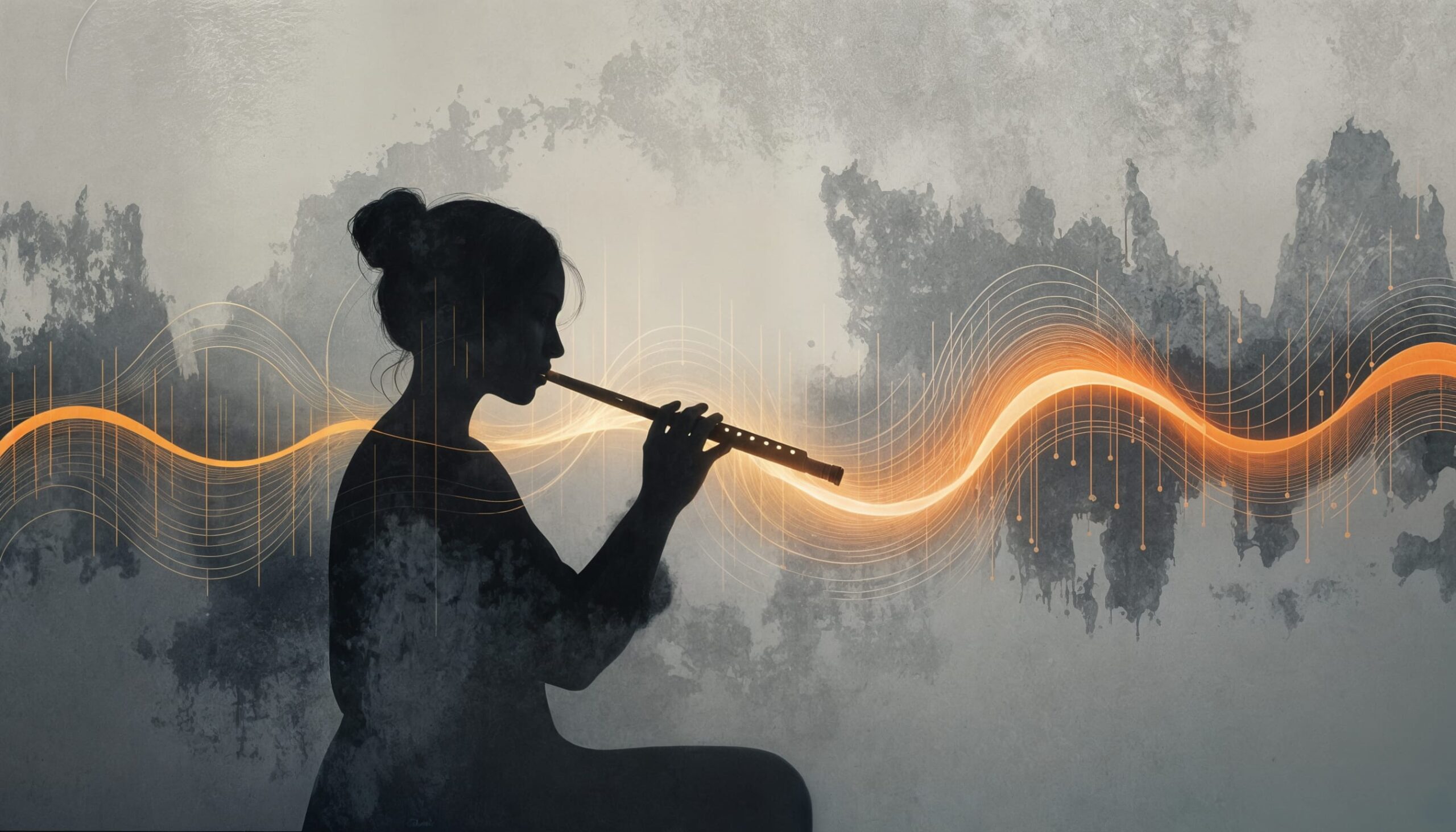
Before we can truly tune into the symphony of our community, we must first learn to listen to the primary instrument we all share: our own body. This practice of embodied awareness is a core tenet of the visionary composer Pauline Oliveros’s philosophy. Her concept of Deep Listening® isn’t just about the sounds around us; it’s crucially about the sounds within us, and the physical sensations that accompany sound-making. It’s a holistic approach that asks us to close the gap between the body that plays and the ears that judge, uniting them into a single, perceptive organism.
Musicians have long sought this integration through various somatic disciplines. The Alexander Technique, for instance, is not simply a series of exercises but an educational method focused on the “use of the self.” It teaches a musician to become aware of and release habitual patterns of tension—the unconsciously raised shoulder, the tilted head, the tightened jaw—that interfere with breath support, posture, and free expression. By learning to allow the head to lead a freely lengthening spine, the flutist can find a profound sense of ease and poise, allowing the sound to emerge not from force but from balanced coordination. Similarly, the Feldenkrais Method® uses gentle movement and directed attention to help us discover more efficient and graceful ways of functioning. Through its “Awareness Through Movement” lessons, a player might explore the subtle connections between their fingertips, wrists, arms, and back, learning to undo the habitual tension that can lead to injury and limit technical facility. This is, in essence, a deep listening practice turned inward—using radical attentiveness not for external sound but for the body’s own subtle feedback to achieve greater efficiency and expression.
You can begin to integrate similar ideas into your own routine. For five minutes, simply repeat your favorite long-note exercise on a single note. But as you play, shift your attention away from a critical judgment of the direct sound emanating from your instrument and listen inwardly instead. Notice the physical sensations. Where do you feel the vibration? Is your jaw tight? Are your shoulders relaxed? Is your breath flowing freely from your core? The goal is to cultivate a nonjudgmental awareness, to simply notice what is. Your mind will inevitably wander. The practice is not to force focus but to simply notice the distraction and gently guide your attention back to the sensation of the breath, the vibration in your hands and lips. Think of it as developing an inner ear, one that listens for the subtle physical precursors to a beautiful tone. Is the sound freer when your shoulders drop? Does the resonance deepen when your jaw is soft? This nonjudgmental observation is where true integration begins, transforming a simple long-tone into a profound meditation.
This practice of noticing physical sensation without immediate judgment is not only key to an integrated sound but is also a powerful tool for grounding oneself and managing the physical symptoms of performance anxiety. By shifting our focus from the fear of external judgment to our own internal state, we reclaim a sense of control and presence. This is the first step toward a more integrated and intuitive way of playing, and it is from this place of inner alignment that a true musical conversation with others can begin.
Frameworks for Attentive Listening
| Thinker / Method | Core Idea | Relevance to a Musician’s Listening Practice |
|---|---|---|
| Pauline Oliveros | Deep Listening®: A practice of holistic sonic awareness, listening to the entire sound field, both external and internal, with “radical attentiveness.” | Moves beyond just hearing the notes to being present with the entire sonic moment: the room, the audience, one’s own body, and thoughts. |
| John Cage | The Primacy of Silence: Challenged the definition of music and silence, arguing that sound is ever-present. He framed listening as an act of awareness of all ambient sound. | Encourages us to listen to the “spaces between the notes” and to the sounds of the performance environment as part of the musical experience. |
| R. Murray Schafer | The Soundscape: The study of the total sonic environment. He advocated for “acoustic ecology”—a conscious relationship with the sounds around us. | Promotes an awareness of how our surroundings (the practice room, the concert hall) shape our perception of the music we make and hear. |
| F.M. Alexander | The Alexander Technique: An educational method for recognizing and changing habitual patterns of tension in the body to improve ease and coordination. | By releasing unnecessary physical tension, the musician can listen more freely and accurately to their own sound production and physical sensations. |
| Moshé Feldenkrais | The Feldenkrais Method®: A somatic practice using gentle movement and directed attention to improve body awareness and enhance human functioning. | Develops a refined internal listening—paying close attention to the body’s subtle feedback during the act of playing to achieve greater efficiency and expression. |
A Conversation Among Friends
“A conversation among friends.” This is how the German writer Johann Wolfgang von Goethe described the string quartet in an 1829 letter, marveling at how “one hears four intelligent people conversing among themselves.” The metaphor is perfect, highlighting the intimate, interactive, and deeply human nature of chamber music.
True musical collaboration is, at its heart, a dialogue. Yet how often in our own ensembles does it feel less like a conversation and more like a series of simultaneous monologues? This happens when we retreat into the solitary collection of our own part, focusing intently on accuracy and execution, but fail to truly listen and respond to our colleagues. The goal becomes matching the surface details of the music—intonation, rhythm, and dynamics—rather than engaging in a shared narrative. Think of a flute choir rehearsal where one section, focused solely on their own passage, isn’t conscious of the lyrical phrase being shaped by another. Each group might be executing their part correctly, but they are not making music together. This is the sound of musicians playing in the same room but not participating in the same conversation.
To shift from monologue to dialogue requires the same profound, empathic listening we cultivated in our own bodies—an awareness turned outward. This can be practiced with a simple exercise. In your next rehearsal, have one player offer a short, simple phrase. The next player must respond not by imitating it but by answering the emotional question it poses. If the first phrase is tense and questioning, the second might be calm and reassuring. If the first is playful, the second might be an exuberant exclamation. This exercise reorients the focus from mere technical duplication toward a collaborative narrative. It can be adapted for any level; a teacher could easily guide a student duo through this exercise, focusing not on complexity but on the sincerity of the musical reply.
This principle—that music is fundamentally a social and interactive art form—is universal. In his book How Music Works, the musician David Byrne explores how context and human interaction shape musical creation. A flute choir, viewed through this lens, is not just a collection of flutists; it is a social and acoustic system whose success depends on the very conversational listening this exercise helps to build. It’s in this space that a group of individual players truly becomes a unified ensemble, a beautiful and intricately woven conversation.
This conversational ideal finds its ultimate expression in improvisation, a topic I explored with the brilliant Swedish flutist Anders Hagberg for an interview in this issue. Many musicians, from classical to jazz to folk traditions, view improvisation as the ultimate musical conversation. This is a subject we will delve into much more deeply in future articles in this series.
A New Ritual of Attention
Whether we are on stage or in the audience, the concert hall has its own long-standing rituals—the performer’s purposeful walk to the stage, the shared silence, the expectant hush. We can cultivate our own private ritual of preparation. In those moments before the first note is played, we can choose to actively engage. As a listener, we can practice hearing the room and feeling the energy of the collective audience. As a performer, we can listen to our own body, noticing our posture and breath. By doing this, we transform ourselves from passive attendees or automatic practitioners into active, present participants.
This is how we reclaim the art of listening—not as a lost relic, but as a living, breathing, and essential part of our musicianship. Whether you are preparing a Bach sonata, a Romantic concerto, or a contemporary commission, this deeper awareness will enrich your interpretation and connection to the music. It is an art we reclaim one conscious breath at a time, discovering that the true conversation of our community is there, waiting. All we need to do is answer.
Two Exercises in Active Listening
| Listening Mode | Exercise | Goal & Focus |
|---|---|---|
| Listening with the Body | For five minutes, repeat your favorite long-note exercise on a single note. Instead of judging the sound with your ears, place your focused attention on the physical sensations: the vibration of the flute, the feeling of the air column, the feedback from the room. | To connect the act of listening to the physical act of playing; to develop somatic awareness and move beyond purely auditory judgment. |
| Listening in Ensemble | In a rehearsal, practice a “call and response” of musical intent. One person plays a short, simple phrase. The next person must respond with a new phrase that answers the emotional question of the first one. | To move beyond simply matching surface details toward a deeper, empathic listening that fosters true musical conversation and collaboration. |
For Further Reading and Exploration
- Pauline Oliveros & Deep Listening: Her books, including Deep Listening: A Composer’s Sound Practice, Sonic Meditations, and Quantum Listening, are essential. The Center for Deep Listening at Rensselaer continues her work and offers resources.
- On Sound, Silence, and the Environment: Explore the foundational writings of John Cage in Silence: Lectures and Writings and learn more about his philosophy at the John Cage Trust. Delve into the world of acoustic ecology with R. Murray Schafer’s seminal book, The Soundscape: Our Sonic Environment and the Tuning of the World.
- A Foundational Guide to Listening: Aaron Copland’s classic What to Listen for in Music remains an indispensable guide to engaging with music on multiple levels, from the purely sonic to the deeply structural.
- On Music and Collaboration: How Music Works by David Byrne offers a brilliant look at how context shapes music. For a different perspective on music as a language, explore bassist Victor Wooten’s The Music Lesson: A Spiritual Search for Growth Through Music.
- Somatic Practices: Explore the official websites for the American Society for the Alexander Technique (AmSAT) and the Feldenkrais Guild® of North America to find resources and certified practitioners.
- Practitioners & Descendants: The lineage of Deep Listening continues through certified instructors and artists. Explore the work of composers like Annea Lockwood, a longtime colleague of Oliveros whose work is deeply rooted in listening to natural soundscapes, and performers like flutist Claire Chase, whose monumental Density 2036 project is a masterclass in embodied performance.
(Editor’s Note: Look for Robert Rabinowitz’s in-depth interview with Claire Chase in the next issue of The Flutist Quarterly!)