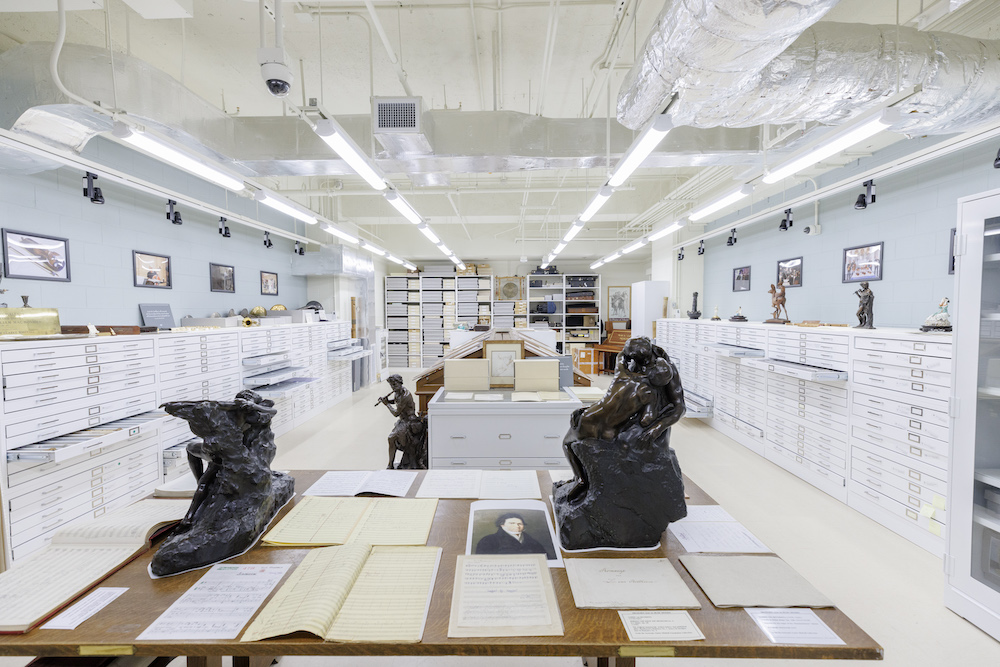


Since the Summer of 2024, Carol Lynn Ward Bamford, curator of musical instruments at the Library of Congress, and Robert Rabinowitz have been working together on our special series highlighting the Flute Vault’s collection. For this issue, they wanted to stop and take stock—and talk a little bit about what Rabinowitz has learned since he started their fascinating and fun adventure of diving into this incredible array of flutes.
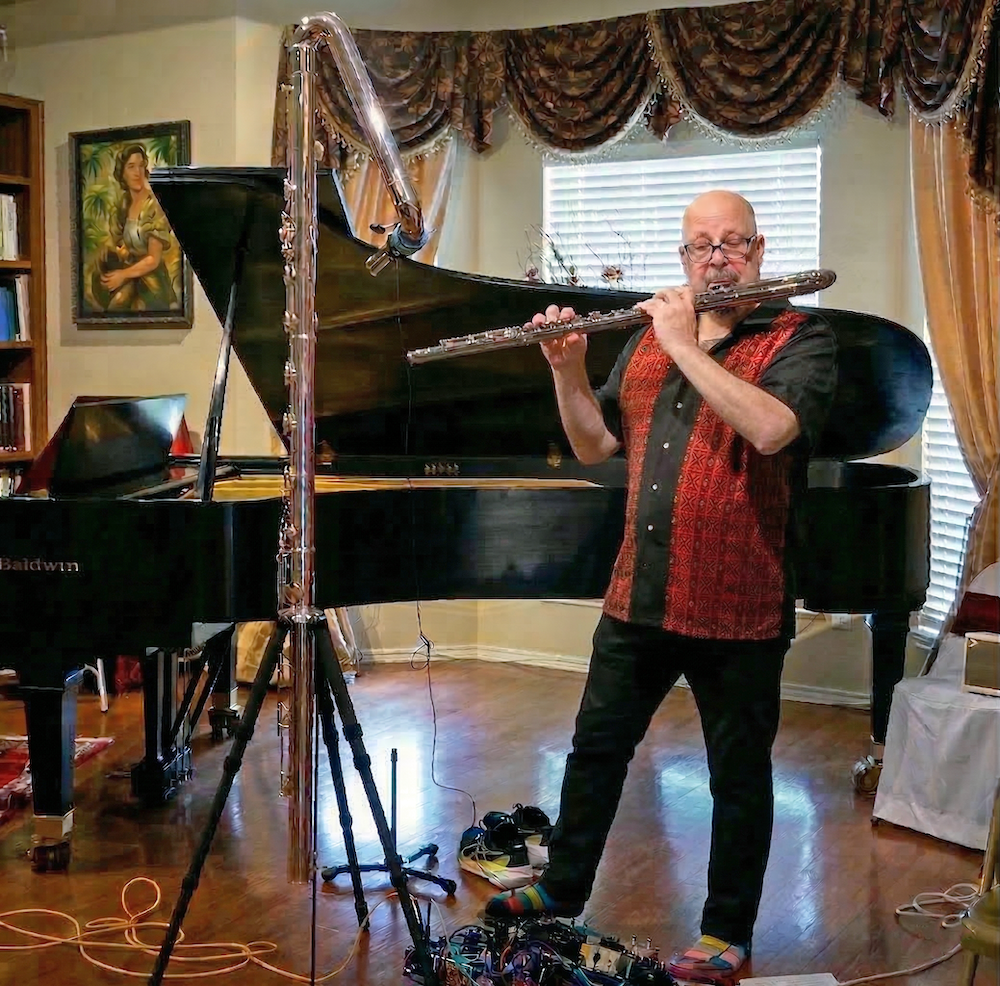
You never know who you will meet in the Library of Congress Flute Vault! That’s how I met Robert Rabinowitz—he came in with some colleagues to visit and learn more about our collection, and we instantly discovered a shared desire to learn more about flutes and flute players. A partnership was born! It’s no surprise he’s so curious: Robert’s a composer, classically trained flutist, and jazz saxophonist, and after retirement he discovered and embraced the low flutes (alto, bass, and contrabass). His latest compositions are often written for his own custom collection. And he has recently developed a philosophical approach to music education for which he has begun writing a book and is creating a website called Zen in the Art of Flute.
Since we’ve been collaborating for so long now, I was curious to know what he’s learned from digging further into the Flute Vault’s stories. We met over Zoom the other day, and I asked him…
Carol Lynn Ward Bamford: Let’s talk about our collaboration, which began after—or rather during!!—your visit to the flute vault.
 Robert Rabinowitz: It’s easy to picture the Library of Congress as this intimidating fortress where historic instruments just get locked away. But it’s incredibly alive. Getting to know Dayton C. Miller has been fascinating; he was a physicist, a flutist, and really, he’s the “ghost in the room” behind all these instruments. But honestly, the biggest lesson for me has been that the value isn’t just in the flutes themselves; it’s also in the paper trail. The context hidden in those old letters, invoices, and ledgers is just as critical as the objects. It really turns historical research into a treasure hunt, trying to connect 19th-century history to our 21st-century readers. Looking back at the specific pieces we’ve done, the biggest revelation for me has been uncovering the physical realities of the instruments versus the historical myths surrounding them. Every article we do—whether analyzing a Cornelius Ward flute or deciphering musical iconography—teaches me that these aren’t just static artifacts. They are these incredible intersections of acoustic physics, material science, and social history.
For instance, when we worked on the Claude Laurent article, diving into the material science revealed that most instruments in the collection are made of unstable potash glass rather than true crystal. That completely reframes how we think about their preservation and sound. Or when we wrote The Flutist in the Physics Lab, we saw firsthand how Miller’s scientific rigor directly drove his collecting habits. When we were pulling together the Music Under Hand piece on the walking stick flutes, the LoC’s digital archive was my absolute lifeline, my primary research tool. The ability to pull up high-resolution images and examine the specific keywork of a 19th-century flute right from home is incredible.
CLWB: Robert, you don’t live in Washington, DC, or near the Miller Collection. Beyond our zoom meetings and calls to discuss our articles, how do you approach your online research?
RR: Even if interested flutists can’t make it to Washington DC, the Miller Collection digital archives are this massive “Digital Window.” Between the high-res photos and the 3D-object viewers, it is entirely possible to study and appreciate these instruments from anywhere.
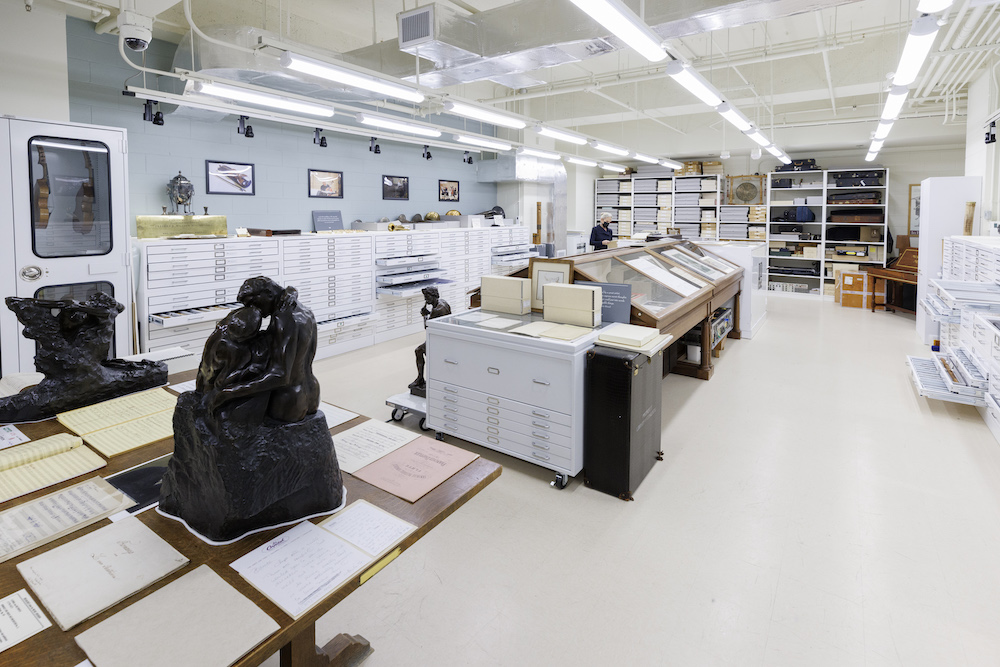
CLWB: We are still working on getting the Miller Collection entirely online! In fact, the Music Scores, about 10,000 from the Miller Collection, just went up on our site.
RR: That’s great! One practical thing I’d point out about using the website for research or writing is that you can’t just assume everything is automatically cleared for publication. The Library doesn’t hold the copyright for everything in its collection, so the onus is on you to verify the rights. But as long as you keep an eye on the “Rights and Access” advisory for whatever you’re looking at, it is an unbelievably accessible repository of free-to-use material.
CLWB: Do you have any research tips or go-to sites, such as Ancestry.com?
RR: Researching provenance takes you down some wild rabbit holes. I’ve found myself digging through 175-year-old British phone books just trying to find a clue about a maker or a past owner. I’ve also been using AI research assistants to help scour the web and compile historical reports, which most people wouldn’t have the time to do manually—I certainly wouldn’t! But my biggest tip for anyone trying that? You have to be incredibly precise with how you ask for things. It’s an iterative process—you have to run multiple searches, save your outputs, and compare them to ensure nothing is hallucinated or omitted. Human oversight is necessary. AI is a fantastic tool, but you still have to put in the work to heavily proofread, cross-check, and verify—substantiation, that’s a good word!
Integrating AI into my workflow has been an absolute game-changer, though it certainly comes with a massive learning curve. For instance, when we were researching those walking stick flutes, I used AI to scour the web, eventually compiling a massive list of around 280 external resources and hyperlinks.
At that point, it became incredibly important not to let that sheer volume of data overwhelm the actual narrative. We had to be absolutely fearless about trimming the list down. The AI was incredibly useful for building the initial scaffolding—tracking down obscure patents and organizing raw data—but the actual synthesis, the curation, and the rigorous fact-checking will always require a human expert’s eye.
And then, of course, once you have all that information gathered, you still have to actually write the article itself. It can never just be a dry list of facts; we have to weave it all together to tell a cohesive, engaging story!
CLWB: Robert, you love writing music and writing words. Do you write about the flute, other than your articles in the FQ, including those from our collaboration?
RR: I have been thinking about how people learn to play the flute. Of course, it could be any instrument. I started writing articles on listening, a Zen practice. The Zen perspective emphasizes deep listening and a holistic, intuitive learning process. When I was a teenager, I loved the book Zen and the Art of Motorcycle Maintenance. It comes from an older book titled Zen in the Art of Archery. In turn, I have started a book and website based on these books. It’s about learning to listen to the world around you, not just to a piece of music.
CLWB: Robert, I’m so glad you visited (in person!) the Flute Vault in Washington, DC!